
Reviewed · ELECTRIC CART & VINTAGE CAR TOURS
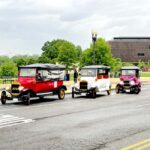
Explore Philadelphia via Vintage Car or Electric cart
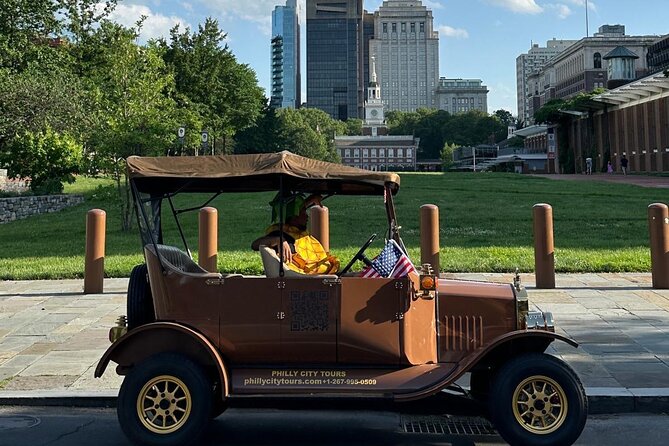
Philadelphia can feel like a maze. This 2-hour vintage car ride makes it simple by chaining the city’s top sights into one smooth loop. You’ll get guided context at major photo points, from City Hall (with that William Penn statue) to the Independence-area classics.
I especially like how the timing is tight but not rushed—you’re out at stops long enough to orient yourself and grab a few real pictures, not just a curbside glance. I also like the guide energy I’ve come to expect from this tour style, with fun, patient storytelling (names I saw repeatedly include Andy, Shane, and Parsa). One possible drawback: vehicle views can be limited for some riders, depending on seating and the cart top, so you may want to request the best vantage if you’re tall or particular about photos.
The route works best when you’re ready for a stop-and-go format. If the weather isn’t great, the experience requires good weather and can be rescheduled, so plan to keep your day flexible.
In This Review
- Key things that make this Philadelphia car tour worth it
- The core idea: why a car tour makes sense in Philadelphia
- Price and value: what $55.20 buys you (and what it doesn’t)
- Meeting point reality check: where you start and how pickup works
- City Hall from the street: the 22-foot-thick walls and the Penn statue
- Philadelphia Museum of Art in 15 minutes: what you can do with a quick window
- Philadelphia’s Magic Gardens: a mosaic maze you can’t skim
- War memorial stops: quick visits that carry real weight
- Philadelphia Vietnam Veterans Memorial
- Philadelphia Korean War Memorial
- Betsy Ross House and Elfreth’s Alley: Old City details you’ll notice later
- Betsy Ross House
- Elfreth’s Alley
- The Independence cluster: Liberty Bell Center and Independence Hall
- Liberty Bell Center (free)
- Independence Hall (admission not included)
- US Mint, the National Constitution Center, Chinatown, and Reading Terminal Market
- United States Mint: a coin-making powerhouse
- National Constitution Center: interactive Constitution storytelling
- Chinatown: immigrant roots to modern food and shops
- Reading Terminal Market: the food payoff
- Vehicle comfort and visibility: the one thing to plan for
- What the guide experience feels like (and why it’s a big deal)
- Who should book this Philadelphia tour, and who should think twice
- Small tips that make your two hours go smoothly
- Should you book this vintage car or electric cart tour in Philadelphia?
- FAQ
- How long is the tour?
- What does it cost?
- Is pickup included, and where do I meet?
- Does the tour include admission tickets?
- Which languages is the tour offered in?
- Is tips included in the price?
- What’s the maximum group size?
- Is the tour dependent on weather?
Key things that make this Philadelphia car tour worth it
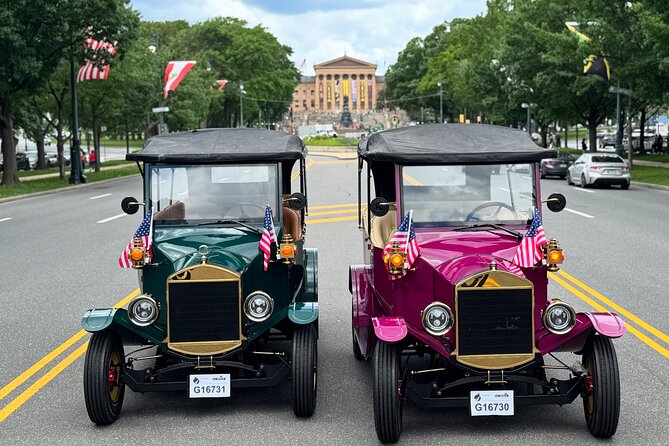
- Vintage car or electric cart gives you a memorable ride without tiring out your legs.
- Big landmark coverage in ~2 hours means you can hit the must-sees even on a tight schedule.
- Frequent short stops let you get oriented and take photos without losing the whole day.
- Memorial stops with real names and dates add weight beyond sightseeing snapshots.
- Guide-led details turn common landmarks (City Hall, Liberty Bell, Independence Hall) into stories you’ll remember.
- Nice pacing for groups up to 22 keeps it manageable and easy to hear along the way.
The core idea: why a car tour makes sense in Philadelphia
Philadelphia rewards people who slow down. The trick is that most first-time visits don’t include enough time to do everything on foot. This kind of tour solves that by putting you into a vehicle for the connections, then letting you get out briefly at the high-impact spots.
You’re not trying to “do” every museum or memorial in one afternoon. Instead, you’re using the car ride to learn what’s where, why it matters, and what you might want to return to later. That’s also why the guide part is important here: you’ll hear context while you’re moving, so the stops feel purposeful.
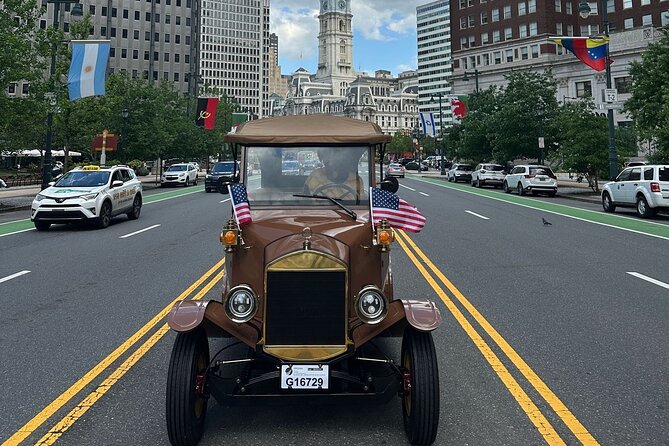
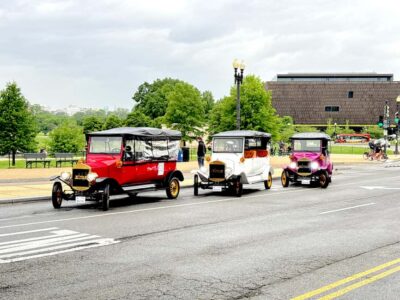
And yes, the ride itself is part of the fun. A vintage car (or electric cart) changes the vibe from standard hop-on hop-off buses. It’s also a strong pick for couples, solo travelers, and families who want structure without the stress of navigating every turn.
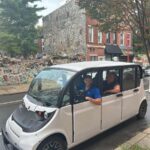
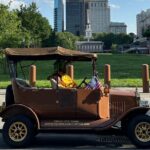
Cover more ground by cart or vintage car
Price and value: what $55.20 buys you (and what it doesn’t)
At $55.20 per person for about two hours, you’re paying for three things: transportation in a vintage car/electric cart, a guided route, and a stop plan that hits major areas efficiently. For many people, the value comes from saving time you would otherwise spend figuring out the best order and then commuting between distant corners of the city.
The part to watch: some stop locations do not have admission included. In particular, the Philadelphia Museum of Art, Philadelphia’s Magic Gardens, the Betsy Ross House, and Independence Hall are listed with admission not included. A few other stops are free, like the Vietnam and Korean War memorials and the Liberty Bell Center.
So the smart approach is this: treat the tour as the guided highlight sequence. If you love a specific site, plan to add tickets separately at your pace.
Meeting point reality check: where you start and how pickup works
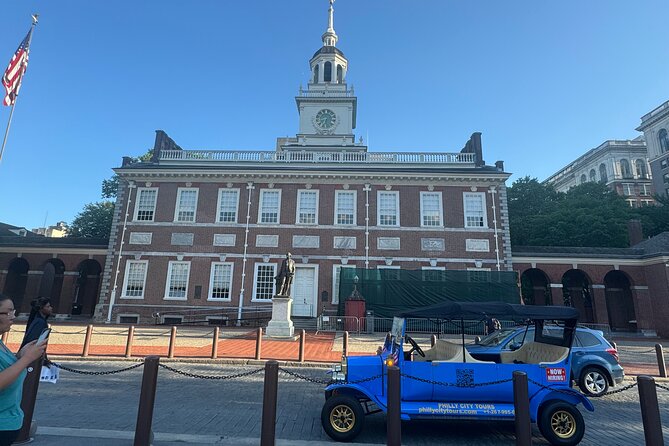
You start at 51 N 12th St, Philadelphia, PA 19107. Look for the Philly City Tours sign, and the tour ends back at the meeting point. Pickup is offered, which can be handy if you’re staying a bit off the central grid.
This starting area also helps you avoid a travel scramble. You’re positioned to reach both the Museum of Art side and the Independence-area cluster without wasting your whole session in transit.
One small practical note: you’ll have a mobile ticket, and confirmation happens at booking. That’s the kind of detail that matters when you’re trying to move quickly in a city with a lot of activity.
City Hall from the street: the 22-foot-thick walls and the Penn statue
The tour kicks off with a powerhouse introduction to Philadelphia City Hall, including a few facts that instantly make the building feel real rather than just impressive on a postcard. You’ll hear that the project cost $25 million at the time and that the walls are 22 feet thick—a reminder of how serious Philadelphia was about building something meant to last.
Then comes the famous timeline: 1901 for completion, and the stature check—548 feet and the claim that it was the tallest building in the world at the time. You’ll also get the headline about the 37-foot statue of William Penn, described as the largest statue atop any building.
Even if you only see City Hall from the outside during a brief stop, the storytelling makes it worth lingering for photos. It sets the tone: this city loves grand statements, and the tour gives you the reason behind the marble-and-stone drama.
Philadelphia Museum of Art in 15 minutes: what you can do with a quick window
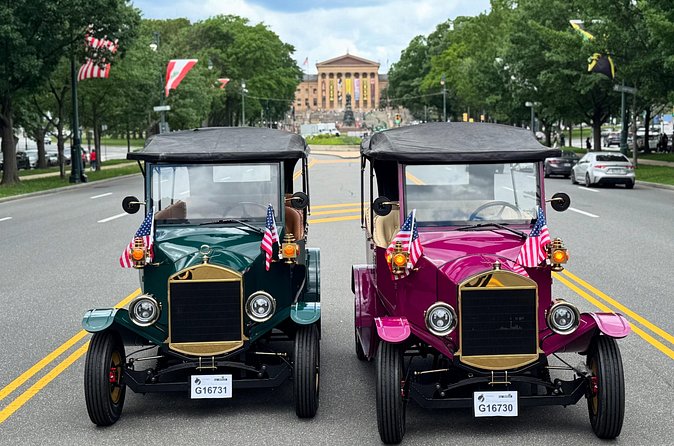
Next up is the Philadelphia Museum of Art (PMA) area, with about 15 minutes there. Admission isn’t included, but you’ll still get time to take in the museum setting and decide whether you want to add entry on your own.
Here’s why PMA works well in a short stop: it’s not just an art institution—it’s also a defining landmark in its own right. The museum was originally chartered in 1876 for the Centennial Exposition in Philadelphia. And it administers collections containing over 240,000 objects, including major holdings of European, American, and Asian origin, spanning sculpture, paintings, prints, drawings, photographs, armor, and decorative arts.
If you’re art-focused, consider using this stop as a taste test. If you see something you want to return for, you’ll have the orientation you need. If you’re not museum-inclined, you can still get something valuable: the photo moment and the context.


Philadelphia’s Magic Gardens: a mosaic maze you can’t skim
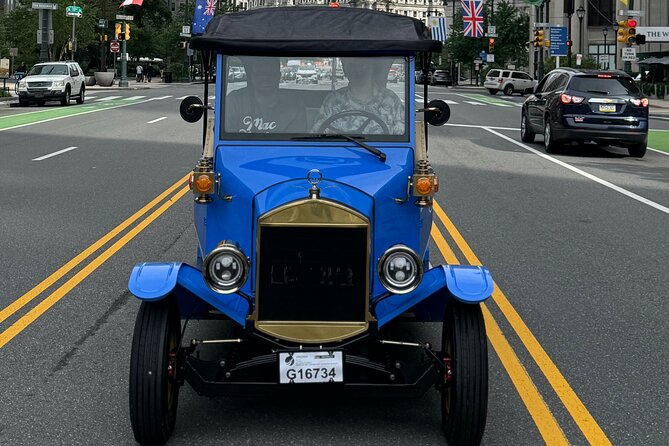
The tour then moves to Philadelphia’s Magic Gardens, with about 10 minutes and admission not included. This is one of those places where photos can’t fully replace being there, but even a short visit helps you understand the scale and the idea.
The attraction was created by mosaic artist Isaiah Zagar, who began working on it in the 1990s. He turned a vacant lot on South Street into a massive mosaic maze using tiles, glass, mirrors, and found objects, inspired by folk art and cultures from around the world.
In a short stop, prioritize one thing: look for patterns. Scan the walls and floors for recurring textures and motifs. If you’re taking pictures, choose a path where you won’t have to backtrack. The whole space is built like a walkable collage, so the best strategy is slow scanning, then one good photo set.
War memorial stops: quick visits that carry real weight
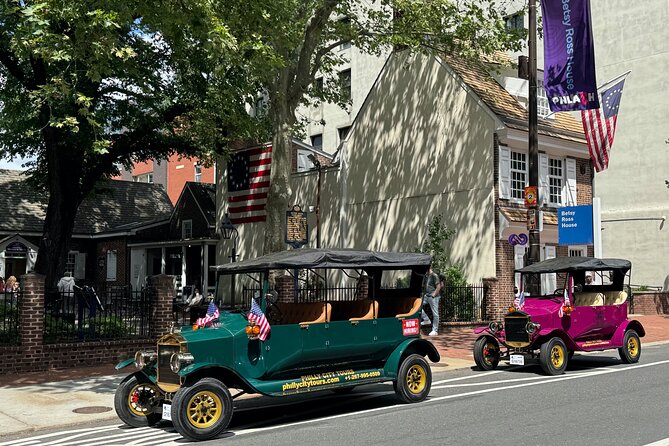
After the art stops, the tour shifts into reflective territory with two memorials designed to be more than passing scenery.
Philadelphia Vietnam Veterans Memorial
You’ll spend about 10 minutes at the Philadelphia Vietnam Veterans Memorial, and it’s free. Dedicated in 1987, it lists the names of 646 Philadelphians who died in the Vietnam War and includes engraved scenes from the conflict. The tour also shares broader context—around 58,000 soldiers lost their lives, with many of those deaths involving young service members around age 20 and below.
This is the kind of stop where you don’t rush. Take your time reading the names, even if it’s just a few minutes. It’s also a good place to put your phone away for a moment and actually look.
Philadelphia Korean War Memorial
Next is the Philadelphia Korean War Memorial, added in 2002. It’s also about 10 minutes and free. Expect black granite pillars that share the war’s history and honor 610 fallen service members from Philly and nearby counties. The broader context shared is that about 36,700 U.S. soldiers lost their lives overall in the conflict.
Together, these memorials change the tone of the tour from sightseeing to recognition. And that matters. They’re part of what makes this route feel like more than a highlights reel.
Betsy Ross House and Elfreth’s Alley: Old City details you’ll notice later
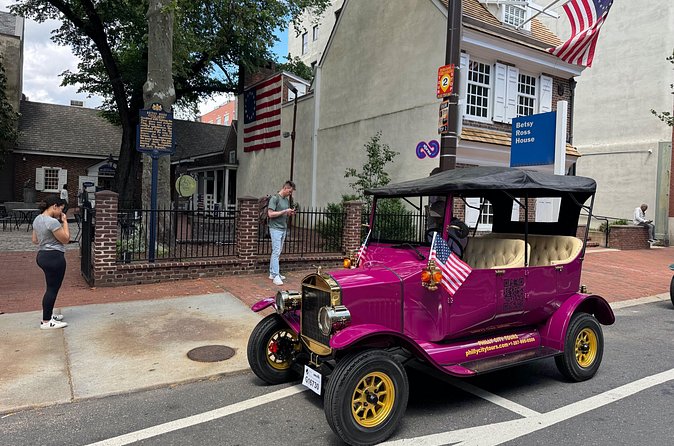
Then you slide into Old City, where the streets feel like a living timeline.
Betsy Ross House
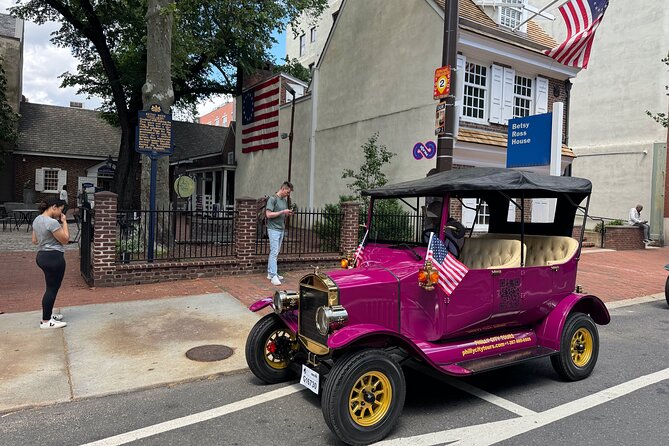
You’ll get around 5 minutes at the Betsy Ross House, and admission is not included. The row home was built in 1740 and restored to about 1777. It commemorates the Betsy Ross legend and history, including the claim that in 1777 she was commissioned by George Washington to create the first American flag.
With only a short stop, treat this as a photo-and-orientation visit. If you want more time inside, plan to come back on another day when you can slow down.
Elfreth’s Alley
Right after, the tour heads to Elfreth’s Alley, which is free and takes about 5 minutes. Built in 1702, it’s described as the oldest continuously lived-on residential street in America. You’ll be looking at 32 charming brick houses from the 1700s and early 1800s, plus cobblestone streets and colonial-style homes.
The street is historically tied to blacksmiths, merchants, and immigrants, and the tour context emphasizes how it still looks like it did centuries ago. There’s also the Elfreth’s Alley Museum to see inside two preserved homes, though you likely won’t have full time for that during a short stop.
If you want a small but meaningful trick: look up and notice window shapes and brick patterns. Old City beauty is often in what you’d normally walk past.
The Independence cluster: Liberty Bell Center and Independence Hall
This is the heart of many Philadelphia trips, and the tour keeps you close to it with short stops designed to help you understand the layout.
Liberty Bell Center (free)
You’ll spend about 5 minutes at Liberty Bell Center, and it’s free. You’ll hear that the Liberty Bell was the official bell of the Pennsylvania State House (today called Independence Hall) and that it rang many times for public announcements. There’s even a specific detail shared about July 8, 1776, when it may have rang for the first public reading of the Declaration of Independence.
You’ll also get the “weight and crack” story: the bell weighs about 2,000 pounds and was silenced by a crack in 1846. In a short stop, this kind of detail turns what could feel like a quick photo line into an actual story you can repeat later.
Independence Hall (admission not included)
Next is Independence Hall, also about 5 minutes, with admission not included. Built in 1732 as the Pennsylvania State House, it’s presented as the birthplace of America. You’ll hear that the Second Continental Congress met there in May 1775, that the Declaration of Independence was adopted on July 4, 1776, and that the Constitutional Convention met there starting September 17, 1787.
In other words: this is where the big dates live. If you want deeper time inside, you’ll likely need to plan separate tickets. But even without full entry, this stop can give you the mental map that makes a later visit far more satisfying.
US Mint, the National Constitution Center, Chinatown, and Reading Terminal Market
The route keeps moving so you can cover multiple Philadelphia “zones” without spending hours commuting.
United States Mint: a coin-making powerhouse
You’ll also get a look at the United States Mint in Philadelphia, established in 1792. It’s described as the largest of the four active mints in the United States and responsible for producing billions of circulating coins, commemorative coins, and medals. Even if you’re not a coin person, it helps you connect Philadelphia’s early government role to the physical objects that still circulate today.
National Constitution Center: interactive Constitution storytelling
You’ll pass the National Constitution Center, located on Independence Mall. It’s described as the first museum in the world devoted to telling the story of the United States Constitution from Revolutionary times to the present, using more than 100 interactive and multimedia exhibits, film, photographs, text, sculpture, and artifacts.
This is a “think about a return visit” stop. The center sounds designed for people who enjoy learning by doing, not just reading. In a two-hour tour format, you’re mostly getting the placement and the context.
Chinatown: immigrant roots to modern food and shops
Next comes Chinatown, with roots traced back to the 1870s and 1880s when Chinese immigrants arrived in Philadelphia. Today, the area is described as home to multiple Asian cultures including Korea, Thailand, and Vietnam, with authentic Asian cuisine, shops, and cultural events.
In a short time window, you can use this stop like a scout mission. If you find a food smell you like, you’ll know where to go next.
Reading Terminal Market: the food payoff
Finally, you land at Reading Terminal Market, one of America’s largest and oldest public markets. It’s housed since 1893 in a National Historic Landmark building and is home to 70+ family-owned, small businesses. Expect locally grown produce, locally sourced meats and poultry, seafood, cheeses, baked goods, and confections.
This is a practical ending. You’ll have a chance to grab something to eat, or at least plan what to order if you come back. It’s also a nice option for families, because it gives you choices without requiring a sit-down reservation.
Vehicle comfort and visibility: the one thing to plan for
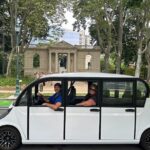
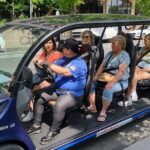
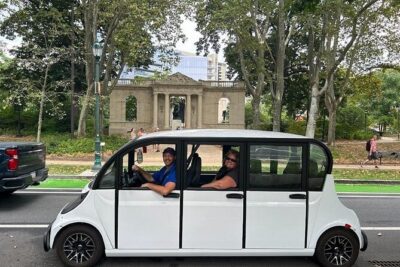
The tour runs in a vintage car or electric cart, and the vehicle style matters for comfort and viewing. Most people love the experience, but one review issue is worth taking seriously: vehicle viewing can be blocked by the top.
The top cover may come down and reduce sightlines. If you’re taller or you care a lot about photos from your seat, contact the company in advance to ask about seating options (they mention XL seats for taller guests). And if the top affects your view during the ride, the guide team can remove it upon request because it’s fully removable.
This is also why I’d suggest picking where you sit based on your priorities. If you want the best exterior photos, choose a spot where you can see over the edge when the top is in place—or be ready to ask for adjustment.
What the guide experience feels like (and why it’s a big deal)
The best part of this tour format is how the guide connects dots while you’re traveling between stops. Names that stood out in the guide praise include Andy, Shane, and others like Parsa and Chaynj. The consistent theme is a mix of history context, humor, and real patience during picture stops.
You’ll also get frequent opportunities to get out, look around briefly, and take photos without feeling like the vehicle is leaving without you. That matters on a short two-hour plan, where every minute counts.
If you’re the type who wants a little structure—someone to explain what you’re looking at instead of guessing—you’ll likely enjoy this.
Who should book this Philadelphia tour, and who should think twice
This is a strong match if:
- You’re visiting Philly for the first time and want high-impact landmarks in one go
- You want guidance (so you don’t spend your limited time Googling what you’re looking at)
- You’re traveling with kids and want less walking between distant stops
- You want a fun ride that still covers the major Independence-area sites
You might think twice if:
- You need long museum or interior time at multiple stops (the tour is short at each location)
- You’re very sensitive to vehicle viewing and want guaranteed full sightlines from your seat
- You want a quiet, slow neighborhood day instead of a structured highlight loop
Small tips that make your two hours go smoothly
- Wear shoes you can move in fast. You’ll step out several times, even if stops are short.
- If you’re planning to add museum entry, pick one priority. Admission isn’t included for several major sites, so you’ll want a plan.
- Bring a phone charger or a power bank if you’re taking lots of photos. Short stops go quick.
- If you’re tall, ask about seating before you go. It can make the difference in what you can see.
- Use the memorial stops as a reset. They’re only minutes, but they add meaning beyond landmarks.
Should you book this vintage car or electric cart tour in Philadelphia?
I’d book it if your goal is efficient orientation plus a few memorable moments you can talk about later. For the price, you’re getting the vehicle, the guided route, and access to the Independence-area landmarks, Old City streets, major art stops, and a food ending at Reading Terminal Market.
I would not book it if you want deep time inside multiple museums. It’s a highlight route. The best way to “win” is to let the tour teach you what’s worth returning for, then build your own follow-up day(s) from there.
If your schedule can handle it and weather cooperates, this is one of the easiest ways to see Philadelphia’s big stories in just two hours. And if you’re lucky enough to catch a guide like Andy, you’ll likely leave with both facts and a smile.
FAQ
How long is the tour?
It runs for about 2 hours (approx.).
What does it cost?
The price is $55.20 per person.
Is pickup included, and where do I meet?
Pickup is offered. The tour starts at 51 N 12th St, Philadelphia, PA 19107, and you should look for the Philly City Tours sign.
Does the tour include admission tickets?
Not for all stops. Admission tickets are not included for the Philadelphia Museum of Art, Philadelphia’s Magic Gardens, the Betsy Ross House, and Independence Hall. Some sites are free, like the Vietnam Veterans Memorial, Korean War Memorial, and Liberty Bell Center.
Which languages is the tour offered in?
The tour is offered in English.
Is tips included in the price?
No. Tips are not included.
What’s the maximum group size?
The tour has a maximum of 22 travelers.
Is the tour dependent on weather?
Yes, it requires good weather. If canceled due to poor weather, you’ll be offered a different date or a full refund.
More Tour Reviews in Philadelphia
Philadelphia by Cart and Vintage Car
Fresh Off the Press: Latest Philadelphia Reviews










Electric Cart & Vintage Car Tours, compared.
 ★ 5.0Philadelphia 2 Hour Electric Cart Tour633 reviews
 ★ 4.82 Hour Electric Cart Tour of Philadelphia with Local GuideFrom $6957 reviews
 ★ 4.5One Hour Tour Of Philadelphia Historical Sites In A Vintage CarFrom $3952 reviews
 ★ 5.0Philadelphia 1-Hour Evening Electric Cart TourFrom $5936 reviews
 ★ 4.9Guided Tour by Vintage Car Day & NightFrom $3912 reviews
 ★ 4.01 Hour Philadelphia Private Guided Tour by Deluxe Electric Car11 reviews
 ★ 5.0Vintage Thrift Quest Walking Tour in Philadelphia6 reviews
 ★ 5.0Philadelphia Evening Electric Cart TourFrom $595 reviews
Browse the lists this tour appears in