
Reviewed · REVOLUTIONARY PHILADELPHIA & THE FOUNDERS
Revolution and the Founders: History Tour of Philadelphia
Philadelphia is history you can walk into.
This tour pairs a focused 1776 storyline with major stops like the Liberty Bell and Independence Hall, plus a guide with a history degree who keeps the details human and easy to follow. I also like the pacing: you cover a lot in two hours, then you’re free to roam on your own. One thing to plan for: it’s largely outdoors, so comfort will depend on the day (lines, cold wind, and the fact that big interiors can be limited by access).
In This Review
- Key things I’d circle before you go
- A two-hour walk that turns Philadelphia into a 1776 story
- Start at Grim Philly Twilight Tours and expect a guided, high-energy pace
- Liberty Bell: the icon everyone recognizes, plus the story you don’t
- Independence Hall: timed entry and what you should expect inside
- Washington’s Philadelphia: the President’s House and Congress Hall
- Franklin Court and the institutions that shaped ideas
- Money and science: the First Bank, Second Bank, and Franklin-linked networks
- Carpenters’ Hall and the secret French connection
- Library Company, Dolley Madison’s house, and the middle-class side of independence
- Price and value: what $29 buys in two hours of guided Philadelphia
- Practical tips so you don’t fight the city
- Should you book this Revolution and the Founders walking tour?
- FAQ
- How long is the Revolution and the Founders history tour?
- What does the tour cost?
- Where do I meet the guide, and where does the tour end?
- Is a mobile ticket used?
- Are Independence Hall timed tickets included?
- Is Liberty Bell interior access included?
- Does the tour run in bad weather?
- Can I get a refund if my plans change?
Key things I’d circle before you go
- A history-degree guide who actually teaches the story, not just the signage
- Liberty Bell + Independence Hall as the core, with timed entry know-how
- A fast-moving walk that keeps your day intact
- Founder-focused stops beyond the headlines (Franklin, money, institutions, and more)
- Small group size (up to 24) for questions and a more personal feel
A two-hour walk that turns Philadelphia into a 1776 story
This is the kind of walking tour that helps Philly click. The route is built around the Revolution and the founders, but it doesn’t stop at monuments. The real value is how your guide connects places to decisions, debates, and the day-to-day reality behind independence.
You get a clean mental map fast: where power sat, where ideas spread, where money mattered, and where key people moved through the city. After the tour, you don’t just know where things are—you understand why they’re there.
And because it’s only about two hours, it works well as your “first taste” of Old City. You can come hungry for history, then spend the rest of your day choosing museums, cafés, and neighborhoods you want to revisit.
Back to 1776 and the men who signed here
Start at Grim Philly Twilight Tours and expect a guided, high-energy pace
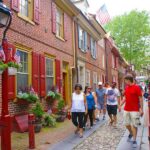
You’ll meet at 523 Market St at Grim Philly Twilight Tours. The tour ends at the Merchant Exchange Building, 143 S 3rd St, right behind City Tavern and near the area where Continental Congress met on Saturdays.
Pace matters here. You’re walking from stop to stop with a guide who keeps things moving quickly—especially around the big headline sites. That’s a plus if you want an efficient overview. It can be a trade-off if you prefer slow wandering and lots of inside time.
Group size is capped at 24 travelers, which usually helps the guide keep the group together and respond to questions. It also means the experience is less like herding cats (still some cats, though, because Philadelphia sidewalks are Philadelphia sidewalks).
Also note the format: mobile ticket, English offered, and runs every morning and every afternoon rain or shine. If weather is rough, your experience will depend on how well you can dress for it.
Liberty Bell: the icon everyone recognizes, plus the story you don’t
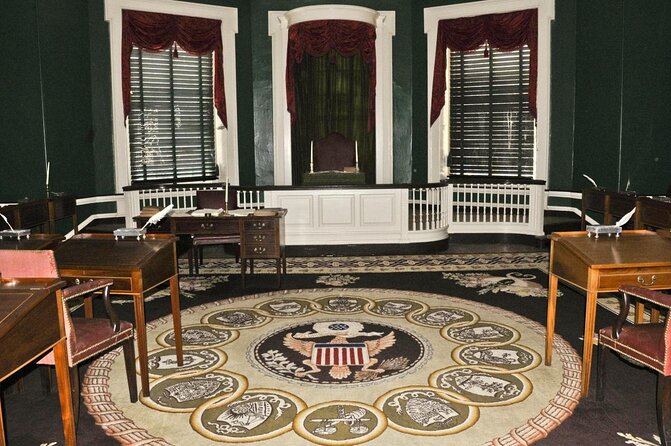
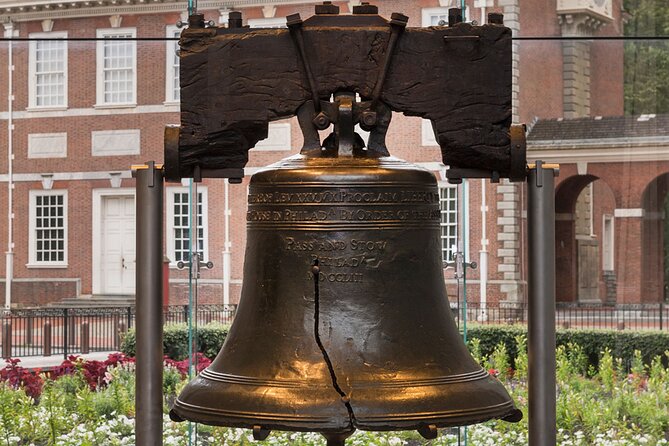
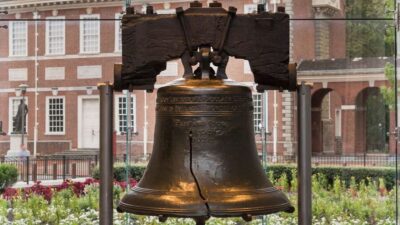
The tour starts at the Liberty Bell area in the National Historic Park. This is the obvious “wow” stop, but your guide’s goal is to make it more than a photo stop.
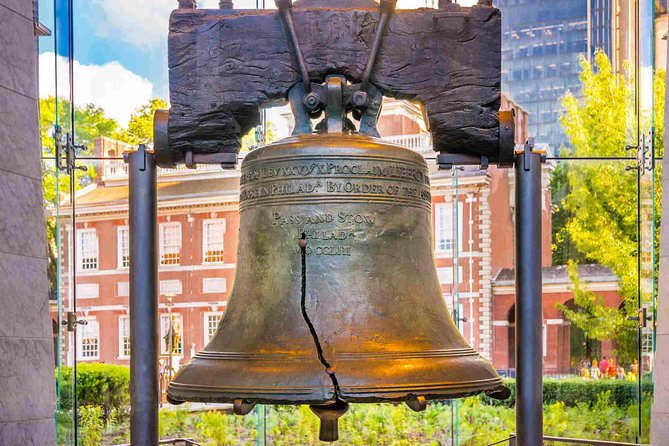
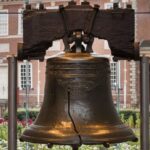
You’ll hear how the bell was commissioned in 1752, cracked on its first test ring, then was recast two years later by local workmen John Pass and John Stow. You also get the meaning behind the famous words on it, including the Biblical line about freedom—phrased as, Proclaim LIBERTY Throughout all the Land unto all the Inhabitants Thereof.
Here’s the practical bit: during peak season, expect lines and delays. One of the tour’s benefits is that your guide talks through the bell’s creation and significance from the exterior pavilion area, then gives clear guidance on whether it’s worth spending extra time for interior access.
If you choose the interior option, plan for extra time. The upside is that the bell becomes more real when you can see it up close. The drawback is timing: your two-hour tour is designed to keep the group moving, so your best bet is to decide early if you want that extra stop.
Independence Hall: timed entry and what you should expect inside
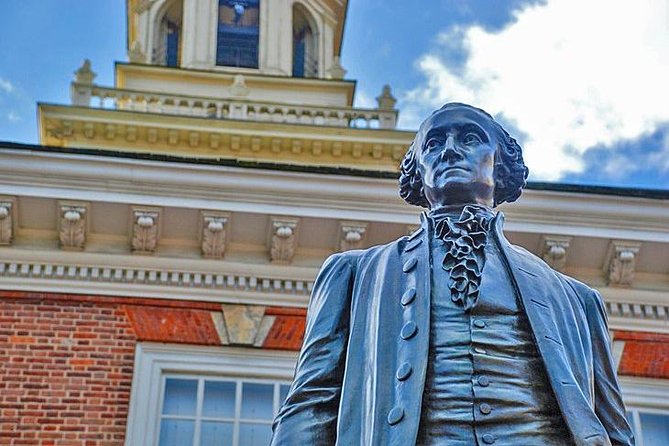
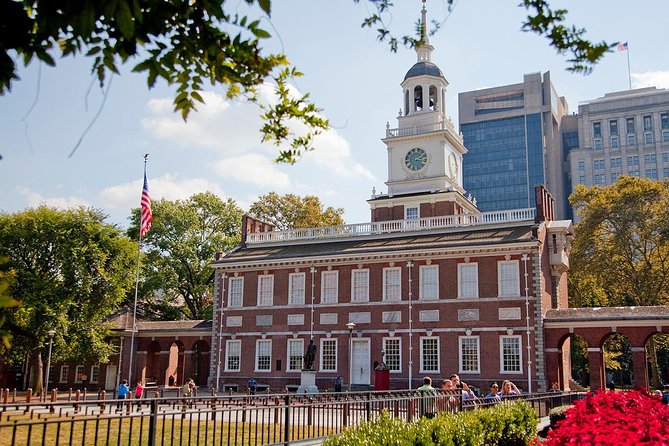
Next is Independence Hall, the place where the Declaration of Independence and the U.S. Constitution were debated and adopted. This complex is a magnet for visitors, and access is managed with free timed entry passes.
The tour keeps it efficient. You’ll get quick, clear instructions on how to navigate the complex, plus a short visit inside the East Wing, described as serving as Supreme Court Chambers when Philadelphia was the nation’s capital.
A key consideration: since timed entry and hours can shift with crowds, you’ll want to follow your guide’s directions carefully. Your visit inside is likely not an “everything, in-depth” museum experience. It’s more like: see the most important rooms and learn what they meant, then move on so you don’t lose the rest of the story.
If you’ve been to big historic buildings before and found them overwhelming, this approach will probably feel refreshing. You’ll leave with the “why” and the layout, then you can decide later if you want to return for more.
Washington’s Philadelphia: the President’s House and Congress Hall

After Independence Hall, the tour swings into the city’s government days. You’ll see America’s first “White House”—the President’s House, where both George Washington and John Adams served while Philadelphia was the U.S. capital from 1790 to 1800.
This stop works because your guide ties the building to the kinds of meetings that happened there: official and unofficial business with foreign dignitaries and members of Congress and Senate. The tour also points out that Benedict Arnold lived in the structure as Military Governor in Philadelphia after the British evacuation during the war.
Then you move to Congress Hall, another essential piece of the puzzle. This is where presidential inaugurations took place (Washington and Adams), and where U.S. Congress met while Philadelphia was the capital.
Both of these stops can feel “less dramatic” than the Liberty Bell and Independence Hall from the outside. That’s where your guide’s interpretation matters. You start to see that independence wasn’t just speeches and symbols—it was rooms full of negotiations, decisions, and constant logistics.
Deeper into old Philadelphia

Franklin Court and the institutions that shaped ideas
If the Revolution was a team sport, Benjamin Franklin was a major player. The tour spends time around Franklin Court, within Independence National Historical Park. You’ll connect Franklin to the Constitutional Convention era and also hear his famous “hang together” line in the context of resisting the British crown.
From there, you’ll visit additional places that bring Franklin’s world into focus:
- The location tied to America’s first Pentagon, where military strategy and intelligence were formulated during the Revolution.
- The Benjamin Franklin Post Office & Museum, described as the only Colonial-themed post office operated by the U.S. Postal Service. It’s also notable for the idea that it doesn’t fly the American flag, since there wasn’t one in 1775 when Franklin was appointed Postmaster General. You’ll even see the postmark style used to cancel stamps: B. Free Franklin.
This is where the tour becomes more than a political walking route. You get a sense of how communication, experimentation, printing, and public institutions helped ideas travel. Franklin’s electrical experiments and publishing activities are mentioned as part of the tour’s Franklin storyline.
Practical reality: some of these sites may be exterior-facing or limited by hours and access. The format is designed for movement, so you should think of it as a guided route for learning first, then a prompt for what to see more deeply on your own later.
Money and science: the First Bank, Second Bank, and Franklin-linked networks

The tour doesn’t treat independence like it happened in a vacuum. It moves into economics and institutions—places where survival and state-building got serious.
You’ll visit the First Bank of the United States, founded in 1797 and championed by Alexander Hamilton as Secretary of the Treasury. Architectural design matters here, but the bigger point is how early America tried to stabilize finances and power through institutions.
Then you’ll see the Second Bank of the United States, chartered in 1816 by President James Madison and later losing its charter under Andrew Jackson in 1834. Hamilton and Jackson come up again, including the duel story your guide connects to their competing visions and personalities.
Next, the tour passes the American Philosophical Society, founded in 1743 by Benjamin Franklin. Early members listed include George Washington, John Adams, Thomas Jefferson, Alexander Hamilton, Thomas Paine, David Rittenhouse, and others. This stop is especially useful if you like the idea that the Revolution was also about learning, debate, and research—not just war.
You’ll also walk near the University of Pennsylvania and an adjacent mention of America’s first surgical center, tied to the tour’s Franklin and institutions thread.
If you’re curious about how knowledge spread, this section gives you names and a timeline you can actually place in your head.
Carpenters’ Hall and the secret French connection
Now you get a more strategic, less-famous part of the founding story: Carpenters’ Hall. This is the site of the First Continental Congress in 1774.
Your guide also points out that in December 1775, Franklin held secret meetings there with John Jay, Fancis Daymon, and the French spy Julien Achard de Bonvouloir. These negotiations are framed as critical for securing French support—something your guide emphasizes as a major factor in the colonists’ ability to win the Revolutionary War.
Then there’s a shift in timing: British forces occupying the American capital during the war and later occupying this building are mentioned as part of the site’s layered history.
This stop is a good reminder that revolution isn’t just homegrown persuasion. It’s alliances, intelligence, risk, and diplomacy. If you like the human chess behind major events, this will likely be one of your favorite stops.
Library Company, Dolley Madison’s house, and the middle-class side of independence
The tour keeps zooming out from leaders to systems and everyday life. You’ll see the Library Company, founded by Benjamin Franklin in 1731, described as the first institution in the world to lend materials to the public.
That single detail changes how you picture Franklin. He’s not only a thinker in letters. He’s building infrastructure for people to learn.
Then you’ll visit the home of future First Lady Dolley Madison—the Dolley Todd House site, where she lived with her first husband, John Todd, from 1791 to 1793. The tour frames this as a snapshot of middle-class lifestyle in 18th-century Philadelphia.
This is a useful balance against the heavy political stops. It reminds you that the founders were living in real neighborhoods, not history textbooks.
Price and value: what $29 buys in two hours of guided Philadelphia
At $29 per person for about two hours, the value is mostly in the guide and the routing.
You’re not paying for a private car or a slow stroll. You’re paying for:
- A history-degree guide who ties the places together.
- A structured path through the most important sites, so you don’t spend your day guessing what matters.
- Free timed entry passes for Independence Hall, which can be the difference between seeing the place and just standing in lines.
- A short orientation introduction before you start moving.
The tour also gives you optional choices—like whether to spend extra time for Liberty Bell interior access. That’s a nice way to match the tour to your energy level that day.
If you’re visiting Philadelphia for the first time and want to understand the Revolution without building your own plan from scratch, this is a solid spend. It’s also ideal if you want to come out with names, dates, and a route you can revisit later.
If you’re the type who loves long museum time and quiet reading, you might feel a little rushed. That’s not a problem with the tour—it’s a fit issue.
Practical tips so you don’t fight the city
- Wear real walking shoes. You’ll be on foot for the full experience.
- Dress for the weather. It runs rain or shine, and Philadelphia can be surprisingly sharp in cold months.
- If you want interior time at Liberty Bell or extra time at Independence Hall, you’ll need to manage your minutes. The tour is built to prioritize highlights.
- For the best odds of a great guide, consider requesting one of the standout names you may see offered (people mentioned Josh, Kyle, Ted, Joseph, and Vince). Different guides bring different styles, from dramatic storytelling to brisk expert explanations.
Also: this is a group tour with a maximum of 24 people, so your best experience comes when you listen for instructions and stay close at each stop.
Should you book this Revolution and the Founders walking tour?
Yes—if you want a quick, meaningful “first overview” of Philadelphia’s founding era. I’d book it when you care about the story behind the sights and you like learning with a guide who connects places to events.
Skip or consider a different format if you:
- Hate cold-weather walking and need a mostly indoor plan
- Prefer deep, unhurried museum time over a packed highlights route
- Expect guaranteed long interior access everywhere (this tour prioritizes highlights and timed entry areas)
For most first-timers, though, it’s a smart way to see the big icons—then leave with a framework for what to do next.
FAQ
How long is the Revolution and the Founders history tour?
It lasts about 2 hours.
What does the tour cost?
The price is $29.00 per person.
Where do I meet the guide, and where does the tour end?
You meet at Grim Philly Twilight Tours, 523 Market St, Philadelphia, PA 19106. It ends at the Merchant Exchange Building, 143 S 3rd St, Philadelphia, PA 19106.
Is a mobile ticket used?
Yes, the tour includes a mobile ticket.
Are Independence Hall timed tickets included?
Yes. Independence Hall requires free timed entry passes, and the tour includes this.
Is Liberty Bell interior access included?
The tour provides exterior viewing and directions for interior access. Interior of the Liberty Bell pavilion is described as an additional hour option for those who want it.
Does the tour run in bad weather?
It runs rain or shine. If it’s canceled due to poor weather, you’ll be offered a different date or a full refund.
Can I get a refund if my plans change?
Free cancellation is available up to 24 hours in advance for a full refund. If you cancel less than 24 hours before the start time, it isn’t refundable.
More Tours in Philadelphia

More Tour Reviews in Philadelphia
Revolutionary Philadelphia, a Little Further


Fresh Off the Press: Latest Philadelphia Reviews









Revolutionary Philadelphia & the Founders, compared.
 ★ 5.02.5 Hour Philadelphia History Tour with Washington War Tent ShowFrom $45924 reviews
 ★ 4.6Revolution and The Founders History TourFrom $29450 reviews
 ★ 4.9History, Highlights & Revolution Walking TourFrom $45317 reviews
 ★ 4.8Revolutionary Walk Through Historic Old CityFrom $35208 reviews
 ★ 4.5Museum of the American Revolution Admission Ticket with Audio Guided OptionFrom $25187 reviews
 ★ 4.5Founding Phantoms Adult’s Only Walking TourFrom $3498 reviews
 ★ 4.8Museum of the American Revolution EntryFrom $2790 reviews
 ★ 3.5Valley Forge Revolutionary War Self-Guided Driving TourFrom $1647 reviews
Browse the lists this tour appears in