
Reviewed · REVOLUTIONARY PHILADELPHIA & THE FOUNDERS
2.5 Hour Philadelphia History Tour with Washington War Tent Show
Philly’s founding story, on foot and on schedule. This 2.5-hour small-group walk stitches together Old City landmarks with an included Washington War Tent presentation at the Museum of the American Revolution. You also get a guided narrative that keeps the big names connected to what happened on the streets of Philadelphia.
I like how the route hits both the official power sites and the parts people actually lived in, including one stop on one of America’s oldest residential streets. I also like that Independence National Historical Park is the backbone of the walk, with a discounted museum ticket after the tour so you can keep exploring at your pace.
One thing to consider: several of the major buildings are viewed from the outside, so this is best if you want context and orientation more than a bunch of inside ticket time. Expect a smart walking day, not a sprint through every single room.
In This Review
- Key Highlights You Can Actually Plan Around
- From Signer’s Garden to Old City: the tour’s smart start
- Old City power stops: Independence Hall, Congress Hall, and Old City Hall
- Liberty Bell myth-busting, and what you should not expect to enter
- Washington’s War Tent at the Museum of the American Revolution
- Elfreth’s Alley and the joy of walking real old streets
- Carpenters’ Hall, Franklin’s grave, and the layers of the city
- Betsy Ross House passed-by time, and why it still matters
- Price, pacing, and who this 2.5-hour walk fits best
- Should you book this Philadelphia history walking tour?
- FAQ
- How long is the 2.5 Hour Philadelphia History Tour with Washington War Tent Show?
- Where do I meet and where does the tour end?
- What’s included in the ticket price?
- Do we go inside Independence Hall or the Liberty Bell Center?
- Is the Museum of the American Revolution ticket included?
- How big is the group?
Key Highlights You Can Actually Plan Around
- 2.5-hour small group format (max 12 travelers), so questions don’t get swallowed
- Independence National Historical Park focus, with the core Revolutionary landmarks in one route
- Included George Washington’s War Tent presentation at the Museum of the American Revolution
- A discounted entry ticket for the museum after your tour ends, letting you go deeper later
- Stops that correct common myths around places like the Liberty Bell and the Betsy Ross story
- A walk that mixes government history with daily life on Elfreth’s Alley
From Signer’s Garden to Old City: the tour’s smart start
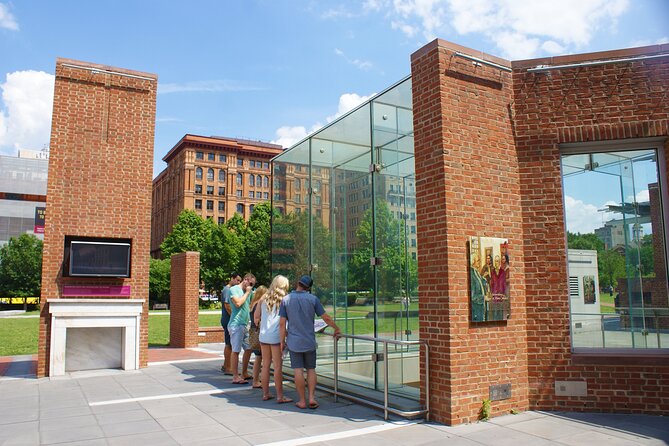
The experience kicks off at Signer’s Garden at the statue of The Signer, located at 434-498 Chestnut St. It’s a good warm-up because it sets the tone: the statue is meant to represent all the signers of the Declaration of Independence and U.S. Constitution, and the idea of freedom they stood behind.
Starting here also helps you understand what comes next. Instead of jumping straight to the most famous postcard stops, you begin with the bigger concept: why these leaders mattered and what they were trying to build. I like that this makes the rest of the walk feel like one connected story, not random sightseeing.
The day runs through some of Philadelphia’s most central history areas, and you finish in Old City. That ending location is practical, because it means you can head to dinner without a long transit plan.
Back to 1776 and the men who signed here


Old City power stops: Independence Hall, Congress Hall, and Old City Hall
This is where the tour earns its keep: you concentrate on Independence National Historical Park and the surrounding Revolutionary-era buildings that shaped the country. You’ll see Independence Hall, Congress Hall, and Old City Hall as part of the guided route, with time built in for explanation rather than rushing.
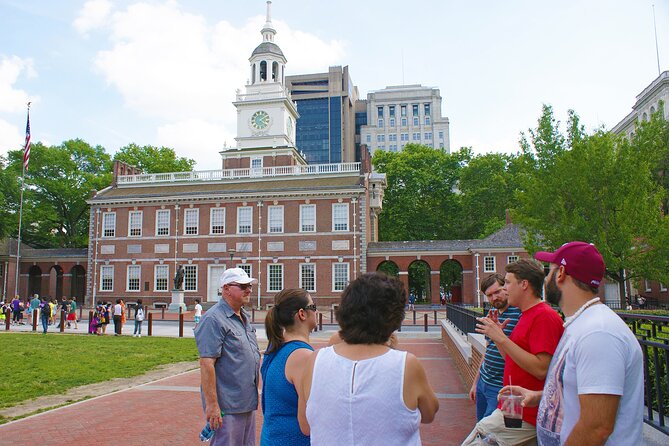
At Independence Hall, the emphasis is on the philosophies and the trials and triumphs of the Founding Fathers who worked there. Even though the tour description notes the visit includes seeing Independence Hall from outside, that can actually be a plus for first-time visitors. From street level and from viewing angles around the complex, you get a sense of location and layout, so you understand where events fit into a bigger political picture.
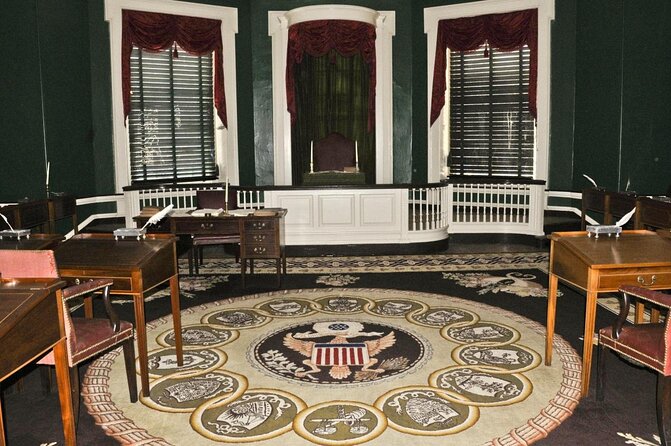
Congress Hall follows as one of the adjoining buildings, the original home for the U.S. Congress. The tour treats it as part of the same origin story, not a “bonus stop.” And Old City Hall rounds out the political timeline by connecting the building to how modern democracy was shaped and how founding members and ideas played out in real time.
In short: if you want a guided orientation to Philadelphia’s founding sites, this format works. It keeps you focused on what each place meant and how they connect, instead of letting you get lost in the logistics of which building is where.
Liberty Bell myth-busting, and what you should not expect to enter
At the Liberty Bell Center, the tour aims to do something useful: it talks history and also helps dispel myths. That matters, because the Liberty Bell story is one of those topics where pop culture can overwrite the details.
You should also know the limits of the day. The tour information lists Liberty Bell Center as a stop with admission not included, and the experience is described as a walking tour through Old City. In practice, that means you’re not relying on this day to be your only chance at a deep visit inside the venue.
The practical takeaway: plan to use this tour for the explanation and big-picture context, then decide if you want to add extra time for inside viewing on your own later. If you’re the type who likes facts and context before you take photos, you’ll appreciate this stop’s tone.
Washington’s War Tent at the Museum of the American Revolution
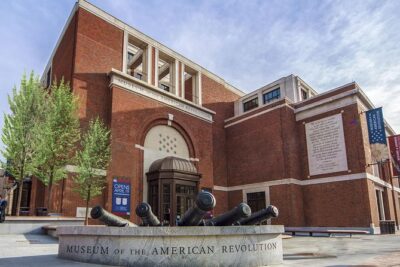
If you’re deciding whether this tour is worth your time, this is the part that tips the scale. The walk includes a trip to the Museum of the American Revolution, where you go inside for a presentation centered on George Washington’s War Tent. The tent itself is described as being present during many critical Revolutionary War moments, which gives the tour a memorable “this is what it looked like” anchor.
After the presentation, you’re set up to keep going. You get a discounted entry ticket to see more of the museum after your tour ends. That’s smart value design: you get the guided highlight during the walk, then you’re not forced to do the entire museum on someone else’s schedule.
This is also where small-group touring feels most useful. A good guide can point you toward what to watch for during the presentation, and it’s easier to ask follow-up questions without being rushed.
If your schedule in Philadelphia is tight, I like that the included museum moment makes the tour feel “complete” instead of ending with only exterior views.
Elfreth’s Alley and the joy of walking real old streets
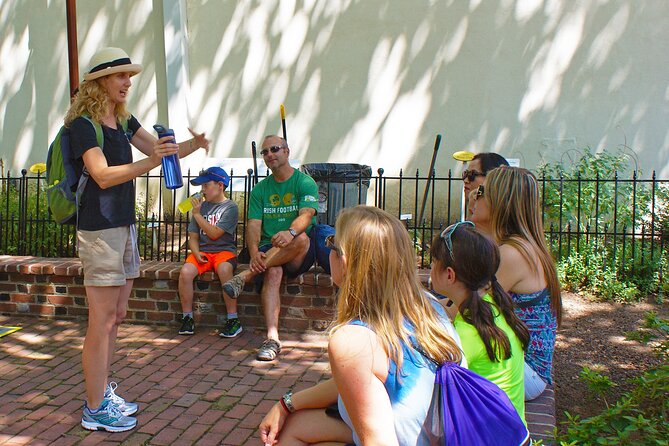
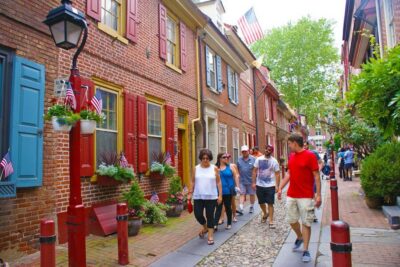
One of the nicest surprises is Elfreth’s Alley, described as the oldest continuously-occupied residential street in the United States. You’ll spend time learning about the brick work, narrow homes, and early 1700s-era architecture that still shapes the look of the street today.
This is a different kind of history than the landmark buildings. It’s about everyday life. And that contrast is why the walk works so well for many people: you get the political story at the major sites, then you get a visual reminder that real humans lived in the same city where big decisions were made.
The stop is short, but it’s timed well. You’re not exhausted by the end of the tour, yet you’ve already built the historical context. That makes the alley feel less like a scenic detour and more like an extension of the Revolution era.
Deeper into old Philadelphia



Carpenters’ Hall, Franklin’s grave, and the layers of the city
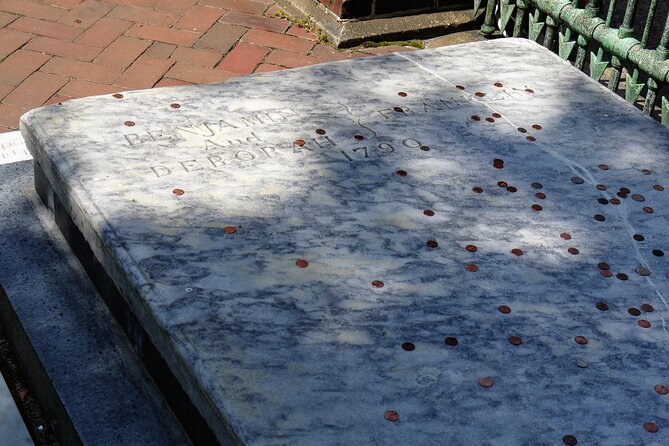
The tour doesn’t just name-check famous sites. It also connects them to the way Philadelphia was organized during the founding era.
At Carpenters’ Hall, you’ll see the building from the outside while hearing why it matters. It’s tied to the Commonwealth of Pennsylvania being founded and also to the first Continental Congress. That’s a big deal: it helps you see Philadelphia as a place where multiple phases of nation-building happened, not just one dramatic moment.
Then you continue along Arch Street to Benjamin Franklin’s grave, with the tour framing him as an inventor and key figure in American history. This is the kind of stop that doesn’t need a long visit to land well, because it gives you a clear anchor point in the city’s story.
Next comes The President’s House, where George Washington and John Adams lived while president. The tour also notes that enslaved people lived at this location and that the site is still an active archaeological location. Even if you only see it from the street, that combination of details adds weight. It turns a famous name into a real place with real people and real consequences.
One practical note: this portion of the walk is where you’ll feel how Philadelphia’s center is laid out. The tour keeps moving, so good shoes matter.
Betsy Ross House passed-by time, and why it still matters
You’ll pass by the Betsy Ross House area and hear about Betsy Ross as a seamstress and flag maker. The tour specifically calls out myth correction, which is useful because the Betsy Ross story is one of the most repeated origin narratives in American flag history.
Since the stop is described as something you pass by (with admission not included), don’t treat it like a full museum experience. Treat it like a quick guided correction and context moment that enriches what you already know, or what you thought you knew.
If you’re traveling with kids or family members who have heard versions of these stories, this kind of myth-busting can be a hit because it turns “fact checking” into something interactive.
Price, pacing, and who this 2.5-hour walk fits best
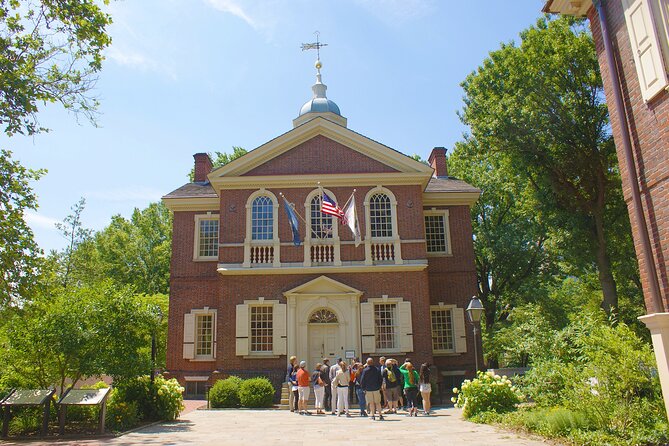
For $45 per person and about 2 hours 30 minutes, the value comes from what you actually get inside that window. You’re not paying just for a photo walk. You get guided interpretation across the main Revolutionary landmark cluster, plus an included museum presentation, plus a discounted follow-up ticket for the museum afterward.
The small-group size (maximum of 12 travelers) also matters for value. When the group is that size, guides can answer questions and adjust pacing. The reviews you provided back that up with examples of guides like Tom, PJ, Adam, and John keeping the energy up and fielding lots of questions without losing the thread.
Pacing is another strength. Several guides are described as animated and fun, and the tour is built to keep momentum without feeling like a forced march. Still, it’s a walking tour, so if you’re dealing with mobility limits or you just don’t like being on your feet for stretches, you’ll want to plan carefully.
This tour is a great fit for:
- First-time Philly visitors who want a practical overview fast
- History lovers who like connecting leaders to places you can see in real life
- Families who want an organized route that keeps attention from stop to stop
- Anyone planning to do the Museum of the American Revolution anyway and wants a guided reason to go
It’s less ideal if:
- You need maximum time inside ticketed venues
- You’re hoping for a full Liberty Bell Center interior visit as part of the included plan
The included donation to a local historic organization is a nice bonus too. It nudges the day from pure sightseeing into something that helps preserve the story.
Should you book this Philadelphia history walking tour?
I think you should book it if you want a tight, guided Revolutionary roadmap that also gives you one memorable indoor moment at the Museum of the American Revolution. The combination of the Independence-area landmark route plus the included War Tent presentation is a strong one-two punch, especially if your schedule is short.
If you’re the type who likes to understand the why before you photograph the what, you’ll likely enjoy the myth-busting stops and the way the guide connects themes across buildings. And if you want a small-group experience, this format (max 12) is built for real conversation.
If your priority is spending lots of time inside every major venue, you might feel more satisfied by planning extra standalone time after the tour. But as a first stop in your Philly history plan, this is one of the cleaner ways to get oriented and leave with a clearer picture of how the founding era looked and worked on the ground.
FAQ
How long is the 2.5 Hour Philadelphia History Tour with Washington War Tent Show?
The tour is listed as about 2 hours 30 minutes.
Where do I meet and where does the tour end?
You start at Signer’s Garden, 434-498 Chestnut St, Philadelphia, PA 19106. The tour ends in Old City, Philadelphia.
What’s included in the ticket price?
The tour includes a knowledgeable local expert guide, a presentation featuring George Washington’s War Tent at the Museum of the American Revolution, and a discounted entry option to the museum after the tour. It also includes a donation to a local non-profit historic organization.
Do we go inside Independence Hall or the Liberty Bell Center?
Independence Hall is described as being seen from outside, and Liberty Bell Center is listed with admission not included. So you should not count on an inside visit as part of the tour.
Is the Museum of the American Revolution ticket included?
Yes, you go inside for the War Tent presentation, and you receive a discounted ticket to see the rest of the museum after the tour.
How big is the group?
The tour lists a maximum of 12 travelers.
More Tours in Philadelphia




More Tour Reviews in Philadelphia
Revolutionary Philadelphia, a Little Further



Fresh Off the Press: Latest Philadelphia Reviews












Revolutionary Philadelphia & the Founders, compared.
 ★ 5.0Revolution and the Founders: History Tour of PhiladelphiaFrom $292,944 reviews
 ★ 4.6Revolution and The Founders History TourFrom $29450 reviews
 ★ 4.9History, Highlights & Revolution Walking TourFrom $45317 reviews
 ★ 4.8Revolutionary Walk Through Historic Old CityFrom $35208 reviews
 ★ 4.5Museum of the American Revolution Admission Ticket with Audio Guided OptionFrom $25187 reviews
 ★ 4.5Founding Phantoms Adult’s Only Walking TourFrom $3498 reviews
 ★ 4.8Museum of the American Revolution EntryFrom $2790 reviews
 ★ 3.5Valley Forge Revolutionary War Self-Guided Driving TourFrom $1647 reviews
Browse the lists this tour appears in