
Reviewed · MURALS, STREET ART & ART MUSEUM
Small-Group Public Walking Tour Exploring Philadelphia’s Gilded Age to Now
Architecture tells Philly’s story. This small-group tour links the Gilded Age to today, and I like the way it turns street corners into design lessons plus city politics; I also like that the group is capped at eight so your questions actually get answered. One heads-up: it’s mostly walk-and-look, with stops that can be exterior-focused, so plan for a steady pace for about 2.5 hours.
You get a guided route through some of the city’s most recognizable buildings—market halls, art institutions, grand hotels, and modern towers—without feeling like you’re stuck on a bus. The price is $45 per person, and with a mobile ticket and frequent landmark stops, it’s a good value if you want context fast. Dress for real walking in real weather; the tour runs in all weather, but if conditions get too poor, you may be offered another date or a refund.
In This Review
- Key things to know before you go
- Why Philadelphia’s building styles change so fast
- Small-group size makes the walking feel human
- Reading Terminal Market: old-school food hall energy
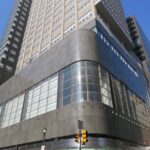
- Loews Philadelphia Hotel and PSFS: international style shows up early
- Pennsylvania Academy of the Fine Arts: Frank Furness meets 1876 ambition
- The Masonic Temple: big exterior drama, optional interior rewards
- City Hall Visitor Center: 2nd Empire Baroque and William Penn’s big moment
- Macy’s and the Wanamaker world: Art Deco facade plus a grand court
- Ritz-Carlton and the Girard Bank to Land Title building: Furness and Burnham’s ambition
- Union League of Philadelphia: a Civil War-era club with architectural status
- Bellevue Hotel (Unbound Collection by Hyatt): Beaux-Arts with a French chateau look
- Academy of Music: an opera house turned orchestra home
- Drexel Building: a Renaissance palazzo copy in the middle of modern finance
- Liberty Place and the height agreement that snapped in the 1980s
- Comcast Center: modern glass, modern form, and the innovation center’s zig-zag pattern
- Penn Center and Suburban Station: Art Deco built for speed
- Love Park: your finale at the William sculpture and a view toward the Parkway
- Price and value: is $45 worth 2.5 hours?
- What to wear, how to pace yourself, and what to expect
- Who this tour is best for
- Should you book this Philly Gilded-Age to Now walking tour?
- FAQ
- How long is the tour?
- What does it cost?
- How big is the group?
- Is the tour guided and what language is it in?
- Where does the tour start and end?
- Are there any admission fees during the tour?
- What’s the minimum age and how active is it?
Key things to know before you go
- Small group (max 8): More conversation, less shuffling around.
- Design timeline from old to new: You’re not just seeing famous spots, you’re seeing style changes.
- A lot of quick-hit landmarks: Many stops are about 5–15 minutes, so bring your curiosity.
- Two places may cost extra: The Pennsylvania Academy of the Fine Arts and the Masonic Temple interior tours are not included.
- Mobile ticket + transit-friendly area: Easy to manage on foot.
Why Philadelphia’s building styles change so fast
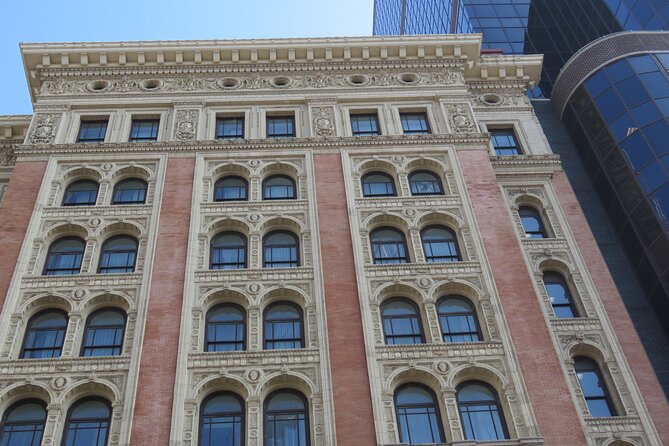
Philadelphia makes architecture feel like a language you can read on foot. One block can show a 19th-century style tied to a specific moment in the city, then the next block can show how planning, money, and technology changed what got built.
That’s the core idea here: you’ll walk a tight route where each stop has a reason to exist, not just a pretty facade to admire. And the guide’s job isn’t just pointing; it’s connecting design choices to the era you’re standing in—so you start seeing patterns instead of isolated monuments.
Follow more of the mural mile and the Art Museum

Small-group size makes the walking feel human
With a maximum of 8 travelers, the pace stays manageable and the tour doesn’t turn into a sprinting herd. This matters more than you’d think, because many of these buildings are best understood by noticing small cues: materials, rooflines, how the facade is organized, and how the building relates to the street.
It also helps for the most practical part of a walking tour: questions. If you’re the type who wonders why a style looks the way it does, or how one landmark connects to another, you’ll get more direct answers than you would on a larger group tour.
Reading Terminal Market: old-school food hall energy
You start at Reading Terminal Market, a longtime indoor market with roots in the 1890s. It’s one of those places where the building feels like it belongs to an older America, even though it has evolved over time.
This is a great first stop because it sets the tone: Philly isn’t only about marble and monuments. A market like this shows how daily life shaped the city’s growth. Expect about 5 minutes—enough time to orient yourself and notice the setting—then you’re moving on.
Loews Philadelphia Hotel and PSFS: international style shows up early
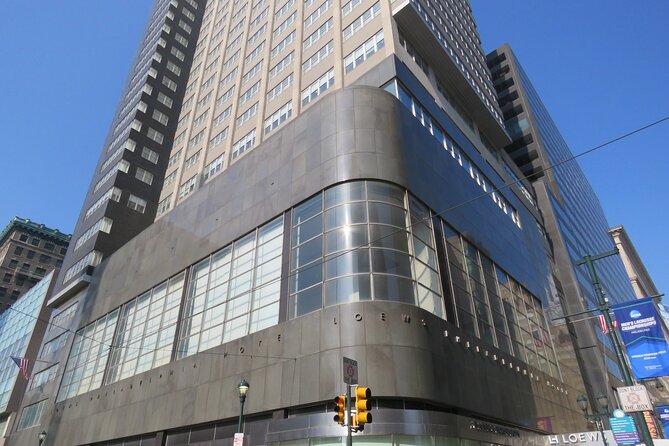
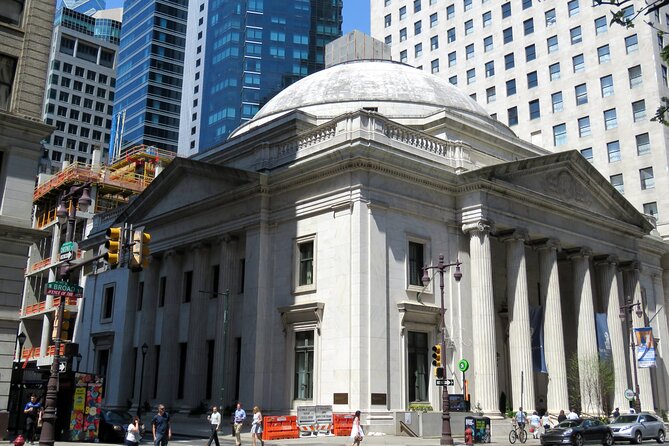
Next comes Loews Philadelphia Hotel, where the story centers on PSFS—often described as the first International Style building in the U.S. The design was created during the Depression through collaboration between a local architect and a Swiss designer, using principles linked to Bauhaus and European architecture.
Even if you’re not an architecture nerd, it’s a useful stop. You’ll see how modernism arrived through real-world constraints—economic pressure, design thinking, and the desire to look forward.
Pennsylvania Academy of the Fine Arts: Frank Furness meets 1876 ambition
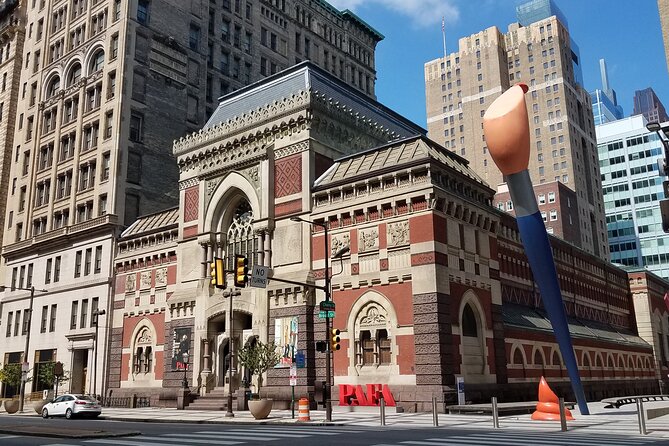
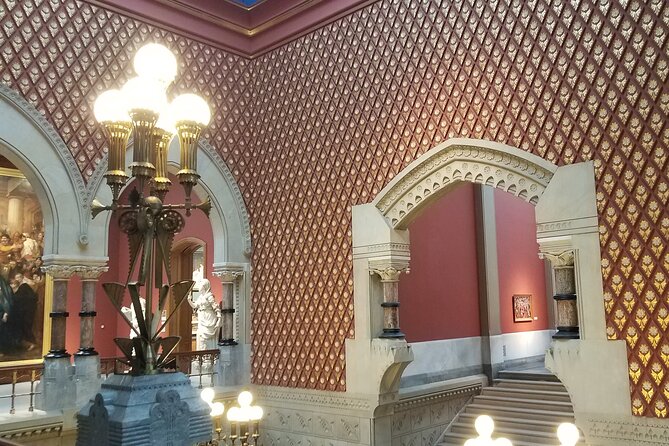
From international modernism, you shift into 19th-century design with the Pennsylvania Academy of the Fine Arts (PAFA). It’s the oldest art school in the U.S., and it’s also strongly associated with Frank Furness and his High Victorian Gothic work.
This is one of the stops where you may want to decide how much you want to go inside. Admission is not included, so you’ll likely spend part of your 10 minutes outside unless you’ve planned for entry. Either way, it helps you understand how Philly treated art education as a serious civic mission—especially with the connection to the Centennial Exposition of 1876.
Philly at a walking pace, more routes




The Masonic Temple: big exterior drama, optional interior rewards
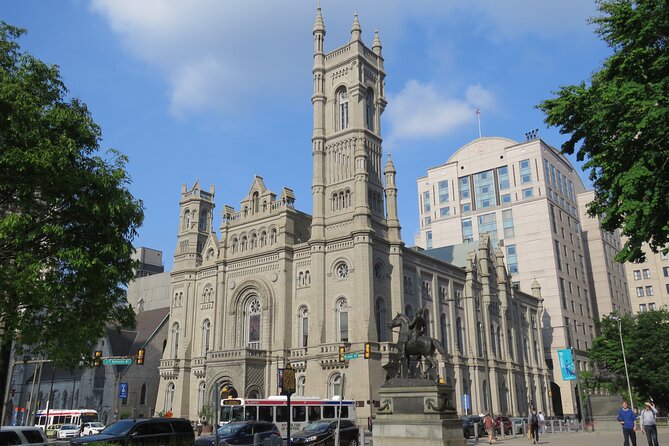
You get a look at the Masonic Temple exterior, built just after the Civil War in a Romanesque or Norman Castle style. The exterior is meant to feel weighty and ceremonial—like power made visible through stone shapes and massing.
Interior access is the question here. The interior rooms can be spectacular, but that visit is not included in your tour. If you’re hoping for maximum wow-factor, bring extra time and consider reserving an interior tour separately.
City Hall Visitor Center: 2nd Empire Baroque and William Penn’s big moment
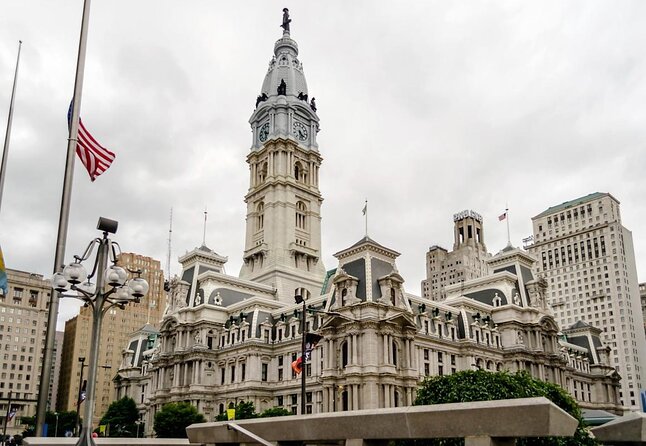
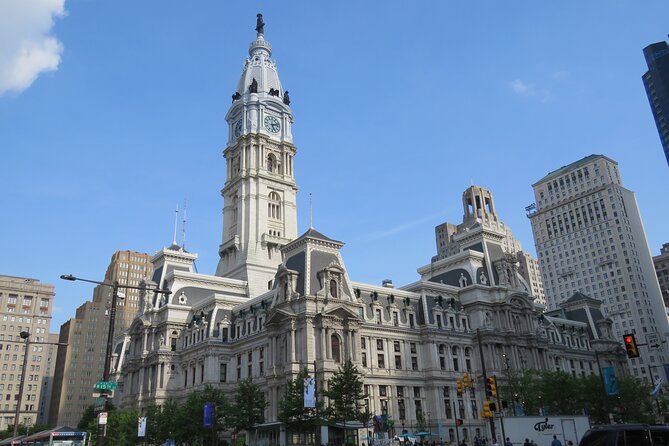
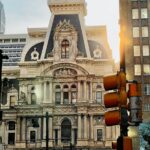
Then it’s City Hall Visitor Center, housed in the 2nd Empire Baroque building next to Philadelphia City Hall. This is a building bragging right made into architecture: it’s described as the largest municipal building in the U.S., and it has the tallest masonry bearing wall building distinction in the world.
The tower statue of William Penn is another standout—specifically noted as the tallest on any building worldwide. You’ll have about 10 minutes, which is enough for the outside views and to grab a sense of the building’s scale without feeling rushed.
Macy’s and the Wanamaker world: Art Deco facade plus a grand court
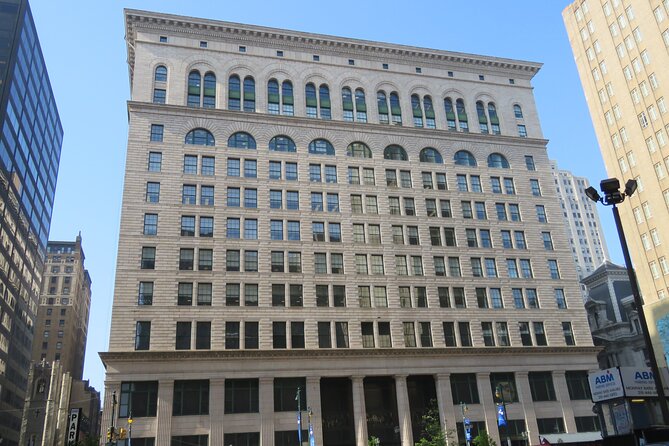
At Macy’s Philadelphia, you first see the Art Deco facade across the street for the Market Street National Bank, then continue into the John Wanamaker Building. You’ll get time to see the Grand Court and its famous grand organ, and this is one of the more visually rewarding stops.
This works especially well in the walking-tour context because you’re moving through the city’s retail history, not just seeing buildings that look important from a distance. Expect about 15 minutes here—longer than most stops—so it doesn’t feel like a quick photo stop.
Ritz-Carlton and the Girard Bank to Land Title building: Furness and Burnham’s ambition
Next is the Ritz-Carlton, Philadelphia area, where the tour highlights the former Girard Bank Building designed by Frank Furness in a High Victorian Gothic style. There’s also a story about how an alternate design was rejected before the final look you see today.
Across Chestnut Street, you then focus on the Land Title Building, Philadelphia’s first by Chicago architect Daniel Burnham. Burnham is tied to a mindset you’ll actually feel in these city projects: he urged people to make big plans, aim high in hope, and work—because small thinking doesn’t move anyone forward.
This is a fast stop (about 5 minutes), but it’s powerful because it shows how two architects can represent two different kinds of pressure: style and ambition, bank power and public confidence.
Union League of Philadelphia: a Civil War-era club with architectural status
The tour continues with the Union League of Philadelphia, an early example of 2nd empire baroque style. The highlight is partly architectural, but it’s also tied to the club’s purpose: it was created to support Union troops during the Civil War.
This stop is short—about 5 minutes—and admission is free, but don’t count on deep interior access unless you specifically plan for it. Still, it’s worth the glance because it shows Philly using architecture not just for commerce and government, but also for civic loyalty and social power.
Bellevue Hotel (Unbound Collection by Hyatt): Beaux-Arts with a French chateau look
You’ll then see the Bellevue Hotel, now the Unbound Collection by Hyatt. The building is described as Beaux Arts with a French chateau-style look at the top, and it’s connected to George Hewitt, who is also linked as a partner with Frank Furness.
This stop is another good “pause” moment. Even with only about 5 minutes, you’ll likely notice how the building uses classical ideas—symmetry, ornament, and a deliberate sense of ceremony—to project stability.
Academy of Music: an opera house turned orchestra home
At the Academy of Music, you’re seeing a building whose role shifted over time. It’s the original home of the Philadelphia Orchestra, and it was originally an opera house, with a design concept based on La Scala in Milan.
One detail I love here is the practical compromise in materials. The Italianate facade was intended to be marble, but brick and brownstone were used to save cost. That kind of behind-the-scenes choice is exactly why a guided tour helps: it turns your eye from ornament-only viewing into design decision reading.
Expect about 5 minutes.
Drexel Building: a Renaissance palazzo copy in the middle of modern finance
The Drexel Building is a quick but interesting stop. It’s described as a copy of the Strozzi Palace in Florence, originally made for Anthony Drexel’s financial company, and it keeps the Renaissance palazzo-style trimmings on the exterior.
It’s also a nice reminder that the “old world” wasn’t just a vibe in Philadelphia—it was a direct template for how money wanted to be seen. Even if you only have 5 minutes, you can still spot the palazzo influence: the way the facade is organized and the feeling of a building designed to look composed and permanent.
Liberty Place and the height agreement that snapped in the 1980s
Then you hit a different kind of story: the city skyline. At Shops at Liberty Place, you’ll see two towers that broke a longstanding 548-foot height barrier. The context matters—there had been a gentleman’s agreement to keep buildings no taller than the City Hall statue of William Penn, but that changed in the 1980s.
This is how Philly shows modern growth in rules changing over time. It’s not just “new buildings happened.” It’s that planning decisions and informal agreements shaped what was possible—until they didn’t.
Expect 5 minutes here.
Comcast Center: modern glass, modern form, and the innovation center’s zig-zag pattern
Next is the Comcast Center, noted as featuring the 1st and 2nd tallest buildings in Philadelphia. The look is described as a sleek combination of mirror and clear glass rising in a tapered form, and nearby is the Comcast Innovation Center, with zig-zag-shaped exterior patterns and three-story groupings.
If you like architecture that feels like it belongs to data and technology, this is your moment. The tour gives about 10 minutes, which is just enough time to compare shapes and textures without feeling like you’re staring for an hour.
Penn Center and Suburban Station: Art Deco built for speed
At Penn Center/Suburban Station, you’re in Art Deco territory, specifically described as the headquarters of the Pennsylvania Railroad from the 1930s. The building was created to replace Frank Furness’ High Victorian Gothic terminal across from City Hall.
The style wasn’t chosen just because it was pretty. It was intended to represent sleekness and the speed of modern trains. This stop clicks for me because it ties design to the idea of movement—how a city wants to market itself as forward-running.
You’ll have about 5 minutes, and admission is free for the time on-site.
Love Park: your finale at the William sculpture and a view toward the Parkway
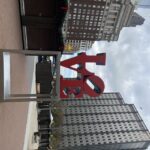
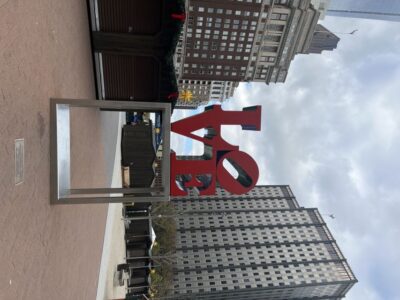
The tour ends at Love Park, finishing near the William sculpture. The park has been redesigned several times, and depending on the season you can find different activities there.
The best bonus is the perspective: from this area you get a grand view up the Ben Franklin Parkway toward the Art Museum. It’s a fitting end point because it brings the architecture-and-urban-planning theme into an actual sightline you can remember long after the walk.
Price and value: is $45 worth 2.5 hours?
At $45 per person, the value depends on your goal. If you want a self-guided stroll, you could do that for cheaper. But you’re paying for three things here: a small group, a guide who connects designs to the city’s eras, and a route that hits major landmarks efficiently.
You also get a useful balance of experiences: some stops are free, some are exterior-focused, and a couple of interiors are intentionally optional. That lets you control cost without missing the main architectural stories.
If you’re a first-time visitor, this tour helps you quickly learn how to “read” Philly’s streets. If you live in Philly already, it still works because it turns familiar buildings into explanations—especially when your time is limited.
What to wear, how to pace yourself, and what to expect
This is a walking tour with moderate physical fitness recommended. The stop times are short, so you’ll want comfortable shoes and a jacket you can handle if the weather shifts.
Also, keep your expectations aligned with the format. Many stops are brief, and a few are best appreciated from the outside unless you pay for separate interior entry. That’s normal for a dense downtown route—just don’t expect every stop to be a long indoor visit.
Who this tour is best for
This is a strong fit if you’re into architecture, city planning, or just want to understand how Philly grew from older institutions into newer skyline ambitions.
I’d especially recommend it for:
- First-time visitors who want quick orientation plus deeper context
- People who like design details and want the “why” behind styles
- Anyone visiting for a day or two and wanting a route that covers a lot without stress
If you hate walking or want fully guided access inside every building, you may find the short stop lengths and optional paid interiors a bit limiting.
Should you book this Philly Gilded-Age to Now walking tour?
Yes—if you want a well-paced downtown route with top landmark variety and a guide who can answer your questions with specifics, it’s a smart booking.
Book it if you’re looking for value in a tight time window and you enjoy learning how architectural styles connect to the era that produced them. Skip it only if you want long museum-style interior time at every stop, or if you’d rather explore at your own speed without a planned order.
FAQ
How long is the tour?
The tour lasts about 2 hours 30 minutes.
What does it cost?
The price is $45.00 per person.
How big is the group?
It’s capped at a maximum of 8 travelers.
Is the tour guided and what language is it in?
Yes, it includes a live guided tour, offered in English.
Where does the tour start and end?
It starts at 1200 Arch St, Philadelphia, PA 19107 and ends at 1515 John F Kennedy Blvd, Philadelphia, PA 19102 (Love Park).
Are there any admission fees during the tour?
Most stops are free, but admission is not included for Pennsylvania Academy of the Fine Arts and the Masonic Temple (interior is optional).
What’s the minimum age and how active is it?
The minimum age is 16. You should have a moderate physical fitness level since it’s a walking tour.
More Tours in Philadelphia

More Tour Reviews in Philadelphia
The Mural Mile and the Art Museum
Fresh Off the Press: Latest Philadelphia Reviews






Murals, Street Art & Art Museum, compared.
 ★ 5.0Philadelphia Murals and Street Art Tour with Magic GardensFrom $45199 reviews
 ★ 4.6Philadelphia Museum of Art and The Rodin MuseumFrom $3055 reviews
★ 4.4Philadelphia Murals and Street Art Tour with Magic GardensFrom $4544 reviews
★ 4.6Philadelphia Museum of Art and The Rodin MuseumFrom $3055 reviews
★ 4.4Philadelphia Murals and Street Art Tour with Magic GardensFrom $4544 reviews
 ★ 3.1Street Art Walking Tour with a Local GuideFrom $353 reviews
Browse the lists this tour appears in