

Reviewed · ESCAPE GAMES & SCAVENGER HUNTS
Self-Guided Philadelphia Scavenger Hunt: People Who Made America
History turns into a race. This self-guided Philadelphia scavenger hunt turns famous names into quick challenges you solve across Old City landmarks. I like that it has individual roles and photo missions, so the game doesn’t feel like one person doing all the work.
I also like the built-in structure: you use the Let’s Roam app for maps, riddles, and leaderboards, and the game caps at only 10 participants for a more personal feel. One thing to plan for: it’s app-driven, so you’ll want a fully charged phone (and a power bank if you’re worried), because you’re using your device to play.
One more consideration: the experience is listed as non-refundable and not changeable, and I’ve seen issues where a start didn’t work and support rerouted people. If you’re booking for a specific day/time, I’d be ready to contact support fast if the app won’t launch the hunt when you expect it to.
In This Review
- Key things to know before you play
- Why a People Who Made America hunt fits Philadelphia
- Let’s Roam app, roles, and how the game actually works
- Price and value: what $13.08 buys you in two hours
- Starting at Arch Street Meeting House and keeping your pace
- Walking the Old City loop: what each landmark adds
- Philadelphia Chinatown: warm-up clues and street-level focus
- National Constitution Center: where your trivia brain can sprint
- Declaration House (Graff House): history through a specific address
- Liberty Bell Center (first hit): the stop people expect
- Liberty Bell Center (second hit): a second chance to notice details
- Reading Terminal Market: break your brain, keep the momentum
- Masonic Temple: a surprising finish that adds texture
- Photo challenges: why Braniac, Photographer, and Mapper make it more fun
- Competition, group size, and why the 10-participant cap matters
- Practical prep: shoes, weather, and charged devices
- Who should book this hunt (and who might not)
- Possible frustrations—and how to reduce your risk
- Should you book this Philadelphia People Who Made America hunt?
- FAQ
- How long does the self-guided hunt take?
- How much does it cost per person?
- Where does the hunt start and end?
- Is this hunt guided by a person?
- What app do I use during the hunt?
- What languages is the hunt offered in?
- What photo challenge roles are available?
- Are attraction fees included?
- Can I cancel and get a refund?
- Is there a minimum age?
Key things to know before you play

- App-based self-guided game: maps, photo challenges, riddles, and leaderboards all run through the Let’s Roam app
- Photo role options: choose between Braniac, Photographer, and Mapper to guide how you play
- A tight group cap: the experience is capped at only 10 participants for a more focused, dynamic feel
- Old City landmarks on the route: you’ll move between major stops like the Constitution Center and Liberty Bell area
- No tour guide on-site: you’re using your phone instead of following a person
Why a People Who Made America hunt fits Philadelphia
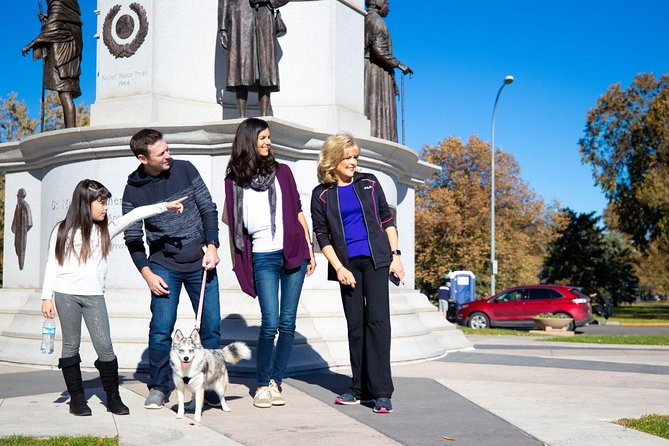
Philadelphia is great for story-based walking because so many sites sit close together—and because the city has layers. This hunt leans into that. Instead of reading one plaque at a time, you’re bouncing between places tied to the people you’re meant to learn about: William Penn’s ideal society, Benjamin Franklin, and Tamanend of the Lenni-Lenape nation, honored as the Patron Saint of America. That framing matters because it turns “fact gathering” into something active.
You also get a more modern way to experience Old City: you’re not just passing monuments—you’re completing challenges. The game structure nudges you to look up, look around, and notice details that you might skip if you were doing a standard walk.
The vibe is competitive in a friendly way, too. You answer trivia and solve challenges as a multi-player group. If you like history but dislike slow pacing, this type of activity tends to hit the sweet spot: short tasks, frequent movement, and a sense of progress.
Crack the next Philly puzzle on your own clock



Let’s Roam app, roles, and how the game actually works
This is a self-guided hunt, so there’s no guide walking with you. The “guide” is your phone and the Let’s Roam app. You’ll get a mobile ticket and instructions to download the app and start your adventure, then the app handles the sequence: maps, riddles, and challenges.
Here’s what makes it more engaging than a basic scavenger list:
- Individual role for each player. You’re not all answering the same question. Your role shapes what you do during the hunt.
- Photo challenges per player. For each player, you can choose between Braniac, Photographer, and Mapper. Those choices affect the type of challenge you complete.
- Photo delivery after. You get digital copies of your adventure hunt photos, so you’re not just taking pictures for fun—you’re producing something the game recognizes.
If you’ve done other city games before, you know the key factor is battery life. This one explicitly warns to make sure your device is fully charged and suggests a power bank if you need one. I agree. Philadelphia walking can eat phone power fast, especially with maps and camera use.
Price and value: what $13.08 buys you in two hours

At $13.08 per person for around 2 hours, this is one of the more budget-friendly ways to experience a concentration of landmark stops. The value comes from what’s included—not the location.
You’re paying for:
- the app-based hunt content (maps, riddles, leaderboards)
- individual roles and photo challenges
- digital copies of the photos you generate during the game
- phone/email/chat support if you run into issues
- taxes and fees
What’s not included is also important for planning:
- attraction fees
- food and drinks
- private transport
- a tour guide
So the real question isn’t just whether it’s cheap. It’s whether you want a structured activity instead of spending the same time on your own. If you’re pairing this with a few paid sites on top, budget accordingly. If you’re mostly walking and learning, this price is a strong fit.
Starting at Arch Street Meeting House and keeping your pace

You start at Arch Street Meeting House, 320 Arch St, Philadelphia, PA 19106, and the activity ends back at the meeting point. Since it’s self-guided private, you can start at any time and go at your own pace—at least in theory.
In practice, the “self-guided” part means you control timing. That’s great if your group moves at different speeds. It’s also on you to keep an eye on instructions in the app and follow the prompts.
I recommend arriving a bit early, not to “wait around,” but to get your phone ready. Check that your app instructions are loaded, your role is set, and you’re ready to start. Two hours can go fast when you’re solving and coordinating.
Walking the Old City loop: what each landmark adds

This hunt is built around an Old City route with a set sequence of stops. You’ll be answering trivia and completing challenges as you move through Philadelphia’s core. Here’s what each stop contributes, plus practical ways to make the most of it.
A Philly guide to fill in the backstory






Philadelphia Chinatown: warm-up clues and street-level focus
Starting with Philadelphia Chinatown is smart. It’s a place where you can train your eyes quickly—signs, streets, and the general urban texture of the area.
For the hunt, early stops usually set the tone: you’ll likely be adjusting to the app flow and learning how your photo or trivia role shows up. If you’re new to these games, Chinatown is a comfortable place to get your rhythm.
Tip: wear shoes that handle uneven sidewalks. You’ll be walking through busy foot traffic, and it’s easier if you don’t have to constantly dodge discomfort.
National Constitution Center: where your trivia brain can sprint
The National Constitution Center is a classic “founding story” stop. Even if you’ve seen Constitution-related sites before, this is the kind of location that makes trivia feel relevant instead of random.
In a scavenger hunt format, you’re not just standing and reading—you’re solving prompts and moving onward. That keeps your attention from wandering, which is one of the biggest problems with museum-style history trips.
Tip: if you’re playing in a group, communicate briefly. Agree on who’s watching the app prompts while others scan the area for what the challenge is hinting at.
Declaration House (Graff House): history through a specific address
This stop adds “people history” energy. The name points you toward a direct connection to the founding-era narrative, and the setting helps the game feel grounded in a real place rather than abstract dates.
The likely payoff here is mental: you’ll be connecting the names you’ve been learning about to a geographic spot. In these hunts, that connection is often the reason the activity sticks in your memory.
Caution: because you’re solving while walking, don’t assume you’ll have time for long inside visits. If you want full museum time, plan extra hours outside the hunt window.
Liberty Bell Center (first hit): the stop people expect
The Liberty Bell area is the reason many people come to Philadelphia, and it’s also a high-focus moment in this hunt. Expect the app challenges here to be tied to the symbol and its story.
This is a natural place to slow down for pictures. But stay alert: photo challenges can mean you’re trying to frame something quickly, and you don’t want to get stuck waiting for everyone to catch up.
Tip: if your group includes kids or less patient adults, designate a “timekeeper.” Keep the energy up and avoid a logjam.
Liberty Bell Center (second hit): a second chance to notice details
The route lists Liberty Bell Center twice, which usually means you’ll get a second set of questions or a follow-up task after moving a bit. That second visit can be useful: you’ll notice details the first time you pass through, then be prompted again later.
If you like interactive learning, this kind of repeat stop can boost understanding. If you prefer variety, it might feel a touch redundant—but it’s also a chance to re-check your progress and race toward the next clue.
Reading Terminal Market: break your brain, keep the momentum
Reading Terminal Market is a change of pace—more sensory, more food energy, and a different kind of Philly identity than the strictly founding-era sites. Even if you’re not buying anything, it gives you something to react to besides stone history.
From a game perspective, market stops can be ideal because they create natural landmarks for your photo tasks and easier “spot it” challenges. Also, you can use this moment to reset your group: refuel with water, fix your phone grip, and get everyone back on the same page.
If food is in your plan, budget extra. Food and drinks aren’t included with the hunt.
Masonic Temple: a surprising finish that adds texture
Ending with the Masonic Temple gives the loop a more architectural feel. It’s one of those Philadelphia landmarks that adds variety to a founding-focused story.
By the time you reach the end, you’ll likely be more confident with the rhythm: read prompt, solve, move, snap photo, repeat. A finish stop like this can make the whole walk feel more like a real city experience instead of a single-theme tour.
Photo challenges: why Braniac, Photographer, and Mapper make it more fun
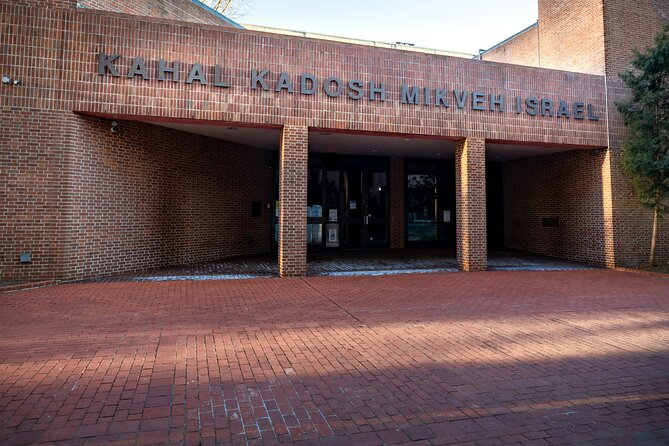
The photo challenge system is the part that tends to turn a normal walk into a game. You’re not just answering questions; you’re producing evidence.
Choosing between Braniac, Photographer, and Mapper also helps groups avoid the “I’m bored” problem. Different roles mean different behaviors. One person may be focused on framing the shot, another on “finding” what the prompt is pointing toward, and another on map-like thinking.
Two practical tips:
- Make sure every player can use the app role prompts. If one person’s phone acts up, the group can lose momentum.
- Keep your camera settings simple. You’re capturing quick tasks, not creating professional photography.
And don’t forget: you get digital copies of the photos from your adventure hunt photos. That means you can revisit what you captured, share them, and remember the route without digging through random phone rolls.
Competition, group size, and why the 10-participant cap matters

This experience is capped at only 10 participants. That’s not just a comfort detail. In a hunt that includes leaderboards and multi-player roles, a smaller group usually helps the experience feel coordinated.
Also, it’s described as interactive and multi-player, which implies you’ll be working together while competing. That blend is ideal for couples, family groups, and friends who like to coordinate without needing constant supervision.
If you’re playing with people who don’t love history, the competition and photos give them an entry point. They can focus on the role tasks while still learning the names and stories the hunt is built around.
Practical prep: shoes, weather, and charged devices

The hunt asks for moderate physical fitness and recommends comfortable shoes. That makes sense for a two-hour walk that moves through multiple landmarks in Old City.
Philadelphia weather matters because you’re outside between stops. Dress for your day and check the forecast. If rain is coming, consider bringing a small umbrella or light rain layer so you don’t cut your walking short.
Then there’s the phone. The experience explicitly warns to ensure your smartphone is fully charged and suggests a power bank if you need one. I treat that as non-negotiable. Between GPS, maps, camera use, and reading prompts, battery drain can surprise you.
One more practical note: the start/end point is the same, and the activity ends back at the meeting location. That means you’ll likely want a plan for dinner or transit nearby after you finish, rather than assuming you’ll naturally “stumble into” your next stop.
Who should book this hunt (and who might not)
This scavenger hunt is a strong fit if you:
- want a 2-hour structured activity instead of a long guided tour
- like history but want it presented as puzzles and challenges
- enjoy group games with roles, photos, and light competition
- are visiting Philadelphia and want a focused route through Old City
It’s also a good choice for families, since the hunt is described as fun and interactive with roles that can keep kids involved in small tasks. No minimum age is required, but you should still consider whether kids can handle walking plus phone prompts for about two hours.
Consider skipping it if:
- you hate using your phone for navigation and tasks
- your group can’t manage basic app troubleshooting
- you were hoping to pay for and access multiple attractions as part of the package (attraction fees aren’t included)
Possible frustrations—and how to reduce your risk
I want to be honest about the main downside risk: since this is self-guided and app-based, everything depends on the hunt being available when you try to start it.
There’s at least one account where booking didn’t seem available at the start moment and support rerouted the person to a comparable alternative. That didn’t resolve the disappointment for that situation, and it highlights the bigger issue: the experience is non-refundable and cannot be changed for any reason if you cancel or request amendments.
So, how do you reduce risk?
- Start at the time you plan to play and don’t wait until late in the day.
- Make sure your device is ready before you leave the house (charged, app downloaded, volume on if prompts require it).
- Keep your support contact ready if the hunt won’t load.
If you go in with that mindset, you’re more likely to get the fun, competitive scavenger hunt that the experience is built to deliver.
Should you book this Philadelphia People Who Made America hunt?
If you want a practical, not-too-expensive way to see Old City and learn founding-era names through puzzles and photos, this is a good bet. The $13.08 price makes it easy to try, and the role system plus photo challenges help keep a group engaged instead of turning it into one-person trivia.
I’d book it if your group is comfortable using a smartphone for navigation and if you can do a steady two-hour walk. I’d think twice if you’re hoping for a guided, fully flexible museum-style experience, because there’s no tour guide and attraction fees aren’t included.
Ultimately, this hunt feels best when you treat it like a game: charge your phone, wear comfortable shoes, and focus on the little tasks between landmarks. Do that, and you’ll likely finish with more than photos—you’ll have a route in your head tied to names like William Penn, Benjamin Franklin, and Tamanend.
FAQ
How long does the self-guided hunt take?
It takes about 2 hours.
How much does it cost per person?
The price is $13.08 per person.
Where does the hunt start and end?
It starts at Arch Street Meeting House, 320 Arch St, Philadelphia, PA 19106, USA, and ends back at the same meeting point.
Is this hunt guided by a person?
No. It’s self-guided, with phone/email/chat support available if you need help.
What app do I use during the hunt?
You use the Let’s Roam app for maps, photo challenges, riddles, and leaderboards.
What languages is the hunt offered in?
It’s offered in English.
What photo challenge roles are available?
You can choose between Braniac, Photographer, or Mapper for your role.
Are attraction fees included?
No. Attraction fees are not included.
Can I cancel and get a refund?
No. The experience is non-refundable and can’t be changed for any reason.
Is there a minimum age?
No minimum age is required.
Let a Philly Guide Lead
More Tour Reviews in Philadelphia






Crack the City: More Philly Trails



Fresh Off the Press: Latest Philadelphia Reviews











Escape Games & Scavenger Hunts, compared.
 ★ 5.0The Escape Game: 60-Minute Adventures at King of Prussia MallFrom $4279 reviews
 ★ 4.5Outdoor Escape Room in Philadelphia – Logan SquareFrom $7518 reviews
 ★ 5.0Vintage Thrift Quest Walking Tour in Philadelphia6 reviews
 ★ 4.0Philadelphia Founding Father Quest and Self-Guided TourFrom $75 reviews
 ★ 3.0Solve the Case: Self-Guided Mystery Puzzle Walk in PhiladelphiaFrom $74 reviews
 ★ 4.5Philadelphia Murder Mystery: Ben Franklin Detective GameFrom $53 reviews
 ★ 3.5Philadelphia Scavenger Hunt & Highlights Self Guided Audio TourFrom $83 reviews
Browse the lists this tour appears in