
Reviewed · REVOLUTIONARY PHILADELPHIA & THE FOUNDERS
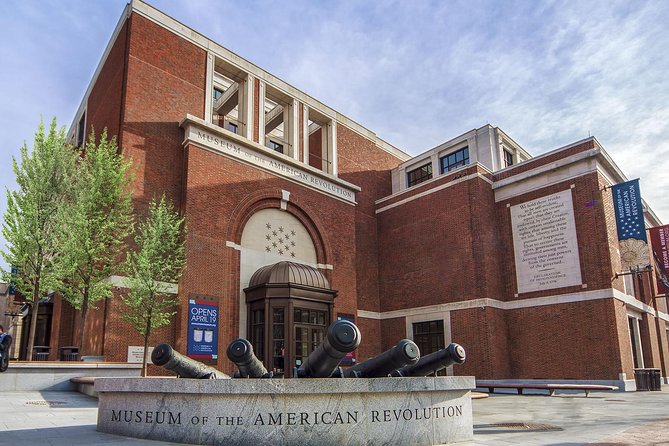
Museum of the American Revolution Admission Ticket with Audio Guided Option
Revolution history feels close here. With a two-day ticket and skip-the-line entry, you can settle in for about 3 to 4 hours and then return the next day without rushing. The whole museum is built to help you track the cause-and-effect of the Revolution, from early arguments to open war.
I especially like the way the exhibits turn key people and places into places you can stand inside. The George Washington’s headquarters tent moment is powerful, and the optional audio guided option makes the rest of the galleries easier to follow.
One note: the museum can get busy, including with large groups and school visits, so expect some crowding around the most popular interactive areas.
In This Review
- Key Takeaways Before You Go
- A Museum Ticket That Lets You Breathe in Philly’s Revolution Timeline
- Skip-the-Line Entry Plus the Intro Film: A Fast Start to the Story
- George Washington’s Headquarters Tent: The Exhibit That Hits Emotional Notes
- The Boston Liberty Tree and the Grievances That Drove the Break
- Oneida Nation Life-Size Figures and the Choice to Join the American Cause
- Brandywine and the British Infantry Charge: When Fear Becomes a Scene
- War at Sea: Climbing Aboard a Replica Privateer Ship
- How the Audio Tour Wand Changes the Way You See the Rooms
- Timing Your Visit: 3 to 4 Hours, Two Days, and Real Crowds
- What’s Included (and What Isn’t) for a Smooth Day
- Price and Value: Getting More Than One Museum Stop
- Who This Fits Best (and Who Might Want to Pair It)
- Should You Book the Museum of the American Revolution Ticket?
- FAQ
- How much does the Museum of the American Revolution ticket cost?
- Is the ticket valid for one day or two?
- How long should I plan to spend at the museum?
- Can I enter faster than standard ticket lines?
- Is there an audio guide option?
- Do I get an audio wand or something else?
- Where is the museum in relation to major sights?
- Are children allowed?
- Are service animals allowed?
- What is the cancellation policy?
Key Takeaways Before You Go
- Two consecutive days means you can pace yourself instead of sprinting through exhibits in one visit.
- Skip-the-line entry saves real time, especially when lines form near timed entry areas.
- Audio options in English, Spanish, or French help you connect details to what you’re seeing.
- Life-size scenes (including Washington’s tent and the Boston Liberty Tree reproduction) make the story feel physical.
- Interactive battle moments and a replica privateer ship help explain what war looked and sounded like.
A Museum Ticket That Lets You Breathe in Philly’s Revolution Timeline
This is one of the better ways to see American Revolution history in Philadelphia because you’re not stuck in a single, frantic timeframe. The ticket lets you visit for two consecutive days, and that changes how you experience a museum like this. You can take a slower lap, come back for the exhibits you didn’t get to, and actually connect the story beats.
At $25 per person, the value is strongest when you plan to use both days. If you’re only doing one day, it’s still a solid museum spend, but you’ll feel the time pressure more. I like that the ticket includes an introductory film and optional audio support, so you’re not walking into a maze of rooms with no map.
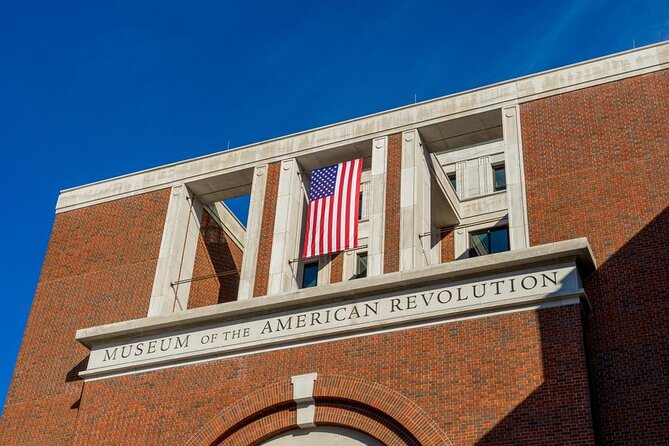
There’s also a practical advantage to where the museum sits. It’s an easy walk from the Liberty Bell and Independence Hall, so you can build a sensible itinerary without constant taxis or long detours.
Back to 1776 and the men who signed here



Skip-the-Line Entry Plus the Intro Film: A Fast Start to the Story

When you arrive, the skip-the-line entry matters. Even if you’re early, museum lines can grow quickly near entry points and ticket checkpoints, and those minutes add up. Getting in smoothly helps you start with momentum.
Before you get scattered among the galleries, take in the museum’s introductory film. It’s designed to give you historical bearings—who’s involved, what’s changing, and why the conflict escalates. If you’re the type who enjoys museums but hates feeling lost, this film is the difference between wandering and understanding.
And because you’ve got two days, you don’t have to force everything on the first visit. Watch the film, get oriented, then return the next day to focus on specific sections that catch your eye.
George Washington’s Headquarters Tent: The Exhibit That Hits Emotional Notes
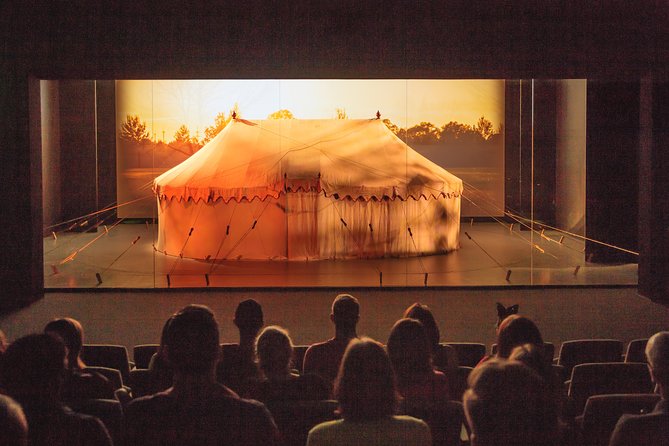
If Washington’s headquarters tent is on your must-see list, plan time for it. The museum uses this space to make the war feel less like a textbook chapter and more like lived, cramped reality.
I like that the museum places you in a setting tied to a Revolutionary-era command environment. Standing in the presence of George Washington’s original Revolutionary War headquarters tent reproduction/focus (as presented in the museum) isn’t just visually striking—it makes the story feel personal. You can look up at the structure, imagine day-to-day decisions, and connect the leadership moments to what the soldiers and civilians endured.
This is also a good “slow stop.” Take a minute. Read the surrounding context. If you’re traveling with kids, this is often the kind of scene that makes them stop talking and actually watch.
The Boston Liberty Tree and the Grievances That Drove the Break
From Washington’s tent, the museum keeps pulling you backward into the reasons people changed their minds about the King and the empire.
You’ll find a life-size reproduction of the Boston Liberty Tree, with branches and lanterns you can stand beneath. It’s one of those exhibits that feels like a stage set, but the goal is meaning: protest as a public language, and symbolism as a tool.
Right after that, you get a look at the grievances listed against the King, presented through authentic printings of the Declaration of Independence. This part is useful because it shows the Revolution didn’t begin as a single dramatic day. It started as arguments, complaints, and political pressure—then it turned into action.
Practical tip: if you read just one section closely, make it this one. It helps the rest of the war story click.
Oneida Nation Life-Size Figures and the Choice to Join the American Cause

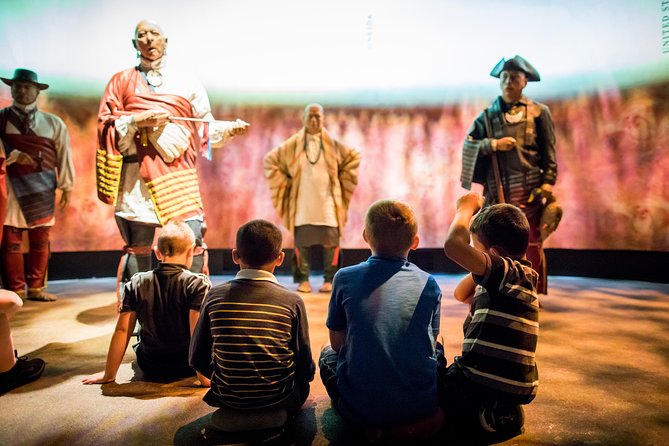
One of the most thought-provoking segments covers the Oneida Indian Nation. You’ll stand among life-size replicas and hear about a debate that led to a decision to break with the Iroquois Confederacy and join the American cause.
This is valuable because it breaks the usual oversimplification of the Revolution as a straight line: colonists versus Britain. The museum shows choices weren’t only political in a distance sense—they were strategic and deeply tied to relationships among Native nations.
Also, this section helps you slow down. The audio and the display pairing encourages you to listen first, then look, instead of trying to do both at once while walking. If you’re traveling with someone who likes deeper context, this is a great place to stop and talk.
More Philly museums and passes worth the ticket






Brandywine and the British Infantry Charge: When Fear Becomes a Scene
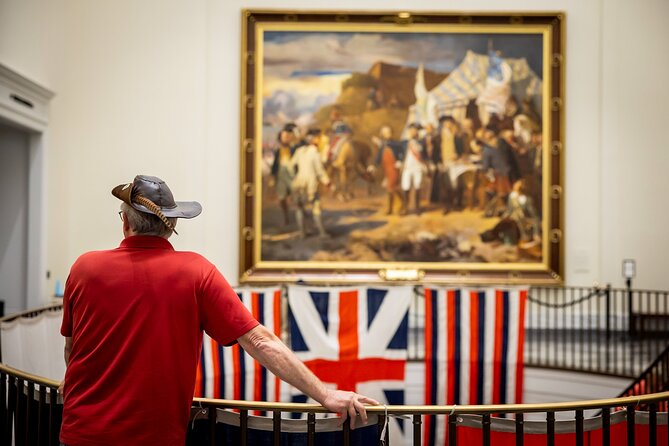
Later, the museum shifts from political arguments to battlefield urgency. You’ll encounter a battle experience centered on the Battle of Brandywine, including an all-out British infantry charge.
I appreciate how the museum stages this moment. It’s intense, but it’s also clear about the kind of chaos war creates. You’re confronted with the speed, movement, and fear on the front lines—without needing to be a military historian to understand what’s happening.
One consideration: if you’re the type who wants more detail on specific battles, you might wish for deeper coverage of a few major campaigns and key figures. The museum does plenty to keep the overall story moving, so this is more “war reality in motion” than a battlefield encyclopedia.
War at Sea: Climbing Aboard a Replica Privateer Ship
The Revolution wasn’t only land warfare, and the museum makes that point in a hands-on way. You can climb aboard a replica privateer ship to experience the war at sea.
This is one of those exhibits that changes your mental picture. Instead of thinking of privateering as just a footnote, you’re given a physical sense of what it meant to operate on ships and fight from the water.
If you’re traveling with teens or curious kids, this is a strong mid-visit “energy reset.” It’s active. It’s visual. It doesn’t require heavy reading to grasp the basic idea.
How the Audio Tour Wand Changes the Way You See the Rooms
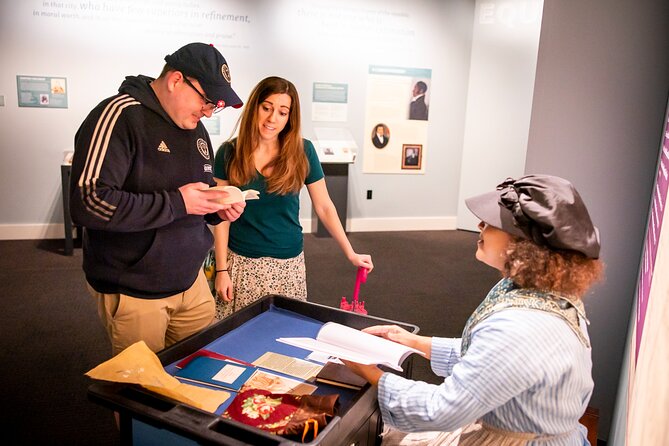
If you want structure without a strict group tour, the audio option is a big part of the ticket’s value. Audio guided options are available at checkout, and you can choose English, Spanish, or French.
The museum’s layout is designed so you can walk room to room and keep picking up the thread. The audio wand adds commentary that helps connect artifacts and scenes to the larger narrative, instead of leaving you to piece everything together yourself.
This matters most for three kinds of visitors:
- You want context but don’t want a live guide schedule.
- You like reading some labels but need more than text alone.
- You’re visiting on two days and want continuity across both.
You can also choose your pace. If you spend extra time at Washington’s tent or the Oneida section, the audio doesn’t punish you—it just keeps the story going while you catch up.
Timing Your Visit: 3 to 4 Hours, Two Days, and Real Crowds
Most visits run about 3 to 4 hours. With a two-day ticket, you can split your time the way you actually travel: one day for the core galleries, one day for the “I want to read that again” stops.
Crowds are the only real workflow issue. The museum can be busy with large groups, and it can also include school visits. That doesn’t ruin the museum, but it does change your strategy. Plan to spend your most deliberate time (like Washington’s tent and the printed grievances section) when crowds are lower.
If you’re trying to avoid the crush, consider starting earlier in your day and leaving interactive areas for later. Also, slow down in smaller sections rather than trying to sprint between the most popular stations.
Group size is capped at a maximum of 14 travelers for the experience booking, which suggests a more manageable flow than huge group formats. Even so, the museum is a major attraction, so arrive with a flexible mindset.
What’s Included (and What Isn’t) for a Smooth Day
This ticket includes a lot of the things that make museums satisfying instead of exhausting:
- Admission to the Museum of the American Revolution
- Ticket valid for 2 Consecutive Days
- Skip-the-line Entry
- An introductory film
- Audio guided options available in English, Spanish, or French
- Special exhibitions when applicable
- All taxes, fees, and handling charges
Food and drinks aren’t included. That’s common for museum tickets, but it’s worth planning for because a long visit can turn you into a tired, snack-seeking person fast. Bring water if that fits your comfort level, or plan to eat before or after you go.
Price and Value: Getting More Than One Museum Stop
Let’s talk straight math. At $25 per person, this isn’t a cheap attraction, but it’s also not priced like a single-purpose guided tour. The value comes from two things: the two-day ticket and the way the museum uses audio support and major set-piece exhibits.
If you use both days, you get a bigger payoff for your time. You can revisit the parts that matter to you—Washington’s tent, the liberty symbolism, the debate around the Oneida, and the battlefield/sea displays—without turning the visit into a blur.
If you only use one day, you can still enjoy it, but you’ll have to be selective. A museum this interactive can easily exceed your “planned 3 hours” if you stop to read and listen.
For a family, this can also be a win because kids often connect best with physical scenes and hands-on areas. Just keep in mind that school groups can raise noise and crowding.
Who This Fits Best (and Who Might Want to Pair It)
This museum works especially well if you:
- like history that uses artifacts and staging, not just flat panels
- want a clear narrative of how arguments turned into war
- enjoy audio support and self-paced walking
- need something that can keep adults and teens engaged
It may be less ideal if you only care about one narrow slice of the war—say, if you’re a battle-by-battle detail hunter. The museum does include battle moments like Brandywine, but it also keeps things moving across the broader story. You might want to pair it with another history stop in Philly if you’re focused on specific campaigns or lesser-covered figures.
Should You Book the Museum of the American Revolution Ticket?
Yes, you should book it if you want a well-structured, self-paced way to understand the Revolution in Philadelphia. The two consecutive days plus the audio wand option is the big reason: you can take your time, return for what you missed, and still feel like you’re seeing the museum as a whole.
Book it especially if you’re combining it with visits to Liberty Bell and Independence Hall. This ticket fits cleanly into a walkable day plan and helps you go beyond the surface “founding moments” by showing how the conflict built up.
Skip it only if you know you hate busy museums and you’re unwilling to handle crowding. If you can be flexible with timing, this is one of the strongest history experiences you can build into a Philly trip.
FAQ
How much does the Museum of the American Revolution ticket cost?
It costs $25.00 per person.
Is the ticket valid for one day or two?
It’s valid for 2 consecutive days.
How long should I plan to spend at the museum?
Plan for about 3 to 4 hours.
Can I enter faster than standard ticket lines?
Yes. The ticket includes skip-the-line entry.
Is there an audio guide option?
Yes. Audio guided options are available at checkout, in English, Spanish, or French.
Do I get an audio wand or something else?
The experience includes an audio-tour option (described as an audio-tour wand in the information provided).
Where is the museum in relation to major sights?
The museum is an easy walk from the Liberty Bell and Independence Hall, and it’s near public transportation.
Are children allowed?
Children must be accompanied by an adult.
Are service animals allowed?
Yes, service animals are allowed.
What is the cancellation policy?
You can cancel for a full refund up to 24 hours before the experience’s start time. If you cancel within 24 hours, the amount paid is not refunded. The experience also notes cancellation due to poor weather may result in a different date or a full refund.
More Tour Reviews in Philadelphia





More Philly Museums and City Passes

Revolutionary Philadelphia, a Little Further


Fresh Off the Press: Latest Philadelphia Reviews












Revolutionary Philadelphia & the Founders, compared.
 ★ 5.0Revolution and the Founders: History Tour of PhiladelphiaFrom $292,944 reviews
 ★ 5.02.5 Hour Philadelphia History Tour with Washington War Tent ShowFrom $45924 reviews
 ★ 4.6Revolution and The Founders History TourFrom $29450 reviews
 ★ 4.9History, Highlights & Revolution Walking TourFrom $45317 reviews
 ★ 4.8Revolutionary Walk Through Historic Old CityFrom $35208 reviews
 ★ 4.5Founding Phantoms Adult’s Only Walking TourFrom $3498 reviews
 ★ 4.8Museum of the American Revolution EntryFrom $2790 reviews
 ★ 3.5Valley Forge Revolutionary War Self-Guided Driving TourFrom $1647 reviews
Browse the lists this tour appears in