
Reviewed · REVOLUTIONARY PHILADELPHIA & THE FOUNDERS
Discovering Colonial Philadelphia Private Walking Tour
Colonial Philadelphia is easiest to understand on foot. This private walking tour strings together the city’s big turning points, from everyday homes to the rooms where the country’s future got written. You get a private guide pace and a route that feels logical, not random.
I especially like the mix of famous landmarks and street-level detail. Two highlights for me are Elfreth’s Alley (America’s oldest continuously occupied residential street) and the storyline that connects Franklin Court to Carpenters’ Hall and then onward to Independence Hall.
One thing to consider: it’s a half-day walk, and you’ll want moderate fitness and comfortable shoes. If you’re bringing kids, this one may feel long or less engaging than you’d hope—though older kids who like history should do fine.
In This Review
- Key things that make this tour worth your time
- Private Colonial Philadelphia in a 2.5 to 3-Hour Walk
- Meeting at 146 Race St and Ending at 52 S 3rd St
- Elfreth’s Alley: America’s Oldest Continuously Occupied Street
- Christ Church: Where Andrew Hamilton, Pierce Butler, and Robert Morris Are Buried
- Franklin Court: Ben Franklin’s Home Location
- Carpenters’ Hall: The First Continental Congress Meeting Place
- Second Bank of the United States: Greek Revival and the Marble Facade Detail
- Independence Hall: Declaration of Independence and the Constitution Convention
- What You’re Really Paying For: A Private Guide’s Pace and Focus
- Stop-by-Stop Timing That Keeps the Story Moving
- Price and Value: When $250 Per Group Makes Sense
- Who This Colonial Walking Tour Is Best For
- Practical Tips for Walking Philadelphia in All Weather
- Should You Book This Colonial Philadelphia Private Walk?
- FAQ
- How long is the Discovering Colonial Philadelphia Private Walking Tour?
- Where does the tour start and end?
- Is this a private tour?
- How many people are in a group?
- Is admission included for all stops?
- What level of walking fitness do I need?
- What language is the tour offered in?
- Does the tour run in bad weather?
- What are the age requirements?
Key things that make this tour worth your time
- A true private group of up to 8 people, so you can ask questions and move at the right tempo
- Colonial landmarks in a smart route: neighborhoods first, then the halls of government
- Elfreth’s Alley delivers the street-scene contrast that most big tours skip
- Architectural notes included, not just dates and names
- Two ticketed stops you’ll plan for: Christ Church and Independence Hall
- Reid gets repeated praise for being engaging, friendly, and going above and beyond
Private Colonial Philadelphia in a 2.5 to 3-Hour Walk
Think of this as your compact map of colonial Philadelphia. In about 2.5 to 3 hours, you’ll move through the city’s most important stops without getting lost in a long, all-day checklist.
You’ll also get context that helps everything click. Instead of just seeing buildings, you’ll understand what kind of power and ideas lived inside them, and how everyday streets connect to major political moments.
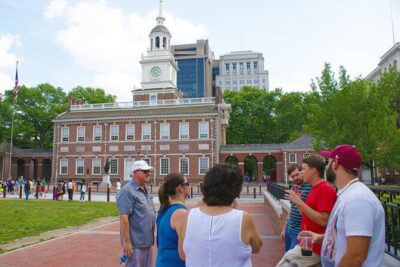
The private format matters more than you might expect. With a small group, you can pause for better viewing and ask the stuff you’re actually curious about, whether it’s architecture, famous residents, or why these places mattered.
Back to 1776 and the men who signed here


Meeting at 146 Race St and Ending at 52 S 3rd St
The tour starts at 146 Race St, Philadelphia, PA 19106 and finishes at 52 S 3rd St, Philadelphia, PA 19106. That end point near South 3rd is helpful because it keeps you central for an easy post-walk plan—dinner, a museum stop, or just grabbing a snack without trekking across town.
Also, the route is designed for walking, and the guide keeps you moving with purposeful stops. It’s not a “see it from the curb and sprint to the next” situation, which makes the time feel well spent.
Because it operates in all weather conditions, plan like a local: layers, a light rain plan, and shoes that won’t punish you by the end.
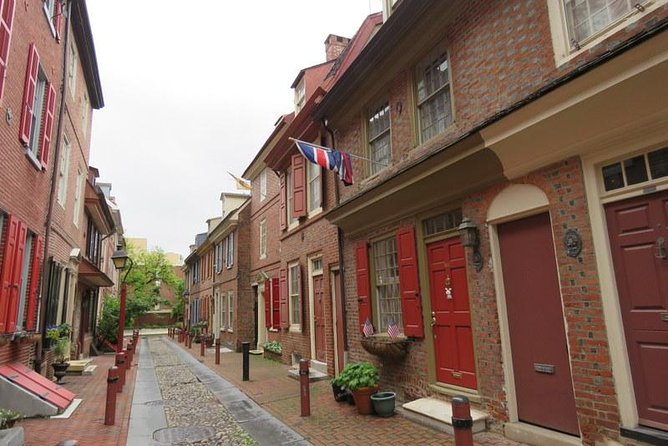
Elfreth’s Alley: America’s Oldest Continuously Occupied Street
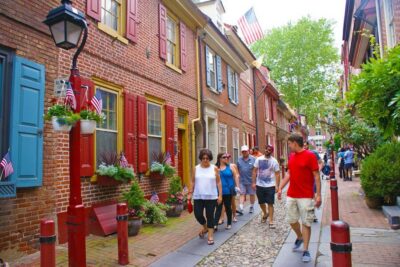
Stop #1 is Elfreth’s Alley, about 15 minutes. This is the oldest continuously occupied residential street in America, and that single fact changes how you look at everything around you.
What I like here is the contrast. Before you get to churches and government halls, you first see how real people lived—close together, on a street that’s been in use for centuries. It’s an immediate gut-level way to picture the past instead of treating it like a display.
The admission is free for this stop, so you can focus on the visuals and the guide’s explanations. Just note it’s a street—so you’ll be on foot with limited room to sprawl, and you’ll want to pay attention when the guide points out details.
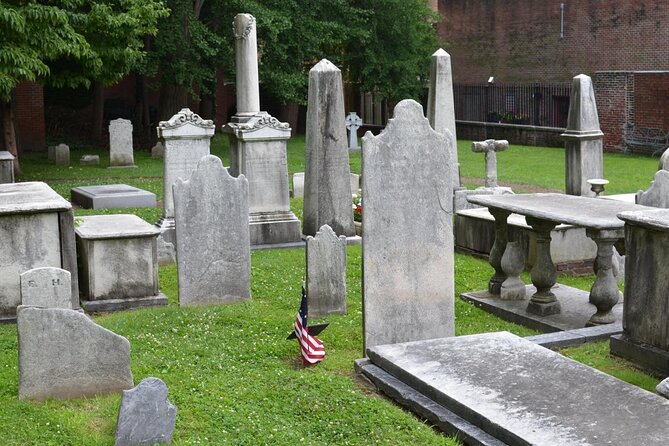
Christ Church: Where Andrew Hamilton, Pierce Butler, and Robert Morris Are Buried
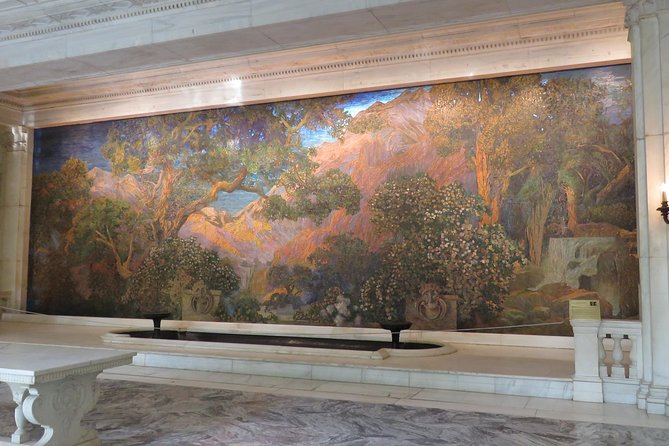
Next comes Christ Church for about 10 minutes. This stop connects you to the people behind early American politics and money through notable burials, including Andrew Hamilton, Pierce Butler, and Robert Morris.
If you like history that has names attached, this is a strong moment. Burial sites aren’t just solemn; they’re also a map of who mattered and why. The guide’s job here is to connect those names to the larger colonial story you’re building across the tour.
One practical consideration: admission is not included for Christ Church. So if you’re the sort of person who hates surprises, plan for a ticket step at this point and keep any entry info handy on your phone.
Franklin Court: Ben Franklin’s Home Location
Then you’ll move to Franklin Court for about 15 minutes. This is the location of Ben Franklin’s home, and it works well as a “brain break” from the more formal sites that follow.
I like this stop because Franklin is the kind of figure you can discuss at multiple angles: science, practical invention, politics, and public influence. A good guide helps you see how those facets connect to the world you’re walking through.
This stop has free admission, which makes it easy to linger just enough. You’re not paying to access the story, and you can keep your attention on the guide’s explanations and the layout.
Your group only, a guide and the whole city





Carpenters’ Hall: The First Continental Congress Meeting Place
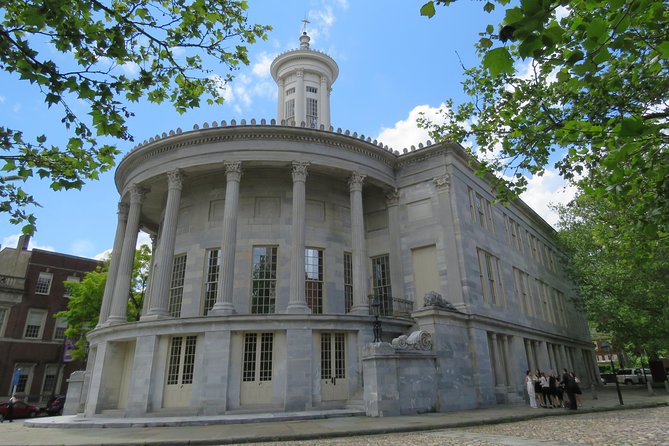
Stop #4 is Carpenters’ Hall for about 10 minutes. This is the home of the 1st Continental Congress, and it’s one of those places where you can feel the shift from protest to structure.
Even in a short visit, this location gives you a key “how it started” piece. It’s a reminder that the big documents and big decisions weren’t born out of thin air—they were organized, argued, and shaped by people working within real meeting spaces.
Admission is free here, so you can treat it like a quick but meaningful chapter break. The drawback is time: at around 10 minutes, you won’t get a museum-style slow read, so lean on your guide’s cues and ask questions if something clicks.
Second Bank of the United States: Greek Revival and the Marble Facade Detail
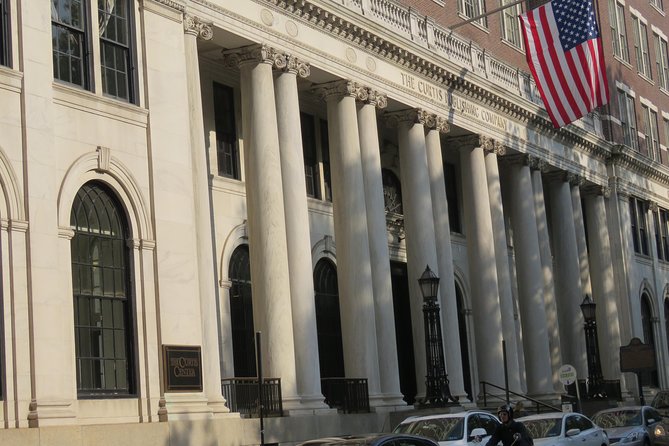
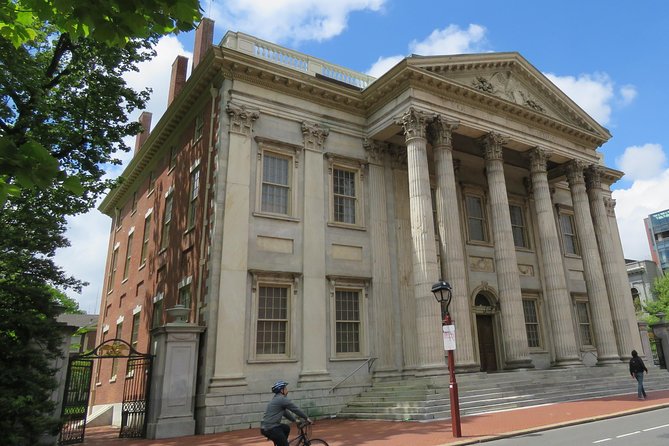
You’ll then reach the Second Bank of the United States for about 10 minutes. This is a Greek revival bank and is noted as the first all-marble facade in the US.
This is where the tour’s architectural side earns its keep. If you’ve ever wondered why certain buildings look “official” even today, this kind of design is part of the answer. The guide’s perspective helps you connect form to function—how a bank dressed like classical Greece projected stability and authority.
Admission is free for this stop, so you can spend your time looking rather than checking tickets. The tradeoff is that it’s still a short stop; if architecture is your main interest, you’ll get the best results by asking your guide what to look for in the facade details.
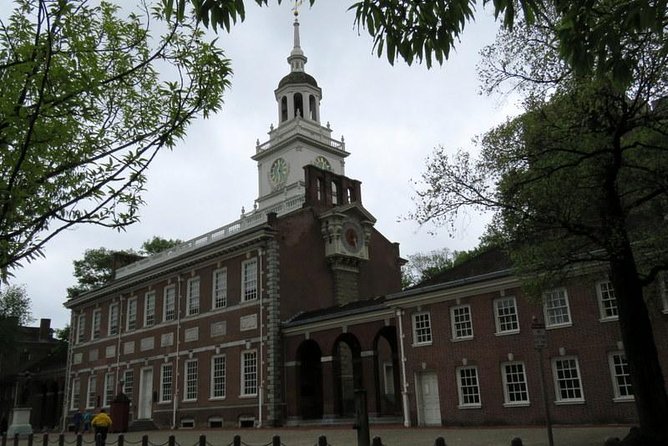
Independence Hall: Declaration of Independence and the Constitution Convention
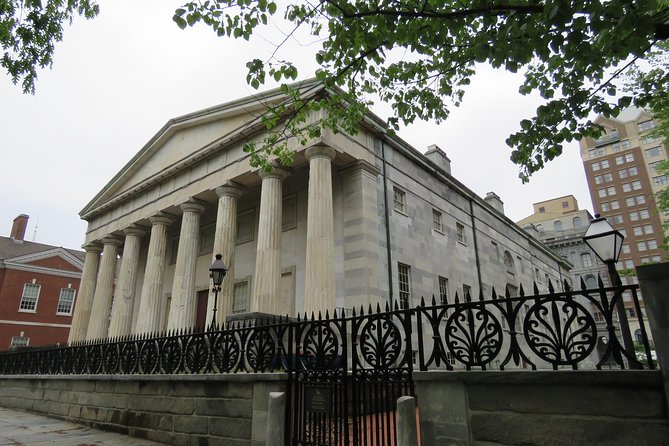
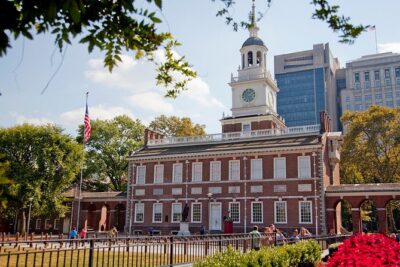
The big finish is Independence Hall for about 15 minutes. This is where the 2nd Continental Congress met, where the Declaration of Independence was created, and where the Philadelphia Convention of 1787 took place, creating the Constitution.
This stop is powerful because it holds multiple turning points in one place. The guide’s job here is to help you keep the timeline straight: first the push for independence, then the later work of designing a new governing framework.
Admission is not included for Independence Hall, so you’ll want to plan ahead for entry. Also, this is often a stop where visitors naturally want to linger, so 15 minutes can feel short if you love reading inscriptions or taking lots of photos.
What You’re Really Paying For: A Private Guide’s Pace and Focus
The tour price is $250 per group (up to 8), and you’re paying for a private experience that’s built around a guide’s attention. That matters most if you travel with friends or family, because the group size keeps it personal without being tiny.
In the reviews, Reid stands out for being engaging, friendly, and extremely knowledgeable about history and architecture. One review also praises him for going above and beyond with extra time and effort, which is exactly what you want from a private guide: not just facts, but the willingness to make sure you leave satisfied.
For me, the best part of a private walking tour is control. If you want more on political history, you can steer there. If you care more about buildings and design, you can ask for those notes and get help seeing what most people overlook.
Stop-by-Stop Timing That Keeps the Story Moving
The itinerary is built in clear chunks, with each stop given a manageable window: Elfreth’s Alley (15 minutes), Christ Church (10), Franklin Court (15), Carpenters’ Hall (10), Second Bank (10), and Independence Hall (15). That adds up to a route that feels paced rather than frantic.
This matters because colonial Philadelphia can be easy to get bogged down in if you wing it. A structured route keeps you from wandering into “I saw a building” mode, and instead you walk into “I understand why this matters” mode.
You’ll still want to move at a steady walking pace. This is designed for moderate fitness, so if you need frequent long breaks, you might prefer a slower pace (or ask the guide what the walking rhythm will be like for your group).
Price and Value: When $250 Per Group Makes Sense
At $250 per group up to 8, your per-person cost depends entirely on group size. If you fill the group, it’s relatively affordable compared to typical private guiding rates in major historic cities. If you’re only two people, it becomes a bigger spend, but you still get the benefit of a private guide and a tight, high-value route.
Value also comes from what’s included versus what isn’t. Your guidance is included, and you get time at multiple high-impact sites, including several with free admission. But plan for two stops where admission isn’t included, so your total trip cost will vary based on what you choose to do there.
For the best value, this is ideal if you can bring a small crew—siblings, a couple of friends, or a parent-and-teen group that’s actually excited about history.
Who This Colonial Walking Tour Is Best For
This works best for adults who want a clean overview without feeling rushed by a giant group. It’s also a smart pick for travelers who like architecture as much as history, since the tour is set up to highlight both.
If you’re sensitive to long walks, keep expectations realistic. This one is built for moderate fitness, and it’s a half-day outing, not a quick stroll.
For families: I’d aim for older kids rather than little ones. Based on the feedback I’ve seen, small kids may not find it engaging, and the length can test attention spans. Older kids who enjoy history will likely get more out of the story connections.
Practical Tips for Walking Philadelphia in All Weather
Because the tour runs in all weather conditions, bring a rain jacket or an umbrella plan, plus shoes you can trust. Even when the day is dry, old-city surfaces can be uneven, so comfort beats style.
Also, expect you’ll be outside for extended chunks. Pack water if you can, and if you’re taking medication or need snacks, plan ahead so you’re not stopping mid-tour for essentials.
One more practical tip: keep your phone charged. The tour uses a mobile ticket, and having it ready saves time and stress at the start.
Should You Book This Colonial Philadelphia Private Walk?
Book it if you want a private guide, a tight route, and a story that connects streets to founding-era decision making. The combination of Elfreth’s Alley, Franklin Court, and Independence Hall in one flow is a strong value, especially if you’re traveling with a small group that can share the cost.
Skip it—or think twice—if you want a long museum-style experience with lots of independent exploration inside buildings. This tour gives you meaningful access and context, but some of the stops are short, and Christ Church and Independence Hall require admission not included, so you’ll want to plan for that.
If you’re the type who learns best by walking, asking questions, and getting help spotting what matters, this is a very solid way to get oriented fast in Philadelphia’s colonial core.
FAQ
How long is the Discovering Colonial Philadelphia Private Walking Tour?
It runs for about 2 hours 30 minutes, with the guided tour listed as 3 hours.
Where does the tour start and end?
It starts at 146 Race St, Philadelphia, PA 19106 and ends at 52 S 3rd St, Philadelphia, PA 19106.
Is this a private tour?
Yes. It’s private, and only your group participates.
How many people are in a group?
The price is for up to 8 people per group.
Is admission included for all stops?
No. Admission is free for some stops (Elfreth’s Alley, Franklin Court, Carpenters’ Hall, and the Second Bank), while admission is not included for Christ Church and Independence Hall.
What level of walking fitness do I need?
It’s suitable for people with a moderate level of fitness.
What language is the tour offered in?
The tour is offered in English.
Does the tour run in bad weather?
Yes, it operates in all weather conditions, so you should dress appropriately.
What are the age requirements?
The minimum age is 18 years.
More Tour Reviews in Philadelphia




Yours Alone: More Private Philly Days
Revolutionary Philadelphia, a Little Further

Fresh Off the Press: Latest Philadelphia Reviews












Revolutionary Philadelphia & the Founders, compared.
 ★ 5.0Revolution and the Founders: History Tour of PhiladelphiaFrom $292,944 reviews
 ★ 5.02.5 Hour Philadelphia History Tour with Washington War Tent ShowFrom $45924 reviews
 ★ 4.6Revolution and The Founders History TourFrom $29450 reviews
 ★ 4.9History, Highlights & Revolution Walking TourFrom $45317 reviews
 ★ 4.8Revolutionary Walk Through Historic Old CityFrom $35208 reviews
 ★ 4.5Museum of the American Revolution Admission Ticket with Audio Guided OptionFrom $25187 reviews
 ★ 4.5Founding Phantoms Adult’s Only Walking TourFrom $3498 reviews
 ★ 4.8Museum of the American Revolution EntryFrom $2790 reviews
Browse the lists this tour appears in