
Reviewed · INDEPENDENCE HALL & LIBERTY BELL
The Constitutional Walking Tour of Philadelphia
If you love the founding story, this walk is your fast lane. The Constitutional Walking Tour of Philadelphia strings together the key sites around Independence National Historical Park with a guide-led, behind-the-scenes feel. I like that you get a big-picture orientation across more than 20 landmarks, and I also like the short, easy stops that keep things moving without feeling rushed. The one drawback to plan around: it’s an outdoor tour with limited time outside each stop, so most famous buildings are viewed from the sidewalk.
I also appreciate the small-group vibe, with a maximum of 40 people, which helps your guide actually answer questions. On recent tours, guides such as PJ, John, Will, Avi, Connor, Abby, Viv, and Michael have been singled out for making history understandable and for keeping the group engaged, even when the weather turns.
In This Review
- Key Points That Matter Before You Go
- Getting Started at the National Constitution Center (Your Bearings in 5 Minutes)
- Price and Pacing: Why $30 Works for a 75-Minute Orientation
- Rain or Shine: What to Wear and How to Hear the Guide
- The Founding-Era Route: A Stop-by-Stop Walk That Feels Like a Timeline
- Stop 1: National Constitution Center
- Stop 2: The President’s House
- Stop 3: Declaration House (Graff House)
- Stop 4: Liberty Bell Center
- Stop 5: Independence Hall
- Stop 6: Congress Hall
- Stop 7: Old City Hall
- Stop 8: The Signer
- Stop 9: American Philosophical Society Museum
- Stop 10: Library Hall
- Stop 11: Second Bank of the United States
- Stop 12: Carpenters’ Hall
- Stop 13: New Hall Military Museum
- Stop 14: First Bank of the United States
- Stop 15: Franklin Court
- Stop 16: Christ Church
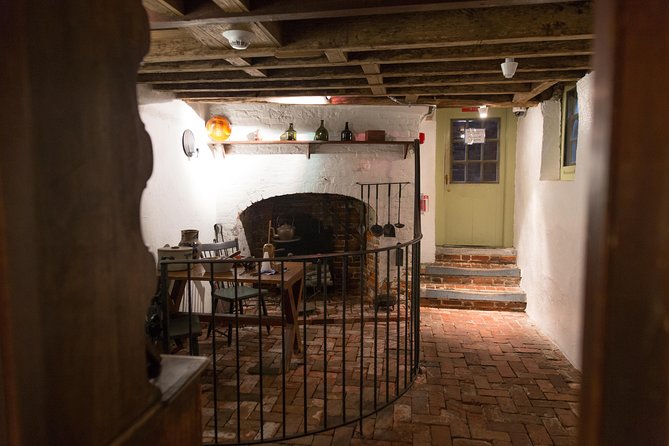
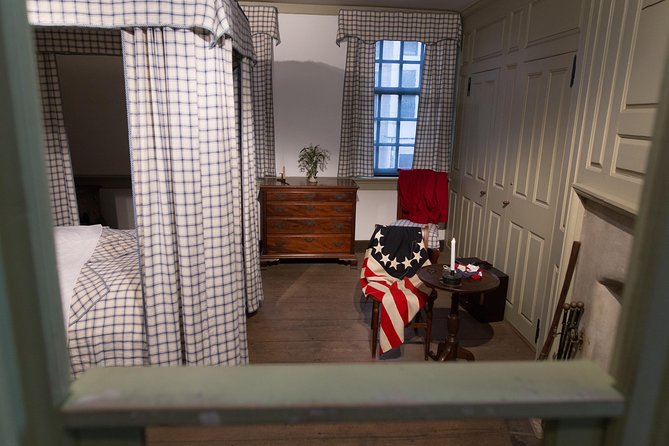
- Stop 17: Betsy Ross House
- Stop 18: Arch Street Meeting House
- Stop 19: Christ Church Burial Ground
- The Big Clarifier: This Is an Outside-Views Tour
- How to Pair This Walk With the Rest of Your Philadelphia Day
- Who This Tour Fits Best (And Who Might Want Something Else)
- Should You Book This Constitutional Walking Tour?
- FAQ
- How long is the Constitutional Walking Tour of Philadelphia?
- How much does the tour cost?
- What sites will I see on the tour?
- Is admission to the historic sites included?
- Does the tour run in bad weather?
- Where do I meet for the tour?
- Is there a limit on group size?
Key Points That Matter Before You Go
You’ll cover 20+ Independence National Historical Park sites on a short 1.25-mile loop on foot.
It’s outdoor-only by design, so expect to see most places from the outside.
The guide makes the walking work, with lots of quick context so each stop clicks.
Rain or shine, so dress for weather and bring comfortable shoes.
Mobile ticket, English guide, and a group cap of 40 helps the experience stay personal.
You’ll finish back where you started at the National Constitution Center area.
Getting Started at the National Constitution Center (Your Bearings in 5 Minutes)
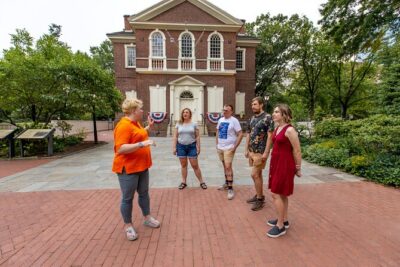
Most days, the easiest way to enjoy Philadelphia’s founding area is to get your bearings fast—and that’s exactly how this tour begins. You start at the National Constitution Center at 525 Arch St, checking in about 15 minutes early. You’ll meet directly outside the main entrance, near three large stone benches, so you’re not stuck wandering the block trying to guess where the group gathered.
From the start, I like the tone the tour sets: big ideas first, then supporting details. Even if you’ve been to Philadelphia before, this kind of orientation helps you see how all these buildings connect into one story about law, power, and public life.
Also, keep in mind this tour is built to be brisk. The stops are timed (often just a couple minutes), so your job is simple: listen, look, and let the guide’s context do the heavy lifting.
More time around Independence Hall and the Bell


Price and Pacing: Why $30 Works for a 75-Minute Orientation
At $30 per person for roughly 1 hour 15 minutes (about 75 minutes), this tour is priced for value if you want your first pass through the sites. You’re paying for a guide, an organized route, and the context that turns a list of buildings into an actual timeline.
Here’s the practical part: you’re not paying for admission to the major attractions. That matters because the Liberty Bell Center and Independence Hall have security screening and/or timed entry logistics. Since those can eat up a lot of your time, the tour focuses on what’s doable in a short window—seeing the landmarks up close on the street and understanding what happened where.
In terms of pacing, think of it as an express walk with frequent reset moments. You’ll get enough stops to catch your breath, but you’re still walking an overall 1.25 miles. This is not a sit-and-stretch kind of experience, so comfortable shoes are non-negotiable.
Rain or Shine: What to Wear and How to Hear the Guide
This tour runs rain or shine, so you’ll want to dress like you’re walking outdoors for a little over an hour. That sounds obvious, but it’s the difference between enjoying the story and thinking about your damp sleeves.
I’d plan for:
- Water and weather control: bring a bottle, and wear something you don’t mind getting a little wet.
- Good walking shoes: the route is mostly sidewalks and outdoor viewing points.
- Hearing-friendly habits: if it’s windy or traffic is loud, it can be tough to catch every word. Standing near the guide helps.
One thing I learned from how people describe their experiences: group size and stop timing matter. With a max of 40 people, your guide can keep the group together. A few reviews also mention guides speaking quickly at times—so if you’re the type who needs to process information slowly, just lean in at each stop and ask questions when the guide pauses.
The Founding-Era Route: A Stop-by-Stop Walk That Feels Like a Timeline
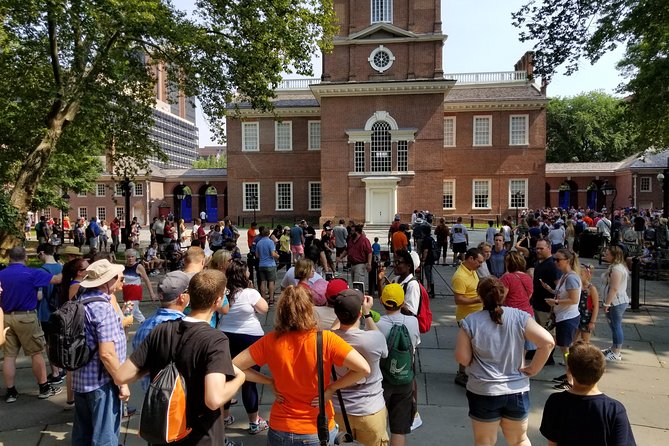
You’ll visit 20+ historic sites around Independence National Historical Park. Each one is brief, but the guide connects them so you leave with a clearer mental map.
Stop 1: National Constitution Center
You begin with the National Constitution Center as your launch point. Admission is not included here, so don’t expect to tour inside on this walk. Instead, it works as a starting anchor: a place that frames the Constitution story before you move into the older, more “hands-on” founding locations nearby.
Philly at a walking pace, more routes



Stop 2: The President’s House
Next is an outdoor commemoration of the President’s House—an earlier version of the White House—where George Washington and John Adams lived when Philadelphia served as the capital from 1790 to 1800. Even from the sidewalk, it helps you understand that political power wasn’t always centered where we assume it is today.
Stop 3: Declaration House (Graff House)
This stop marks the site associated with Thomas Jefferson when he wrote The Declaration of Independence. It’s a quick moment, but it’s a useful one: you’re no longer just reading about independence—you’re standing in the general area where the language of it was shaped.
Stop 4: Liberty Bell Center
The Liberty Bell is the icon most people come to Philadelphia for. During this tour, you’ll see it as a landmark, not as a deep interior visit. That’s intentional because screening lines can take time, and the tour’s goal is orientation and context in a limited window.
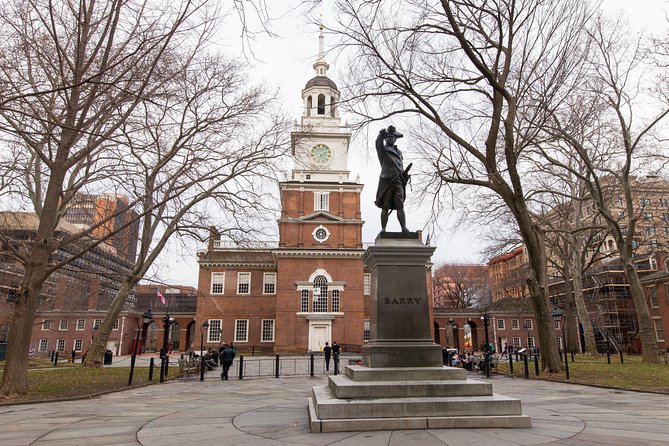
Stop 5: Independence Hall
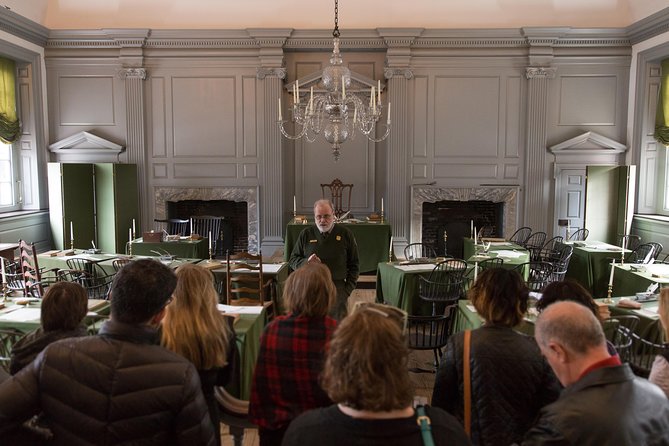
Independence Hall is the headline. Built in 1732 as the Pennsylvania State House, it’s where the founding story reaches its most famous milestone. This is one of the stops where you’ll likely pause and look around more than you planned to, even if your stop time is short.
A smart planning note: if you want to go inside Independence Hall, treat that as a separate timed-ticket plan. This guided walk is designed so you can understand where that visit fits into the broader story.
Stop 6: Congress Hall
Then you step into the era when the United States Capitol wasn’t in Washington, DC. Congress Hall, constructed between 1787 and 1789 as the Philadelphia County Court House, served as the meeting place of the U.S. Congress from 1790 to 1800.
That detail matters, because it helps you see Philadelphia not as a single moment, but as a functioning government hub for a decade.
Stop 7: Old City Hall
Old City Hall is tied to the U.S. Supreme Court, where it once met. Standing here gives you a sense of how “government” used to occupy everyday civic spaces, not the polished, modern buildings you might picture first.
Stop 8: The Signer
You’ll see a statue called The Signer, inspired by George Clymer. This stop is brief, but it’s a nice reminder that the founding wasn’t just abstract ideals—it involved real people, real roles, and public recognition in stone.
Stop 9: American Philosophical Society Museum
Here you connect the founding era to scholarship. The American Philosophical Society is described as the oldest scholarly society in the U.S. If you’ve ever wondered whether early America was all politics and no ideas, this is your correction.
Stop 10: Library Hall
Library Hall is tied to the nation’s first public library and the former Library of Congress. That’s a key theme: early America didn’t just build laws. It also built institutions for learning and public access to information.
Stop 11: Second Bank of the United States
The Second Bank of the United States is one of those places where you can feel the tension between ideals and money. Today it’s used as a portrait gallery, but on this tour the point is what banking represented in the early constitutional debate environment.
Stop 12: Carpenters’ Hall
Carpenters’ Hall is described as the birthplace of American identity. Even if your stop is short, it helps because it reframes “identity” as something built in rooms and meetings—not just declarations on paper.
Stop 13: New Hall Military Museum
You’ll also get a stop focused on military history, interpreting the role of the military in early U.S. history. It’s an important balance point. Independence wasn’t only paperwork; it involved organized force, strategy, and conflict management.
Stop 14: First Bank of the United States
The First Bank of the United States is noted as sparking the first great Constitutional debate. This stop is a reminder that the Constitution wasn’t instantly settled. People fought over what it meant in real life—especially when money and power were on the table.
Stop 15: Franklin Court
Franklin Court connects you directly to Ben Franklin, and it’s also identified as the only colonial-themed Post Office. It’s a fun stop because Franklin is often treated like a statue of ideas, but here the focus turns practical: communication, systems, and daily civic life.
Stop 16: Christ Church
Christ Church is described as an active parish since 1695, often called the Nation’s Church. This stop gives you a sense of how religion, civic events, and community structures overlapped during the founding era.
Stop 17: Betsy Ross House
Betsy Ross House is associated with where Betsy Ross sewed the first Stars and Stripes. It’s one of the stops that tends to get attention right away, partly because it’s vivid and partly because you can spot how symbols were made real.
Stop 18: Arch Street Meeting House
The Arch Street Meeting House connects to the Society of Friends. It’s another way this tour widens beyond the loudest political players into the broader communities shaping Philadelphia’s culture.
Stop 19: Christ Church Burial Ground
Finally, you end near Christ Church Burial Ground, tied here to Benjamin Franklin’s final resting place. It’s a fitting last note: after all the talk of founding language and government buildings, you get to one of the human endings that makes history feel less like a textbook.
The Big Clarifier: This Is an Outside-Views Tour
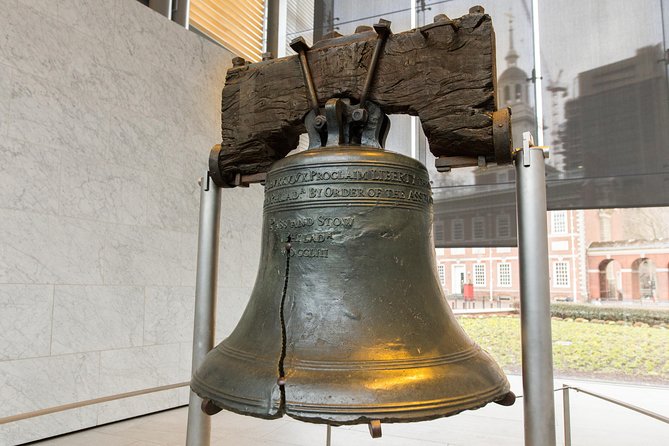
The tour is designed as an outdoor walking experience. Tickets and admission to historic sites are not included, and you should expect most stops to be from the sidewalk or exterior viewing points. This matters for two reasons.
First, it keeps the schedule workable. With 20+ locations on a 1.25-mile walk, you’d lose the whole flow if you tried to queue for interiors at every stop.
Second, it sets the right expectations for the two biggest names on your list:
- Liberty Bell Center: security screening can take time.
- Independence Hall: entry typically requires timed tickets arranged in advance.
So if you’re hoping for a full interior day, I recommend using this walk as your orientation and then adding separate timed visits to the specific sites you care about most.
How to Pair This Walk With the Rest of Your Philadelphia Day
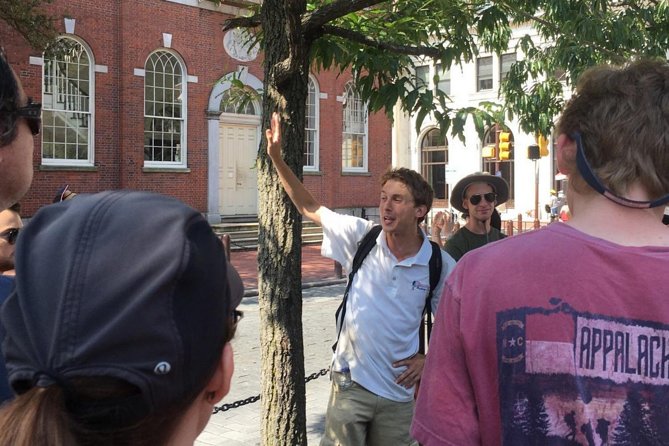
If you’re visiting for a short trip, this tour can act like the anchor plan. I’d use it this way:
1) Take this walk early enough to learn the geography and names.
2) Then return later to the interiors that match your interests.
If you mainly care about the Constitution and Declaration themes, you’ll probably want extra time inside places tied to those stories. If you’re more into symbols, Betsy Ross and the Liberty Bell area may pull you back for repeat viewing. And if you’re a government-and-bureaucracy person, the court and banking stops set you up to appreciate what those institutions meant.
Also, if you’re visiting during any kind of shutdown or crowd-control situation, don’t panic. This walk still delivers the core experience: the route and the exterior context around the central landmarks.
Who This Tour Fits Best (And Who Might Want Something Else)
This works best if you:
- want a first pass through Philadelphia’s founding core
- like your history with names and locations attached
- enjoy asking questions while you’re walking
- travel with kids or teens who can handle a brisk, short-stops pace
It might feel less ideal if you:
- want to spend lots of time inside multiple major sites in one visit
- hate walking on sidewalks for about 1.25 miles
- need long listening sessions without noise (traffic and wind can make it harder)
Should You Book This Constitutional Walking Tour?
I think it’s a smart booking if your goal is to get your bearings and learn how the founding-era institutions connect. The price is fair for what you get: a guided, organized route through the densest concentration of founding landmarks, with quick context at each stop.
Book it if you want to leave with a clearer mental timeline and a short list of places to revisit. Skip it only if your priority is interior museum time, because this tour is built around outside viewing and orientation, not full admissions.
FAQ
How long is the Constitutional Walking Tour of Philadelphia?
The tour is about 1 hour 15 minutes.
How much does the tour cost?
It costs $30.00 per person.
What sites will I see on the tour?
You’ll pass by more than 20 historic sites in the Independence National Historical Park area, including the National Constitution Center, The President’s House, Declaration House (Graff House), the Liberty Bell Center, Independence Hall, Congress Hall, Old City Hall, Carpenters’ Hall, Franklin Court, Christ Church, Betsy Ross House, and more.
Is admission to the historic sites included?
No. Admission to historic sites is not included, and most stops are viewed from the outside. Many sites may require separate tickets if you want to go inside.
Does the tour run in bad weather?
Yes. It operates rain or shine.
Where do I meet for the tour?
You meet at the National Constitution Center, 525 Arch St, Philadelphia, PA 19106, outside the main entrance by three large stone benches. Check in 15 minutes before the tour.
Is there a limit on group size?
Yes. The tour has a maximum of 40 travelers.
More Tours in Philadelphia


More Tour Reviews in Philadelphia
Independence Hall and the Liberty Bell, Continued
Fresh Off the Press: Latest Philadelphia Reviews












Independence Hall & Liberty Bell, compared.
 ★ 4.5Philadelphia Historical Independence Walking TourFrom $25164 reviews
 ★ 4.5Independence Seaport Museum AdmissionFrom $2033 reviews
 ★ 5.0Independence Mall (Entrance to 2 Historic Sites) 2.5 Hour WalkingFrom $3921 reviews
 ★ 4.8Independence Mall: Liberty Bell, Betsy Ross, Christ ChurchFrom $3920 reviews
Browse the lists this tour appears in