
Reviewed · INDEPENDENCE HALL & LIBERTY BELL
Independence Seaport Museum Admission
A steamship-themed museum beats most “sit and read” spots. Here, you’re walking among National Historic Landmark ships and then powering through real exhibits on Philadelphia’s waterways—usually in 1–2 hours. I love the chance to see two very different vessels side by side: an 1892 steel cruiser and a WWII-era submarine. I also like the hands-on feel, especially the workshop where wooden boats get built while you watch. One catch: the historic ships are not ADA accessible, so you’ll want a moderate fitness level to handle ladders, hatches, and gangways.
If you’re looking for a family-friendly history stop that still feels physical (and not just behind glass), this is a smart choice. You can keep it simple with museum entry and the Cruiser Olympia, or add a Submarine Becuna tour on-site if you want the deeper cut.
In This Review
- Key Highlights You’ll Notice Fast
- Two Ships in One Visit: The Real Reason This Works So Well
- Cruiser Olympia: The 1892 Steel Warship Story You’ll Remember
- Submarine Becuna: WWII to Cold War, With the Most Hands-On Payoff
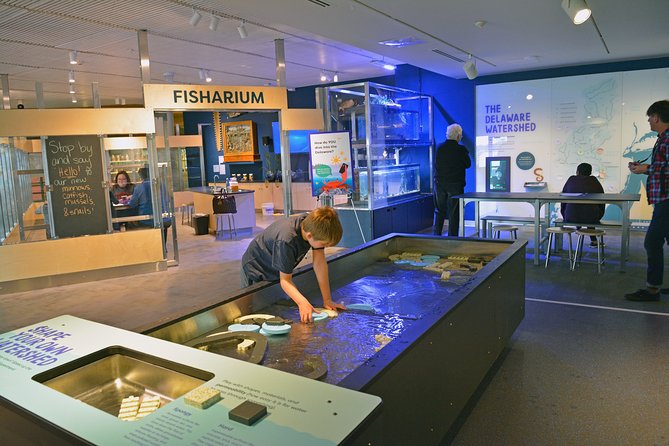
- The Museum Galleries: Context You’ll Want After You See the Ships
- Workshop on the Water: Where Watching Builds Beats Just Reading
- Price and Value: What $20 Gets You (And What It Doesn’t)
- Timing, Weather, and Comfort Tips That Actually Matter
- Who Should Book This Independence Seaport Museum Admission?
- Should You Book It?
- FAQ
- FAQ
- What is included with the $20 admission ticket?
- Is Submarine Becuna included in the ticket price?
- How long should I plan to spend there?
- Is this family-friendly?
- Is the museum and ships ADA accessible?
- Are there physical demands on the ships?
- Will it run in bad weather?
- Do I need to pay for parking?
- What is the cancellation policy?
Key Highlights You’ll Notice Fast
- Cruiser Olympia (1892): the world’s oldest floating steel warship and a Spanish-American War survivor
- Submarine Becuna (1944): WWII through multiple Cold War roles, with guided access available as an add-on
- Hands-on boat building: watch builders work in the Workshop on the Water as they construct wooden boats
- Two floors of themed galleries: from historic disasters on the Delaware to African presence along the river
- Ship navigation is physical: ladders and gangways help you explore, but they also demand mobility
Two Ships in One Visit: The Real Reason This Works So Well
The best thing about this museum is its pacing. You’re not committing to a full half-day with complicated timing. You’re stepping onto (and around) two historical ships, then using the museum floors to fill in the context—how this all ties back to Philadelphia and the Delaware River.
That mix matters. Ship access turns history into something you can feel: metal angles, deck space, openings, and the tight reality of how people actually moved around a vessel. Then the museum galleries give you the stories and connections, so you aren’t just looking at objects—you’re learning why the objects mattered.
The other practical win is flexibility. Your ticket includes the museum building and the Cruiser Olympia. If you want the submarine portion, you’ll need to plan for a guided tour add-on for Submarine Becuna purchased on-site. That lets you decide how intense you want to go.
More time around Independence Hall and the Bell


Cruiser Olympia: The 1892 Steel Warship Story You’ll Remember
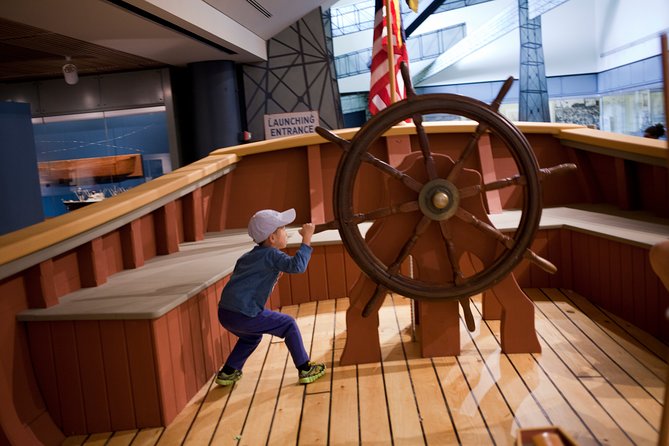
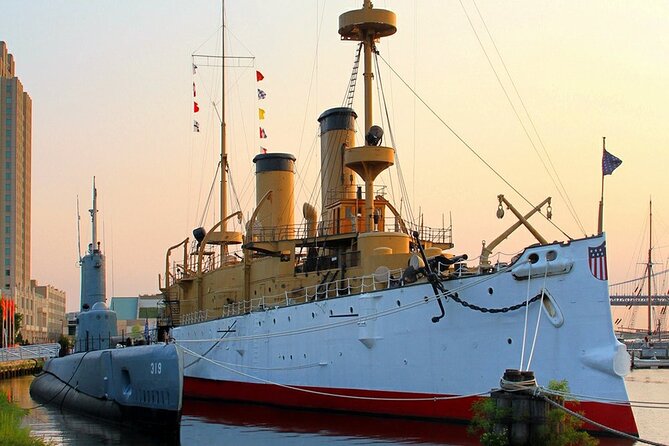
If you only have an hour or so, make your first “must” the Cruiser Olympia. It’s the kind of ship that sounds legendary even before you step aboard—because it is the world’s oldest floating steel warship, and it’s also the only surviving naval ship from the Spanish-American War.
Once you’re on board, the big payoff is how clearly the ship connects to turning points in U.S. naval history:
- Launched in 1892, it was a rare treasure in the U.S. naval fleet at the time
- It served as Admiral Dewey’s flagship during the Battle of Manila Bay
- That battle is remembered as the moment the U.S. emerged as a world naval power
- The ship later received the honor of bringing the soldier for internment for the Tomb of the Unknown Soldier in Arlington Cemetery
What I like here is the way it compresses big national themes into one tangible place. You’re not reading about abstract “naval growth.” You’re looking at a specific ship that lived through key events.
One heads-up before you plan your route: the ship has ladders, hatches, and gangways for navigation, and this historic ship is not ADA accessible. If you can climb stairs and manage uneven ship surfaces safely, you’ll be fine. If you’re unsure, consider arriving a bit earlier so you can take your time and slow down where needed.
Submarine Becuna: WWII to Cold War, With the Most Hands-On Payoff
The submarine is where the visit often turns from “interesting” into “wow, I didn’t expect that.” Submarine Becuna launched in 1944, completed five wartime patrols in the Pacific Ocean, and then continued into later service—operating in the Mediterranean and Atlantic during the Korean, Vietnam, and Cold Wars. It also had a long career as a training submarine.
There’s a special kind of clarity submarines give you. On a cruiser, you’re thinking about open decks and visible roles. On a sub, the story becomes about tight space and lived-in constraints. Even without adding extra background, you can feel why submariners had to be precise and disciplined.
Here’s the key planning detail: the guided tours of Submarine Becuna are a ticket add-on you purchase on-site. Your included admission covers the building and the Cruiser Olympia, so don’t assume the submarine tour is automatically part of the base price.
If you do add the submarine tour, you’ll get more than a quick look. It’s the kind of experience where you leave thinking about the bravery required—because the vessel’s role across wars and decades makes it more than a single-era artifact.
Just like with Olympia, access involves physical navigation (ladders and ship features), and the historic ships are not ADA accessible. If anyone in your group has mobility limits, check in early with the staff so you can plan what’s realistic.
The Museum Galleries: Context You’ll Want After You See the Ships
Once you’ve toured the ships, the museum floors help you connect what you saw to Philadelphia and the Delaware River. Two floors means you can choose your pace. You can skim and still get the gist, or slow down and focus on the themes that interest your group.
Some of the gallery names you’ll likely run into include:
- Disasters on the Delaware: Historic Disasters and Modern Day Heroes
- Tides of Freedom: African Presence on the Delaware River
- Tattoo Lounge
- Titanic Philadelphians
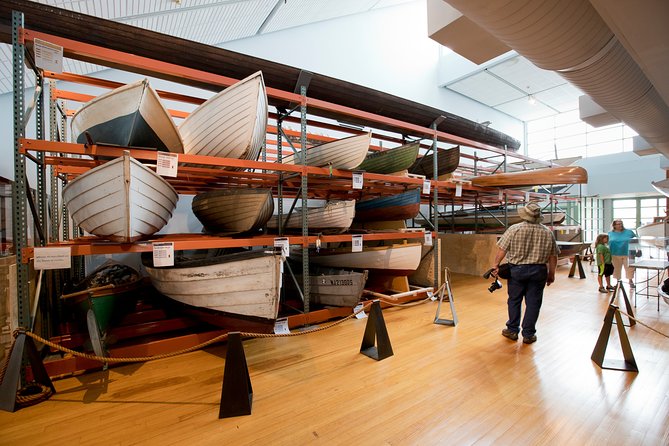
- Boat Gallery
- Underwater Gallery
I like this mix because it doesn’t treat maritime history like one straight line. It includes human stories—people, communities, and risks. It also ranges from well-known events to local angles, which is especially helpful if you want the visit to feel anchored in Philadelphia rather than generic “ship museum” content.
There’s also an educational feel throughout, with programs and resources that help you go from curiosity to understanding. The best part is you can tailor what you spend time on. If your interest is naval technology, you’ll find enough to satisfy that. If you’re more into people and culture, the themes give you that path too.
Workshop on the Water: Where Watching Builds Beats Just Reading
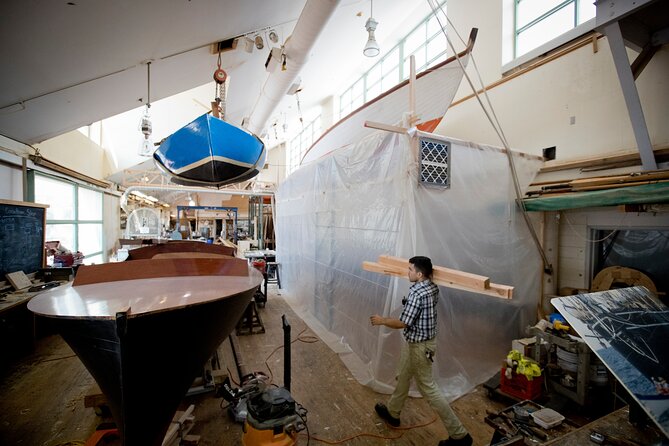
If you have kids, or if you just like real-world craft, plan time for the Workshop on the Water. The museum doesn’t just talk about boatbuilding—it shows it. You can observe wooden boat builders working and constructing vessels while you’re there.
One impressive element is that they work on a schooner called Diligence. This gunboat was built in 1797 in Philadelphia to help defend the young country from pirates. Knowing that the museum is housing a ship project with roots going back to the 1700s makes the workshop feel more than a demo. It feels like time travel with sawdust.
In practical terms, this is also a perfect “reset” zone. Touring ships can be a lot of movement. The workshop gives you a calmer pace while still keeping your eyes on something active.
I also like that this is a different kind of value than a typical museum exhibit. You’re not just looking at finished objects; you’re watching how the objects come together. That helps kids connect history to work, tools, and patience.
More Philly museums and passes worth the ticket




Price and Value: What $20 Gets You (And What It Doesn’t)
At $20 per person, this is one of those museum admissions that feels more fair than flashy. Your ticket includes:
- Admission to the museum building
- Cruiser Olympia
If you choose to do everything, remember that guided tours of Submarine Becuna are not included and must be purchased on-site. That means your final spend depends on how much you want the submarine experience.
But that structure is still good value. You can match the visit to your group:
- If you want an efficient family outing with ships and exhibits, the included Olympia entry plus museum floors can still be a satisfying plan.
- If you know you want the submarine portion, budget time to buy the on-site add-on and build it into your schedule.
Duration is listed as about 1–2 hours, which is a helpful expectation. It’s long enough to see the main ships and hit the key galleries without turning into an all-day project.
One more detail that affects your planning: the experience is commonly booked about 13 days in advance. That doesn’t mean you’ll never find space last minute, but it’s a sign this is a popular stop.
Timing, Weather, and Comfort Tips That Actually Matter
This is an outdoors-and-ships experience even when you’re inside the museum. The museum operates all weather conditions, but the ships will close for extreme conditions like snow, ice, or high temperatures.
So my advice is simple:
- Dress for the day you’ll be walking the decks, not the forecast you first saw.
- Bring layers if the temperature swings.
- Wear footwear that works on ship surfaces and ladders.
You’ll also be moving more than in a standard museum crawl. Even without doing anything athletic, the ship navigation is physical: ladders, hatches, and gangways are part of how you explore.
If you’re traveling with a family, give yourself a little extra breathing room for bathroom breaks and to regroup between ship and exhibit areas. It keeps the experience fun instead of rushed.
Parking is not on-site, and the museum does not own a parking facility. Parking fees aren’t included in the ticket price, so expect to pay for nearby lots or street meters depending on what’s available.
Who Should Book This Independence Seaport Museum Admission?
This is a strong fit if you want:
- A family-friendly history outing that feels hands-on
- Maritime history without needing a guidebook
- A museum visit where the main attractions are actual vessels, not just models
It’s also a smart stop for adults who like practical, real-world history—especially naval and ship technology. The ship stories cover major eras, from the Spanish-American War era through WWII and later Cold War roles, and the galleries connect those themes to Philadelphia’s waterfront.
A key consideration: the historic ships are not ADA accessible, and the experience calls for moderate physical fitness. If your group has mobility limitations, plan in advance and focus on what you can access comfortably.
Should You Book It?
Book it if you want a compact, high-impact Philadelphia experience. For the price, getting Cruiser Olympia plus the museum exhibits is already a solid value. And if you add the Submarine Becuna guided tour, you’ll have a visit that covers multiple eras of U.S. maritime history in a way that feels real, not staged.
Skip or scale back if mobility access is a concern for anyone in your group. The ships’ navigation features and the lack of ADA accessibility can make parts of the experience challenging.
If you’re the type of traveler who likes “real places where history happened,” this is worth your time.
FAQ
FAQ
What is included with the $20 admission ticket?
Your admission includes entry to the museum building and Cruiser Olympia.
Is Submarine Becuna included in the ticket price?
No. Guided tours of Submarine Becuna are a ticket add-on and must be purchased on-site.
How long should I plan to spend there?
The experience is listed as about 1 to 2 hours.
Is this family-friendly?
Yes. It’s described as fun for the entire family, and children must be accompanied by an adult.
Is the museum and ships ADA accessible?
The historic ships are not ADA accessible.
Are there physical demands on the ships?
Yes. You’ll navigate with ladders, hatches, and gangways, so the experience is best with moderate physical fitness.
Will it run in bad weather?
It operates in all weather conditions, but the ships will close if there’s extreme weather such as snow, ice, or high temperatures.
Do I need to pay for parking?
Parking fees are not included, and the museum does not have its own parking facility. There are public parking lots and metered street spots nearby.
What is the cancellation policy?
You can cancel for a full refund if you cancel at least 24 hours before the experience’s start time. Free cancellation is available up to that cutoff.
More Tour Reviews in Philadelphia





More Philly Museums and City Passes
Independence Hall and the Liberty Bell, Continued

Fresh Off the Press: Latest Philadelphia Reviews









Independence Hall & Liberty Bell, compared.
 ★ 4.5The Constitutional Walking Tour of PhiladelphiaFrom $30902 reviews
 ★ 4.5Philadelphia Historical Independence Walking TourFrom $25164 reviews
 ★ 5.0Independence Mall (Entrance to 2 Historic Sites) 2.5 Hour WalkingFrom $3921 reviews
 ★ 4.8Independence Mall: Liberty Bell, Betsy Ross, Christ ChurchFrom $3920 reviews
Browse the lists this tour appears in