

Reviewed · INDEPENDENCE HALL & LIBERTY BELL
Philadelphia Historical Independence Walking Tour
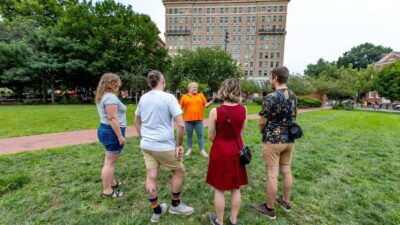
The Philadelphia Historical Independence Walking Tour is a fast, focused way to learn the U.S. story on foot. You’ll hit major stops around Independence Hall and nearby sites tied to the Declaration, the Constitution, and the early workings of government. I especially love the chance to stand in the real places where events happened, and I like the small-group cap (30 max), which tends to make questions feel easy.
One thing to plan for: it’s a walking tour, so expect steady steps and outdoor time. Also, if a particular site is closed or inaccessible on the day you go, the guide may shift the route so you still get a strong overview.
In This Review
- Key highlights you should care about
- Starting at Independence Visitor Center on 6th and Market
- Independence Hall: the Declaration and Constitution made human
- Franklin Court: where Ben Franklin’s house footprint matters
- Carpenters’ Hall and the First Continental Congress
- Congress Hall and the lesson of peaceful transfer
- The President’s House spot: George Washington in real geography
- More than the big three: Betsy Ross House, Declaration House, Supreme Court, and Franklin-era culture
- Guides make or break it: what the best sessions have in common
- Price and value: why $25 can make sense here
- Practical tips so you enjoy the walk more
- Who this tour is best for (and who might want a different plan)
- Should you book this Philadelphia Historical Independence Walking Tour?
- FAQ
- Where does the tour start?
- Where does the tour end?
- About how long is the tour?
- How much does it cost?
- Is the tour offered in English?
- Does the tour have morning and afternoon departures?
- What is the maximum group size?
- Which landmark stops are included?
- Are service animals allowed?
- What happens if I cancel or the weather is poor?
Key highlights you should care about

- Independence Hall first, with context that connects Declaration and Constitution moments
- Franklin Court and Carpenters’ Hall, tied to Franklin, the First Continental Congress, and early Pennsylvania
- Government-in-motion theme, including the story of a peaceful transfer of power
- A cluster of top Independence-area landmarks, including the Declaration House, Supreme Court building, and more
- Guides who field questions and tailor the pace, even when the group is small
- $25 price with free admission at key stops, so you spend on the tour, not extra tickets
Starting at Independence Visitor Center on 6th and Market

The tour kicks off at the Philadelphia Visitor’s Center at 599 Market St, right where 6th and Market meet. That matters because you’re not wandering around trying to figure out what’s next. Within minutes, you’re in the historic core where the streets, brick buildings, and layout help you understand why independence-era leaders chose this area.
You’ll also want to arrive with a little buffer. This is a timed, guided walk, and guides need everyone to be in place before moving as a group. Bring comfortable walking shoes, since this is outdoor time for about 1 hour 30 minutes (approx.).
One more practical bonus: you’ll get a mobile ticket, and the tour is in English. That makes the whole experience simpler when you’re moving through a busy city day.
More time around Independence Hall and the Bell



Independence Hall: the Declaration and Constitution made human
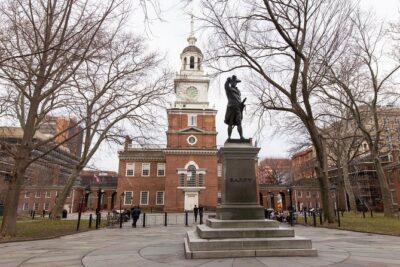
Independence Hall is the headline stop, and you’ll see why quickly. Your guide sets the scene so it’s not just a building to photograph. It’s a place where the ideas of independence and the structure of government were argued over and shaped—specifically tied to the Declaration of Independence and the Constitution being debated and adopted.
The tour also frames Independence Hall around a key theme: the switch from revolutionary vision to working governance. You’ll hear the connection to the Father of the Constitution (the person behind that idea) and you’ll also get the story of a peaceful transfer of power. That last part is a great contrast to the dramatic imagery people often associate with this time period.
Admission note: this stop is listed as free for ticketing on the tour schedule. So you get the significance without turning your afternoon into a ticket-shopping mission.
Franklin Court: where Ben Franklin’s house footprint matters
Right after Independence Hall, you move to Franklin Court to see the spot where Benjamin Franklin’s house was. Even if you’re not a hardcore Franklin fan (I’m not always), this stop helps you connect the famous Revolutionary figures to the day-to-day places they operated from.
Franklin Court works well because it breaks the pace. Independence Hall is politics and constitutional structure. Franklin Court nudges you toward the people and the everyday physical setting—what it looked like when ideas were discussed near real homes and public life.
This stop is also short on time. That’s part of the tour’s strength. You’re getting a sweep of landmark locations, not getting stuck on one site so long that the rest of the story gets rushed.
Carpenters’ Hall and the First Continental Congress
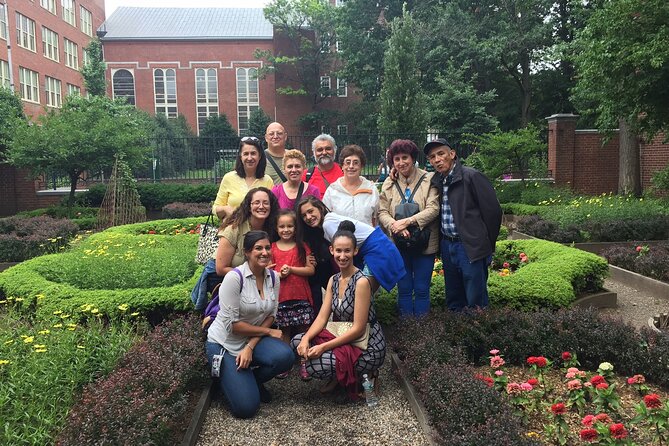
Next up is Carpenters’ Hall. Here, the tour focuses on Carpenters’ Hall as a meeting place tied to early U.S. political organization, including the First Continental Congress.
This is one of those stops that feels simple from the outside, but clicks once your guide explains what happened there. The American Revolution wasn’t only battles and speeches. It was also meetings—people gathering, arguing, drafting, and deciding.
It’s also a nice reminder that early America ran on committees and practical planning as much as it ran on ideals. You’ll leave this section with a clearer picture of how colonial and revolutionary leadership turned into national leadership.
Admission note: the schedule lists the Carpenters’ Hall stop as free for ticketing.
Congress Hall and the lesson of peaceful transfer
Congress Hall is where the tour zooms back into government. The big idea here is the story of the first peaceful transfer of power—how early leadership changes were handled, and what that says about stability even in a new nation.
If you’ve ever wondered how the U.S. system avoided immediate chaos after major political shifts, this is the part of the tour that answers it. It also helps you understand why the founders were obsessed with creating rules that could outlast individual personalities.
This stop is short, but the payoff is big because it gives you a framework you can apply as you look at other sites. You start seeing the city not as random historic buildings, but as an operating system for early national life.
Admission note: this stop is also listed as free for ticketing.
Philly at a walking pace, more routes



The President’s House spot: George Washington in real geography
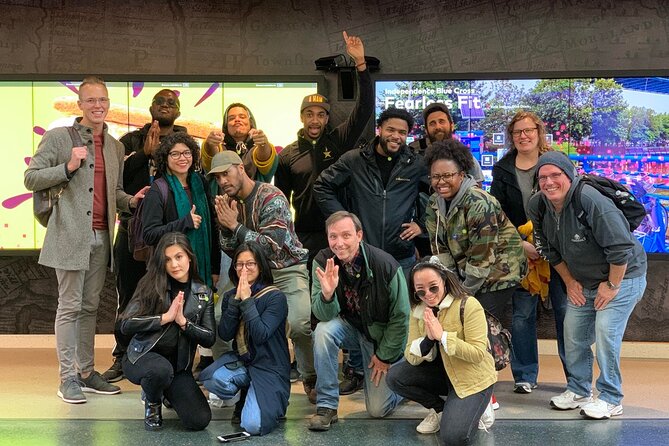
Then you’ll see the spot connected to the President’s House, tied to George Washington’s years as president. This stop is a smart bridge between the Revolution-era story and the early executive branch.
The tour frames it with practical context and fun facts about the President’s House. That’s useful because Washington often gets treated like a distant myth. Standing in the area tied to his presidency helps shrink that gap. It makes it feel like a functioning residence in a functioning capital, not just a symbolic title.
Even if you don’t know every detail of Washington’s presidency, your guide’s framing should give you enough structure to connect this location to Congress Hall and the broader government arc.
More than the big three: Betsy Ross House, Declaration House, Supreme Court, and Franklin-era culture

The tour is built to cover over 20 historical landmark locations in the Independence area, and it doesn’t rely only on the most famous names. You’ll also cover nearby highlights such as:
- Betsy Ross House, believed to be the site where the seamstress lived when she sewed the first American flag
- Declaration House, where Thomas Jefferson wrote the Declaration of Independence
- The original Supreme Court building
- The Library Company of Philadelphia, founded in 1731 by Benjamin Franklin
- Carpenters Hall and Franklin Court (already covered above)
- Franklin Court museum and historic structures inside Independence National Historical Park as part of the broader walk
This matters for your understanding. If you only visit the biggest headline stops, it’s easy to think the founding era was all written in one place, by one group, at one moment. By weaving in Jefferson’s writing location, the Supreme Court’s physical footprint, and Franklin’s library and civic culture, the tour shows how many roles and institutions were forming at once.
How to think about it: treat this as a map you can carry. You’ll likely remember the names, but you’ll also remember the relationships—writing, debating, governing, and building civic life around the city.
One practical consideration: sites can be inaccessible due to circumstances like closures. If something is blocked on your day, your guide is expected to adjust so you still get a meaningful route.
Guides make or break it: what the best sessions have in common
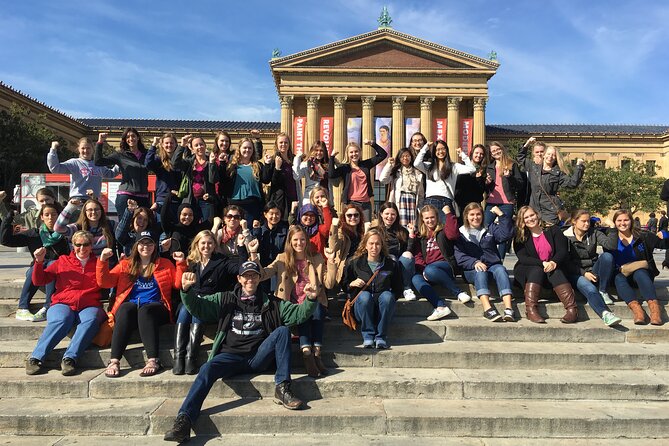
The tour is run by Bow Tie Tours, and the guiding style is clearly a selling point. In the feedback I looked at while writing this, guides named Neil, Matt, Andrew, Michael, Dave, and Mike Rhodes (plus Cpl Mike) show up repeatedly with a similar pattern: they explain what you’re looking at and then stay flexible when questions pop up.
Two things I think you’ll feel in a good tour like this:
- People get to ask questions. The best guides don’t rush you past details; they answer and redirect. That’s especially helpful when you’re there with kids, first-timers, or anyone who learns better by asking why.
- The pacing stays human. Some parties even ended up with a much smaller group, and the guide’s route became more conversational and less rigid.
The group size is capped at 30, which gives you room for a real tour rather than a stampede. In practice, many groups end up smaller, and that’s where you get the best ratio of time-to-questions.
One caution: because the tour is time-limited, even excellent guides can’t turn every stop into a long museum visit. You’ll get clarity and context, not hours inside every building.
Price and value: why $25 can make sense here
At $25 per person for about 1 hour 30 minutes, this is priced like an affordable orientation tour with serious payoff. Here’s why it feels fair:
- You’re paying for a guided walk that stitches together multiple landmark stops into a single story arc.
- Key stops are listed as ticket-free for admission on the tour schedule (including Independence Hall, Franklin Court, Carpenters’ Hall, Congress Hall, and the President’s House spot).
- You’re not just seeing sites—you’re getting explanations of what mattered, why it mattered, and what changed afterward.
If you’re visiting for a short time, this price can be one of your best bets. Instead of spending your limited day hopping between unrelated stops, you get a curated sequence that makes the whole area easier to understand.
Practical tips so you enjoy the walk more
A few ways to set yourself up for a smoother time:
- Wear shoes you can keep on for a while. This is a walking route around historic buildings and park areas.
- Bring a water bottle and a layer for shade or cool air if you’re going in warm months or shoulder seasons.
- Arrive a little early at the Visitor Center so you don’t end up worrying at the meeting point.
- If your group has kids, go in with a flexible mindset. The tour has a track record of keeping young people engaged, but it still runs on a schedule.
- Check site access on the day. If closures happen, your guide may rework what you see so you still get the main story.
Also, since you’ll move through Independence National Historical Park areas, expect outdoor walking and occasional crowding around the most famous structures.
Who this tour is best for (and who might want a different plan)
You’ll likely love this tour if:
- you want a first-pass understanding of U.S. founding history
- you’re short on time in Philadelphia but want to hit a concentrated list of sites
- you appreciate guided context over solo wandering
- you want an experience that works for a range of ages
You might consider something else if:
- you prefer long museum time inside multiple buildings rather than a fast walk-through
- you already know the full founding story and want deeper, single-site scholarship
- you dislike walking in crowds, since Independence-area landmarks can draw lots of foot traffic
Should you book this Philadelphia Historical Independence Walking Tour?
Yes—if you want a practical, story-driven walk through the Independence core, this is a strong pick at $25. Independence Hall, Franklin Court, Carpenters’ Hall, Congress Hall, and the President’s House spot give you the backbone of the story, and the added landmarks around them turn it into something you can actually picture.
Book it if you like asking questions, learning how the institutions of the new nation formed, and getting a route that helps you understand what you’re seeing—without turning your day into a pile of separate tickets and maps. If you’re willing to plan for outdoor walking and a possible day-of route tweak, you’re set up for a satisfying historical afternoon.
FAQ
Where does the tour start?
The tour starts at Independence Visitor Center, 599 Market St, Philadelphia, PA 19106.
Where does the tour end?
The activity ends back at the meeting point.
About how long is the tour?
It runs about 1 hour 30 minutes.
How much does it cost?
The price is $25.00 per person.
Is the tour offered in English?
Yes, the tour is offered in English.
Does the tour have morning and afternoon departures?
You can select from a morning departure or multiple afternoon departure times.
What is the maximum group size?
The tour has a maximum of 30 travelers.
Which landmark stops are included?
Stops include Independence Hall, Franklin Court, Carpenters’ Hall, Congress Hall, and the President’s House spot, plus many additional nearby historical landmarks.
Are service animals allowed?
Yes, service animals are allowed.
What happens if I cancel or the weather is poor?
You can cancel for a full refund up to 24 hours before the experience. If it’s canceled due to poor weather, you’ll be offered a different date or a full refund.
More Tours in Philadelphia

More Tour Reviews in Philadelphia
Independence Hall and the Liberty Bell, Continued
Fresh Off the Press: Latest Philadelphia Reviews












Independence Hall & Liberty Bell, compared.
 ★ 4.5The Constitutional Walking Tour of PhiladelphiaFrom $30902 reviews
 ★ 4.5Independence Seaport Museum AdmissionFrom $2033 reviews
 ★ 5.0Independence Mall (Entrance to 2 Historic Sites) 2.5 Hour WalkingFrom $3921 reviews
 ★ 4.8Independence Mall: Liberty Bell, Betsy Ross, Christ ChurchFrom $3920 reviews
Browse the lists this tour appears in