
Reviewed · HISTORICAL TOURS
Beyond the [Liberty] Bell History Walking Tour
Philadelphia history walks with a point of view. On this Beyond the Liberty Bell History Walking Tour, I like the way it spotlights people you rarely hear about (from Hannah Callowhill Penn to Ona Judge) and I love the tight, 2-hour route that gives you the lay of the land fast, including the UNESCO Independence Hall area and the oldest continuously lived street in the U.S. One thing to keep in mind: the stops are short and the pace is meant to cover ground, so if you want long chats at every corner, you may feel slightly rushed.
You’ll be out in Old City with a guide who answers questions on the fly and keeps the tone interactive. Guides in the same orbit as Mike, Matthew, Joey, and Rebecca have impressed people with their warmth and with stories that go beyond the usual plaques. The tour runs in English, uses a mobile ticket, and caps at 30 so it stays manageable.
The payoff is practical: you don’t just see famous spots, you learn how to connect them to real lives—and you walk away knowing what to prioritize on the rest of your Philly day.
In This Review
- Key things to know before you book
- Why this tour feels different in Philly
- Route walkthrough: Washington Square to the Betsy Ross area
- Stop 1: Washington Square and William Penn’s vision
- Stop 2: Liberty Bell Center and what the bell means
- Stop 3: The President’s House controversy and Ona Judge’s escape
- The oldest continuously lived street: slow down, look up
- Women who shaped Philadelphia: a more complete city picture
- Welcome Park and the Lenape connection
- Timing and pacing: a smart 2-hour hit of Old City
- Price and value: $59 for guided storytelling you can use
- What the best guides do (and why it matters)
- Who should take this tour, and who might prefer something else
- Should you book this Philadelphia walking tour?
- FAQ
- FAQ
- How much does the Beyond the Liberty Bell History Walking Tour cost?
- How long is the tour?
- Where does the tour start and end?
- What time does the tour begin?
- Is the tour offered in English?
- Do I need to buy tickets for the stops?
- What’s the maximum group size?
- Is free cancellation available?
Key things to know before you book
![Beyond the [Liberty] Bell History Walking Tour - Key things to know before you book](https://assets.philadelphiaguides.com/wp-content/uploads/beyond-the-liberty-bell-history-walking-tour-1.jpg)
- A route built around short stops: you’ll hit major landmarks while still getting enough story to make them stick.
- Independence Hall shows up in the UNESCO core: you’ll get context for why this area matters in American history.
- Focus on overlooked founders and escape stories: Hannah Callowhill Penn and Ona Judge come into the spotlight in a way most tours skip.
- Philadelphia beyond the usual names: you’ll hear about women, Black history, Native connections (Lenape), and even LGBTQ contributions.
- Small-group feel: with a max of 30, it tends to stay personal enough for questions.
- Entry costs aren’t the main issue: the listed stops show free admission, so your money mostly goes to the guiding and walking time.
Why this tour feels different in Philly
![Beyond the [Liberty] Bell History Walking Tour - Why this tour feels different in Philly](https://assets.philadelphiaguides.com/wp-content/uploads/beyond-the-liberty-bell-history-walking-tour-2.jpg)
Philadelphia can be a lot in one day. The city has monuments, museums, and a dense trail of dates. Many walking tours try to fix that with a lecture voice and a big sweep of facts. This one does something smarter: it gives you the bones of the city, then puts human stories back on the map.
You get a clear orientation of Philadelphia’s historic core, but the real hook is the cast of characters. Instead of treating the Liberty Bell and Independence Hall as distant symbols, the tour ties them to people who shaped daily life, power, and resistance. That includes women who influenced early Philadelphia, and it includes Ona Judge’s escape story, which reframes what you think you know about George Washington’s household.
Another strong point is how the guide keeps you moving while staying responsive. People call out the interactive style and the fact that questions get answered well. That matters because downtown Philly streets can be confusing if you’re trying to connect buildings to names you learned in school. This tour helps you do that fast.
The third plus is pace with purpose. At about two hours, you cover enough to get your bearings, but you’re not committing to an all-day crawl. That’s a sweet spot for first-time visitors who want the highlights without losing the rest of the day to logistics.
Philly at a walking pace, more routes


Route walkthrough: Washington Square to the Betsy Ross area
This tour starts at 210 W Washington Square at 1:00 pm and ends near the Betsy Ross House at 239 Arch St. You’ll be walking through the Old City area, with frequent short stops that keep the focus on story and orientation.
Here’s what the walk looks like, stop by stop, and why each one is worth your time.
Stop 1: Washington Square and William Penn’s vision
You begin at Washington Square, where the guide sets the scene with William Penn’s plan for Philadelphia—and then expands it beyond the usual male-only narrative.
One of the most useful parts of this opening is how it frames Philadelphia as a designed community, not just a collection of buildings. You also get a specific thread about a forgotten female founder: Hannah Callowhill Penn. That detail does more than add a name; it helps you understand that early Philadelphia’s story included women with real influence, not just the men on formal portraits.
If you’re trying to decide how to spend your first day in Philly, this stop is your “control panel.” Once you get Penn’s vision and the human context, the rest of the walk reads more clearly.
Stop 2: Liberty Bell Center and what the bell means
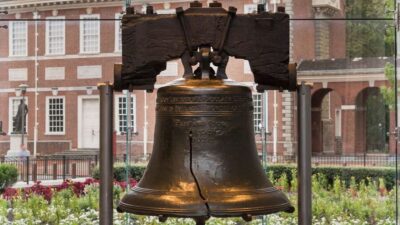
Next up is the Liberty Bell Center. The tour’s take here is practical: you’ll learn what makes the Liberty Bell such an iconic symbol in America, without getting lost in a single-page retelling.
The value of this stop is the interpretation. The bell is easy to treat like a museum object—something you stand near and photograph. The guide helps you see it as a symbol that people have used to argue for rights, identity, and national ideals. That’s why this stop works well even if you already know the basics. You come away with a better sense of how symbols work over time.
Also, the tour lists free admission for this stop, so you’re not paying extra entry fees while focusing on storytelling.
Stop 3: The President’s House controversy and Ona Judge’s escape
This is the kind of stop that changes how you look at the area. You’ll hear about the controversy around the President’s House and you’ll learn the story of Ona Judge’s escape from George Washington.
This matters because it turns the typical “founding fathers” angle into something messier and more human. Ona Judge’s story adds tension and agency to a time period that many visitors absorb as tidy and heroic. Instead of feeling like the past is a finished product, you see it as full of arguments, power struggles, and consequences.
A good walking tour can tell you what happened. This one helps you understand why the story still matters—especially if you’re the kind of traveler who likes history that has edges.
Deeper into old Philadelphia

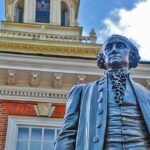
The oldest continuously lived street: slow down, look up
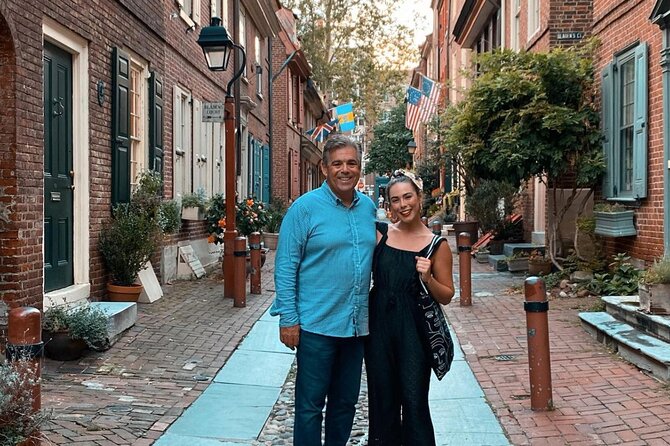
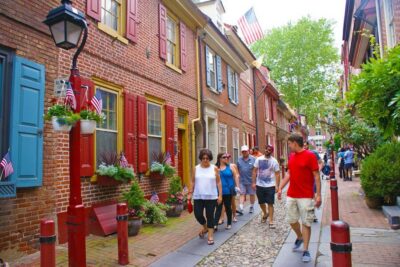
After the President’s House story, the tour heads toward the oldest continuously lived street in the U.S. This is where your eyes change. Buildings that look like “old-time charm” stop being decoration and become evidence.
Why this stop lands: it’s not just a photo moment. The guide points out how the street itself signals continuity. You’re learning history through scale and survival—how the same neighborhood fabric can hold layers of change.
If you’re traveling with someone who thinks history is boring unless it comes with reenactment, this is where you can win them over. Street-level history is usually more persuasive than a wall of text.
Women who shaped Philadelphia: a more complete city picture
The tour also includes time built around the women who formed Philadelphia. This isn’t presented as a bonus trivia layer. It’s woven into the walk so you get a different sense of who did the work and who got remembered.
People especially respond to this angle because it keeps the tour inclusive in a grounded way. It doesn’t only name women; it shows how their roles connect to power, community decisions, and the lived reality of the city.
In the same spirit, the guide’s approach often extends beyond women to highlight other stories that get less airtime, including Black history, Native connections (Lenape), and LGBTQ contributions. Even if you only catch part of the details on the day you go, the overall theme comes through clearly: Philadelphia’s story is bigger than the standard script.
Welcome Park and the Lenape connection
The last stretch brings you to Welcome Park, where you’ll hear about William Penn’s relationship with the Lenape community.
This stop is valuable because it keeps the tour from becoming only a European settler timeline. You get a reminder that the region had people, systems, and relationships long before the English-era story took center stage. The Lenape focus also helps you understand that “founding” doesn’t happen in a vacuum.
If you care about Indigenous history in North America, this is one of the points where the tour feels most grounded and less like a checklist.
Timing and pacing: a smart 2-hour hit of Old City
This tour runs about 2 hours. The stop times listed are short, so expect a steady rhythm: walk a bit, pause, absorb the story, keep moving.
For most people, that’s a plus. It means you can still fit in other nearby sites without feeling like you’re sprinting all day. It also keeps the tour from turning into “stand and read” time. You’ll learn more because you’re not spending your energy staring at signage while your brain tries to switch gears.
One practical note: the tour requests moderate physical fitness. That likely just means you should be comfortable on city sidewalks, with some walking and stops that happen quickly.
A second practical note: the tour is capped at 30, and that usually means you’ll hear the guide without strain and you’ll have a better chance to get your questions answered. Still, don’t plan on slow touring. This is a “get your bearings fast” style.
Price and value: $59 for guided storytelling you can use
![Beyond the [Liberty] Bell History Walking Tour - Price and value: $59 for guided storytelling you can use](https://assets.philadelphiaguides.com/wp-content/uploads/beyond-the-liberty-bell-history-walking-tour-4.jpg)
At $59 per person, this is not the cheapest way to see Liberty Bell area landmarks. But it’s also not priced like a museum day. The value comes from what you pay for: a guide who turns scattered civic landmarks into connected stories you can carry with you.
You’re also not building your cost around site tickets, since the stops list free admission for the points you visit. That shifts the expense toward the actual human guiding and the walking time, which is usually the cost you want to spend on a first visit.
Compared with doing everything on your own, the difference is time and sense-making. Philly’s Old City can feel like a pile of famous facades until someone explains the relationships. Here, you’re getting those links in a structured walk—so you spend your energy learning, not guessing.
One more value point: this tour gets booked in advance on average about 6 days ahead. That’s a hint that it has a loyal crowd. If you have a tight itinerary, don’t wait until the last minute.
What the best guides do (and why it matters)
![Beyond the [Liberty] Bell History Walking Tour - What the best guides do (and why it matters)](https://assets.philadelphiaguides.com/wp-content/uploads/beyond-the-liberty-bell-history-walking-tour-5.jpg)
A lot of history tours sound good in a brochure. The difference is how the guide handles real people in real weather and real question interruptions.
From the way this tour is described by people who went, the standout behavior is responsiveness. Guides like Mike, Matthew, Joey, and Rebecca are specifically credited with being engaging and well-prepared, and with handling impromptu questions without losing the thread of the walk. That’s how you get the experience to feel more like a conversation with a local who knows how to explain and when to move on.
There’s also a clear “less reported stories” emphasis. People point out that it adds new information not covered on the usual city loop, including a focus on women, Black history, Native Americans, and LGBTQ contributions. If you’ve already visited a couple of big-name sites and want the context that makes those sites make sense, this is exactly the kind of guide-led approach that helps.
Who should take this tour, and who might prefer something else
![Beyond the [Liberty] Bell History Walking Tour - Who should take this tour, and who might prefer something else](https://assets.philadelphiaguides.com/wp-content/uploads/beyond-the-liberty-bell-history-walking-tour-6.jpg)
This tour is a great fit if you:
- want an Old City orientation without committing to a long day
- like history that includes people who were overlooked by the standard narrative
- enjoy asking questions and getting direct answers
- appreciate walking routes with clear pacing and short stops
It may be less ideal if you:
- prefer long museum-style pacing where you can linger in one place
- hate walking with frequent stops
- want only famous, super-familiar facts with no push into lesser-known stories
The sweet spot is first-timers and repeat visitors who want a fresher angle on the Liberty Bell and Independence Hall area.
Should you book this Philadelphia walking tour?
![Beyond the [Liberty] Bell History Walking Tour - Should you book this Philadelphia walking tour?](https://assets.philadelphiaguides.com/wp-content/uploads/beyond-the-liberty-bell-history-walking-tour-7.jpg)
If you’re choosing between a generic Old City stroll and a guided walk with a pointed point of view, I’d book this one. For $59, you get a focused route, Independence Hall/Liberty Bell area context, and a strong emphasis on stories that add depth—especially around women, Ona Judge, Lenape connections, and other communities that deserve more credit.
Book it if you want the city explained in a way that’s both practical and human. Skip it only if your ideal tour is slow and heavy on museum time, because this one is built to cover the most important ground in about two hours.
FAQ
![Beyond the [Liberty] Bell History Walking Tour - FAQ](https://assets.philadelphiaguides.com/wp-content/uploads/beyond-the-liberty-bell-history-walking-tour-8.jpg)
FAQ
How much does the Beyond the Liberty Bell History Walking Tour cost?
The price is $59.00 per person.
How long is the tour?
It runs for about 2 hours.
Where does the tour start and end?
It starts at 210 W Washington Square, Philadelphia, PA 19106 and ends at Betsy Ross House, 239 Arch St, Philadelphia, PA 19106.
What time does the tour begin?
The start time is 1:00 pm.
Is the tour offered in English?
Yes, it is offered in English.
Do I need to buy tickets for the stops?
The stops listed show admission tickets as free.
What’s the maximum group size?
The tour has a maximum of 30 travelers.
Is free cancellation available?
Yes. You can cancel for a full refund up to 24 hours before the experience’s start time.
More Philadelphia Walks, Step by Step



More Tours in Philadelphia


More Tour Reviews in Philadelphia
Fresh Off the Press: Latest Philadelphia Reviews












Historical Tours, compared.
 ★ 5.0Revolution and the Founders: History Tour of PhiladelphiaFrom $292,944 reviews
 ★ 5.0Philadelphia Old City Historic Walking Tour with 10+ Top SitesFrom $432,020 reviews
 ★ 5.02.5 Hour Philadelphia History Tour with Washington War Tent ShowFrom $45924 reviews
 ★ 4.6Revolution and The Founders History TourFrom $29450 reviews
 ★ 5.0True Crime Philadelphia and History TourFrom $44416 reviews
 ★ 4.9History, Highlights & Revolution Walking TourFrom $45317 reviews
 ★ 5.0Philadelphia Old City History Pub Crawl Small-Group TourFrom $45294 reviews
 ★ 4.6Grim, Dark, and Twisted History TourFrom $44231 reviews
Browse the lists this tour appears in