
Reviewed · HISTORICAL TOURS
Philadelphia: Black History Walking Tour
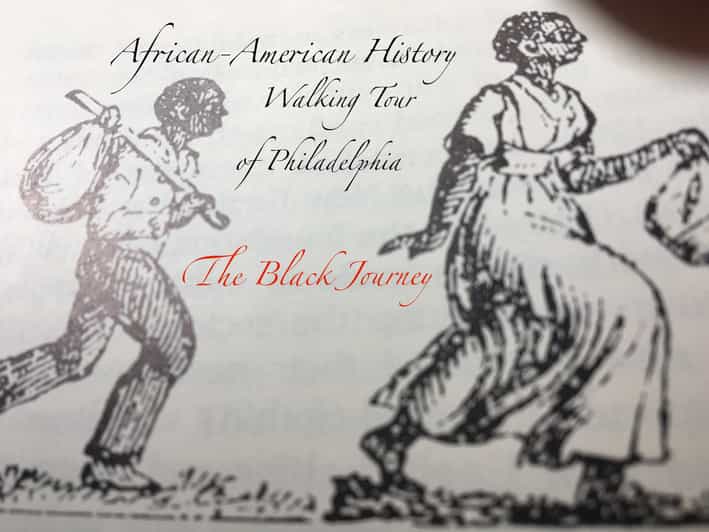
Philadelphia changes when you walk with its truth. This 90-minute Philadelphia Black History walking tour threads together early abolition stories and the darker mechanics of slavery, right through Old City. I love how it starts at Congo Square and then keeps moving, so the history feels like it lives in the street grid, not behind glass.
I also like the contrast: you’ll stand near major founding landmarks while hearing how Black people shaped America’s early story. You’ll learn about the Fugitive Slave Act of 1793 and the real people tied to escape routes and forced sale. One thing to consider is timing—some groups get longer than the stated 90 minutes, and late starts can make the walking feel more tiring than it sounds on paper.
Key highlights worth planning for
- Congo Square and the yellow fever epidemic’s unmarked graves set a human, emotional tone fast
- Quaker education stories show Black and White students learning together in early Philly
- Fugitive Slave Act (1793) and the Old London Coffee Shop connect law to cruelty
- Underground Railroad escape routes are grounded in specific Philadelphia locations
- Founding-era sites (Independence Hall, the U.S. Supreme Court building, the Banks) are tied to the story of enslavement and resistance
In This Review
- Congo Square, Yellow Fever Graves, and the Quaker School That Framed the Whole Story
- The Fugitive Slave Act in 1793 and the Old London Coffee Shop That Show How Slavery Worked
- Underground Railroad Escape Stories Told Through Philadelphia Locations
- Independence Hall to the U.S. Customs House: Why the Route Packs So Much Founding-Era Real Estate
- The 1.5-Mile, Cobblestone Reality: What 90 Minutes Feels Like
- Guides Matter: MaJewel’s Style, Q&A Energy, and When You Need Flexibility
- $35 for a City-Wide Story: Is It Good Value?
- Should You Book the Philadelphia Black History Walking Tour?
- FAQ
- How long is the Philadelphia Black History Walking Tour?
- How far is the walking route?
- Where do I meet the guide?
- What is the price per person?
- Is the tour in English?
- What should I wear for the tour?
- What major sites are included?
- Does the tour cover Underground Railroad locations?
- What’s the tour focus?
- Can I reserve now and pay later, and is there free cancellation?
Congo Square, Yellow Fever Graves, and the Quaker School That Framed the Whole Story
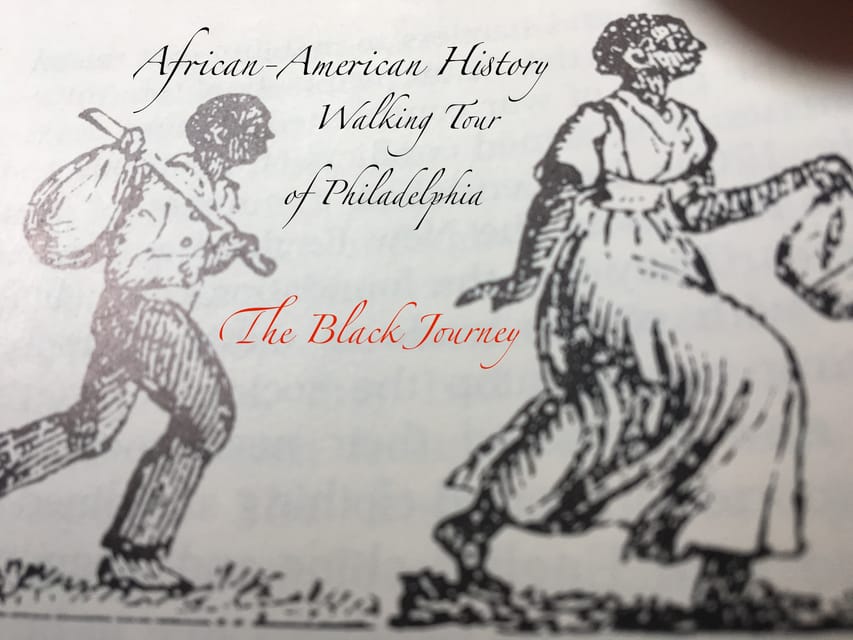
The tour’s start point is practical: meet your guide holding a sign that says The Black Journey in front of the Independence Visitor Center, on the corner of 6th and Market Street at 599 Market St. From there, the story begins before the big-famous buildings, with places that explain why Philadelphia became a critical stage for Black life—free and enslaved—early on.
A standout early stop is Congo Square. Even if you only know Philly through Independence Hall, this is the moment the city’s Black history stops being a side note. You get context about the people and communities that formed in Philadelphia long before the Revolution got the spotlight.
Right after, you’ll hear about the yellow fever epidemic and visit the unmarked graves of free and enslaved victims. This is one of those stops where the guide’s job isn’t to “perform history,” it’s to help you understand the scale of loss and how quickly tragedy could erase names. If you’re the type who likes facts, you’ll get them; if you’re the type who needs a moment to process, you’ll also get that space.
Then comes one of the most thought-provoking themes: education. The tour includes a Quaker school where both Black and White students were educated together. In the Philly of the late 1700s and early 1800s, this kind of pairing doesn’t mean equality in every sense, but it does show that early American ideas were being argued and practiced in real institutions—not just in speeches. You also get pointers to former Quaker Meeting House and Quaker School sites, so you can picture where those conversations happened.
The Fugitive Slave Act in 1793 and the Old London Coffee Shop That Show How Slavery Worked
Once the route pushes into the political and legal side of the story, the tour doesn’t stay abstract. It points to concrete places where policy and commerce shaped human lives.
One key learning is where the Fugitive Slave Act was passed in 1793. This matters because it turns the phrase fugitive slave law into something you can locate in your mind. You’re not just hearing that the law existed—you’re understanding that it was part of how communities, courts, and everyday decision-making enforced enslavement.
From there, the tour brings in a brutal but important detail: the Old London Coffee Shop, where humans were inspected and sold into slavery. That’s a jarring stop for many people, and it’s meant to be. It makes the point that slavery wasn’t only plantations and chains. It was also paperwork, markets, and the kind of public “business” people would rather pretend didn’t happen in their own city.
In this section, you’ll also hear about former locations connected to the system—places like the Philadelphia Prison Site and the Benjamin Rush House Site. Those names connect policy, punishment, and medical or civic influence in the city’s early era. The guide ties them back to the theme that freedom and coercion often lived in the same neighborhoods.
If you like walking tours that feel like a lesson you can stand on, this is a strong stretch. If you need a lighter emotional tone, plan to pace yourself here—this tour is fact-heavy and intentionally direct.
Philly at a walking pace, more routes

Underground Railroad Escape Stories Told Through Philadelphia Locations
The tour’s Underground Railroad focus isn’t just about the concept. It’s about the geography of escape—the idea that people moved through streets, safe houses, and networks that had to stay one step ahead of capture.
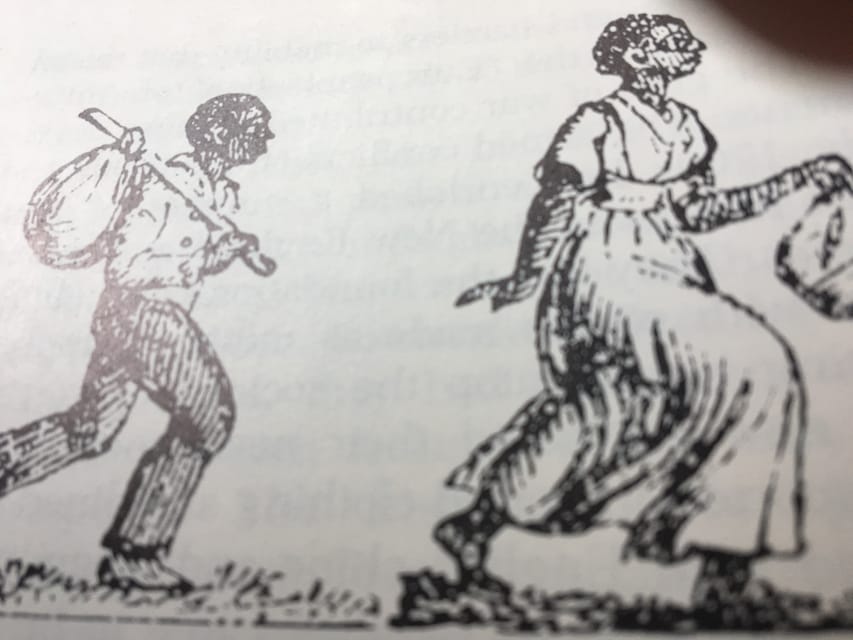
A standout story centers on Martha Washington’s enslaved handmaiden. You’ll hear how she emancipated herself and others, and how she and others traveled along the historic Underground railroad. What makes this part work is the way the guide connects the story to Philly’s early urban layout—where people could disappear, regroup, and try again.
Along the walk, the guide also identifies former locations tied to escape and resistance. You might notice the route includes areas like Dock Creek, the 18th Century Gardens, and other nearby former sites that help you picture movement through the city. These aren’t random stops; they’re there because cities like Philadelphia had chokepoints—water access, market corridors, and neighborhood edges—where people could be seen, traded, or hidden.
The tour also connects national storylines to specific early Philly figures described as prominent early African-Americans, abolitionists, slaveholders, and founding-era leaders. That balancing act is key: you’re not only learning about victims. You’re learning about systems and about the people who fought, negotiated, profited, or enforced.
One more note: access can affect how some stops are handled. There’s at least one instance where viewing depends on coordination with church officials, including Mother Bethel and the tomb of Allen in the basement. If you’re hoping for an inside viewing, keep expectations flexible; the outdoor walking portion is still the core of the experience.
Independence Hall to the U.S. Customs House: Why the Route Packs So Much Founding-Era Real Estate
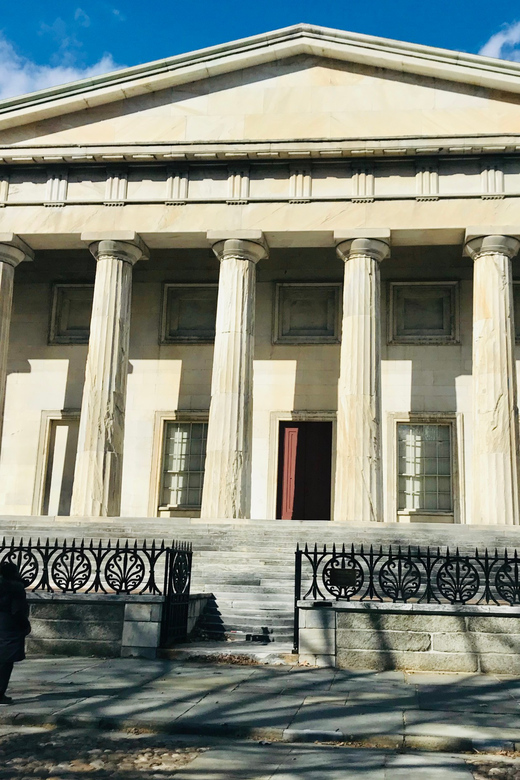
Here’s where the tour earns its name walking in history’s footsteps. You’ll move through a concentration of early American landmarks that most first-time visitors see in a single day, then you’ll learn how slavery and Black life were part of the same civic world.
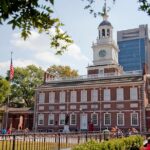
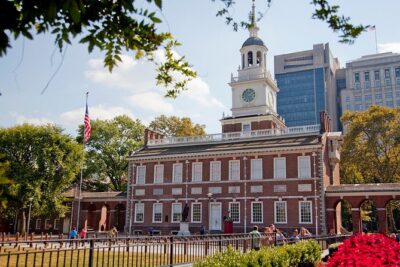
You’ll visit Independence Hall, plus the President’s House, Congress Hall, and Old City Hall. On a typical sightseeing day, these stops are about architecture and politics. On this tour, they’re a backdrop for what America claimed and what it practiced.
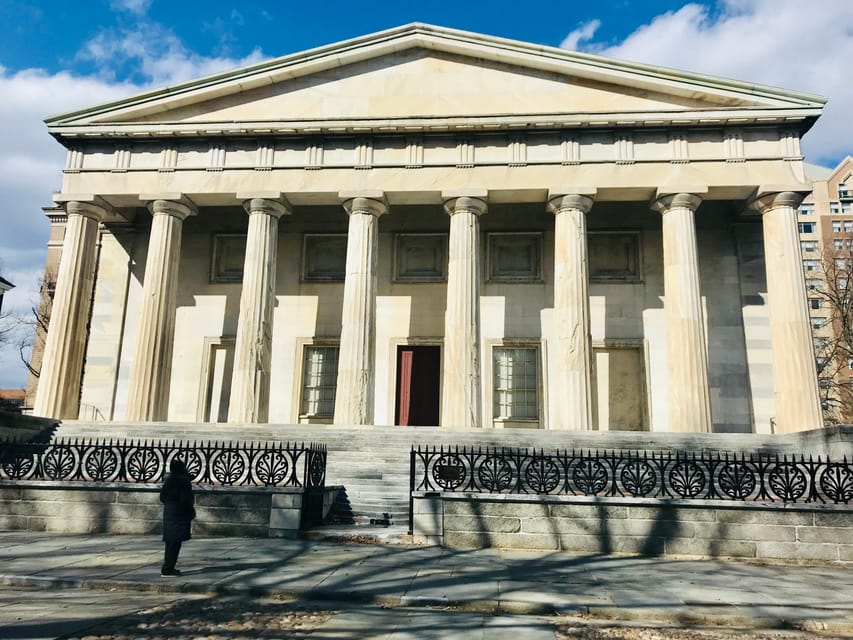
You’ll also pass by or discuss the First U.S. Supreme Court Building and the American Philosophical Society Museum. That pairing is powerful because it forces a question: how did institutions meant for reason, law, and science coexist with enslavement? The guide’s job is to connect the dots so the contradiction feels unavoidable, not clever.
Other found-and-situated stops include Library Hall, Thomas Jefferson Garden, and both the First and Second Bank of the U.S. Banks are especially important in this story because they represent capital—who had it, who controlled it, and how money moved alongside human bondage. Then you’ll continue toward Carpenter’s Hall, New Hall Military Museum, and Independence Square and Washington Square.
The tour also includes a few memorial and symbolic moments: the Tomb of the Unknown Revolutionary War Soldier and the Bicentennial Moon Tree. Even if these aren’t strictly about slavery, they fit the tour’s wider point that “founding” is a process with both victory and harm baked in.
You’ll also hear about residential and city locations like the John Todd House, Bishop White House, and Kidd House, plus commercial and port-adjacent spaces like the Merchant’s Exchange and the U.S. Customs House. Those last two help you understand Philadelphia as a place where global goods, local enforcement, and human trafficking connections could all intersect.
The 1.5-Mile, Cobblestone Reality: What 90 Minutes Feels Like
This is a walking tour, not a sit-down lecture. The route covers about 1.5 miles and runs roughly 90 minutes, on cobblestoned streets. Wear comfortable sturdy shoes—your feet will notice the stones long before the facts do.
Timing is the practical consideration. Even though the tour is advertised as 90 minutes, there’s evidence that some experiences run longer, especially if the guide spends extra time on presentation or if the group starts late. In one case, a late guide and an overlong tour led someone to leave early. That doesn’t mean it always happens, but it does mean you should build in a little buffer if you have a tight schedule afterward.
There can also be small breaks. One account notes a short choice stop at Wawa, which is the kind of real-world detail that matters when you’re walking a dense Old City route.
If you’re planning your day, I’d treat this as a 2-hour slot door-to-door, even if the stated duration is 90 minutes. That keeps you from feeling stressed while the guide is answering questions or adjusting to access needs.
Guides Matter: MaJewel’s Style, Q&A Energy, and When You Need Flexibility
The tour’s success often comes down to the guide, and the guide names do matter. In particular, MaJewel was mentioned for being extremely knowledgeable and for taking time to answer questions. That’s the kind of approach that turns a walk into a conversation, not just a monologue.
You’ll get a fact-filled flow, including an early history focus that explains the role of Black Americans in the foundation of the United States. That framing is intentional. The route isn’t only about famous battles or milestones; it’s about how policies, places, and daily systems shaped lives from the start.
Keep in mind that group management can vary. In one experience, the guide’s opening history segment ran long and repeated points. In another, the guide arrived late, stretching the event and tiring people out. So yes, you might get a tight, well-timed hour-and-a-half, but you also might get a slightly more stretched schedule depending on timing and pacing.
If you want the best outcome, show up a few minutes early at the meeting point with your shoes ready. Then come prepared to walk, listen, and ask questions. This kind of tour rewards attention.
Deeper into old Philadelphia
$35 for a City-Wide Story: Is It Good Value?
At $35 per person for a 90-minute guided walking tour, you’re paying for more than a route map. You’re paying for someone to connect dozens of sites into one argument about early America—how slavery operated, how abolitionists pushed back, and how Black people lived, resisted, and built community.
The value comes from density. You’re not doing just one museum stop. You’re also linking the Underground Railroad story to everyday Philadelphia geography and bringing you into the orbit of Independence Hall, the Supreme Court building, the banks, and more. That’s a lot of “big name” real estate for one ticket price.
The tradeoff is that you’re outdoors for the whole experience and on uneven stones. You’ll also want to plan for your own water and energy, since the tour structure is built around walking and historical stops rather than comfort breaks.
If you like guided interpretation and you want a structured way to see Philadelphia beyond postcard photos, the price feels fair. If you’re mainly chasing famous sights and prefer low-intensity emotional topics, you might feel the tour’s directness more than you expect.
Should You Book the Philadelphia Black History Walking Tour?
I think you should book if you want a guided, street-level look at Philadelphia’s early story—especially if you care about how the law, commerce, and civic institutions intersected with slavery and resistance. The combination of Congo Square, yellow fever graves, Quaker education context, the Fugitive Slave Act moment, and the Old London Coffee Shop stop gives you both emotional grounding and concrete details.
You might skip it if you’re very time-pressed or you can’t handle a possible schedule wobble. Also, if you don’t do well with hard topics connected to persecution, sale, and unmarked graves, you may find the emotional intensity higher than you want.
If you do go, I’d plan a relaxed rest of the day afterward, wear real walking shoes, and arrive early to reduce stress. This tour is at its best when you let the city’s layers talk to you—block by block.
FAQ
How long is the Philadelphia Black History Walking Tour?
The tour lasts about 90 minutes.
How far is the walking route?
It covers approximately 1.5 miles.
Where do I meet the guide?
Meet your guide holding a sign that says The Black Journey in front of the Independence Visitor Center, on the corner of 6th and Market Street at 599 Market St, Philadelphia, PA 19106.
What is the price per person?
The price is $35 per person.
Is the tour in English?
Yes, the live tour guide speaks English.
What should I wear for the tour?
Wear comfortable sturdy shoes. The route includes cobblestoned streets, so weather-appropriate clothing also helps.
What major sites are included?
The tour includes prominent stops in Old City such as Independence Hall, the President’s House area, Congress Hall, Old City Hall, and the First U.S. Supreme Court Building, plus other nearby historic sites listed in the experience.
Does the tour cover Underground Railroad locations?
Yes. The tour includes locations along the Historic Underground Railroad used by enslaved people to escape.
What’s the tour focus?
It focuses on Philadelphia and America’s early history, including the role of Black Americans in the country’s foundation, plus stories tied to enslaved people, abolitionists, and historic figures.
Can I reserve now and pay later, and is there free cancellation?
Yes. You can reserve now and pay later, and free cancellation is available up to 24 hours in advance for a full refund.
More Philadelphia Walks, Step by Step



More Tours in Philadelphia

More Tour Reviews in Philadelphia
Fresh Off the Press: Latest Philadelphia Reviews









Historical Tours, compared.
 ★ 5.0Revolution and the Founders: History Tour of PhiladelphiaFrom $292,944 reviews
 ★ 5.0Philadelphia Old City Historic Walking Tour with 10+ Top SitesFrom $432,020 reviews
 ★ 5.02.5 Hour Philadelphia History Tour with Washington War Tent ShowFrom $45924 reviews
 ★ 4.6Revolution and The Founders History TourFrom $29450 reviews
 ★ 5.0True Crime Philadelphia and History TourFrom $44416 reviews
 ★ 4.9History, Highlights & Revolution Walking TourFrom $45317 reviews
 ★ 5.0Philadelphia Old City History Pub Crawl Small-Group TourFrom $45294 reviews
 ★ 4.6Grim, Dark, and Twisted History TourFrom $44231 reviews
Browse the lists this tour appears in