
Reviewed · HISTORICAL TOURS
Philly Gayborhood and LGBTQ History Walking Tour
Philadelphia keeps its queer story on the walls. This Gayborhood walking tour is built around real places tied to LGBTQ organizers, plus visible art that turns the sidewalk into a lesson. I like how the pace stays human, with frequent short stops where you can take photos and actually read what’s in front of you.
My second favorite part is the way it connects Pride to progress, not just the parade day. You’ll visit the William Way LGBT Community Center, a mural stop at Writer’s Block Rehab, and LGBTQ anchors like Philly AIDS Thrift at Giovanni’s Room, all in about 1 hour 30 minutes. One thing to consider: it depends on good weather, so if Philly’s acting up, you may need to reschedule.
In This Review
- Key highlights you should know
- A 90-minute Gayborhood walk you can plan around
- Price and value: $49 for LGBTQ landmarks that feel personal
- Where you meet: Bud & Marilyn’s on Locust Street
- How the tour moves: short stops, easy pacing, lots of time to look
- Stop 1: William Way LGBT Community Center and the Pride and Progress mural
- Stop 2: Writer’s Block Rehab murals on a local QPOC-owned bar wall
- Stop 3: Philly AIDS Thrift at Giovanni’s Room, and the bookstore legacy
- Stop 4: North Camac Street and where the Gayborhood heart used to beat
- Understanding Pride here: from protest to parade, with real context
- Group size, photos, and your best tour-day mindset
- The private upgrade: same route, smaller group feel
- Who this walking tour is best for
- Timing, weather, and how to avoid a wasted walk
- Should you book this Philly Gayborhood and LGBTQ history tour?
- FAQ
- What is the price for the Philly Gayborhood and LGBTQ History Walking Tour?
- How long is the tour?
- Where does the tour start and end?
- What time does the tour begin?
- Is the tour offered in English?
- Are service animals allowed?
- Is free cancellation available?
Key highlights you should know
- A tight 90-minute route that covers major LGBTQ landmarks without marathon walking
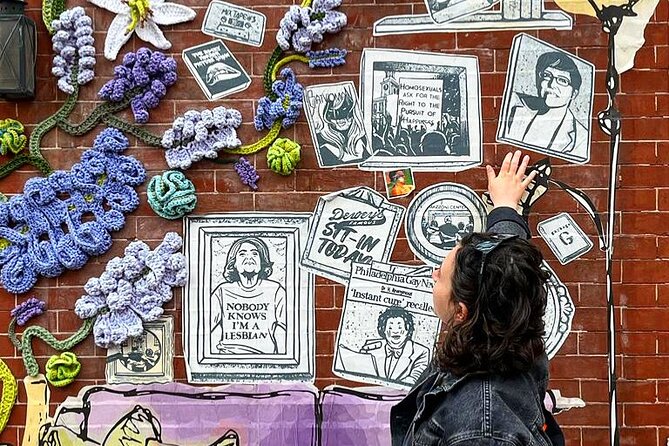
- Pride and Progress mural at William Way plus additional queer icon artwork
- Giovanni’s Room / Philly AIDS Thrift stop, tied to an enduring LGBTQ bookstore tradition
- North Camac Street context for where the Gayborhood’s energy used to gather
- Small-group feel with a maximum of 30 people, plus an option to upgrade for a private tour
A 90-minute Gayborhood walk you can plan around
This is the kind of tour that fits real travel days. You’re out for about 1.5 hours, starting at 3:00 pm and ending back where you meet. With a start time late enough for lunch and early evening plans still possible, it works well if you’re also exploring Center City.
The route is designed for quick learning stops instead of long lectures. You’ll spend around 10–15 minutes at each location, which means you can absorb the context and still keep moving. If you like your history grounded in street-level details, this format is a win.
Philly at a walking pace, more routes
Price and value: $49 for LGBTQ landmarks that feel personal
At $49 per person, you’re paying for a guided walk with curated stops that matter. The value comes from access to places you might not notice on your own, plus the guide’s context for how Philly’s LGBTQ community organized, protested, and celebrated.
This tour also includes a few practical perks that help the value feel real:
- Free admission is built into the listed stops
- The ticket is mobile, so you’re not hunting for paper
- It’s offered in English
- You’re capped at 30 travelers, which helps the guide keep the group together
If you’re visiting for a short time and want something more specific than the usual “big sights,” this price sits in the reasonable-to-splurge range. It’s not a bargain tour, but it’s also not trying to charge like a private driver. For what you get, it tends to make sense.
Where you meet: Bud & Marilyn’s on Locust Street
You’ll start at Bud & Marilyn’s, 1234 Locust St, Philadelphia, PA 19107. Since the tour ends back at the meeting point, you don’t have to guess how you’ll get home afterward.
This also helps with planning photos and dinner. You can use the same area to grab a meal afterward, instead of arriving at a far-flung neighborhood with no plan. And because it’s near public transportation, getting there is usually straightforward.
How the tour moves: short stops, easy pacing, lots of time to look
The whole walk is set up as a sequence of quick, meaningful stops. That matters, because LGBTQ history can feel overwhelming when it’s presented as a giant timeline. Here, it’s broken into pieces you can actually hold in your head: a building with a mural, a bar-side art wall, a bookstore landmark, then a street that explains where the community’s nightlife used to cluster.
The timing is also traveler-friendly. Most stops are around 10–15 minutes, so you’re not stuck listening for too long without a visual break. If you like taking pictures, the pace is built for that.
Stop 1: William Way LGBT Community Center and the Pride and Progress mural
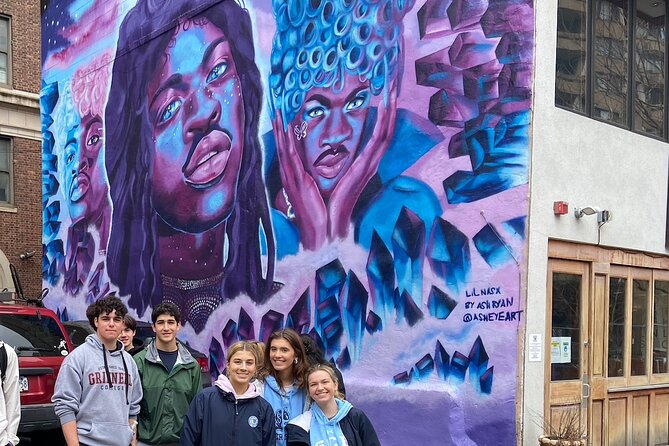
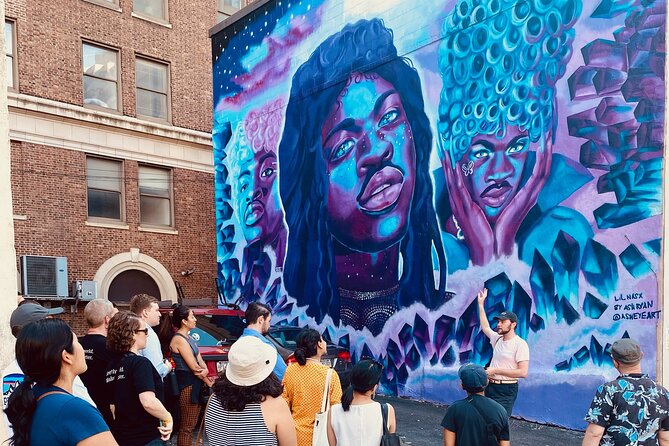
Your first stop is the William Way LGBT Community Center. The big draw here is the Pride and Progress mural on the side of the building.
Why this stop matters: William Way isn’t just a backdrop. It’s a community anchor, and using the mural as a starting point makes the tour’s theme clear right away. You get a visual statement about Pride that isn’t only about celebration—it’s also about change. That framing helps everything else click.
Practical tip: bring your phone camera, obviously, but also take a minute to step back from the wall. Murals can look different up close versus from across the sidewalk, and you’ll get more out of it if you switch angles.
Deeper into old Philadelphia
Stop 2: Writer’s Block Rehab murals on a local QPOC-owned bar wall
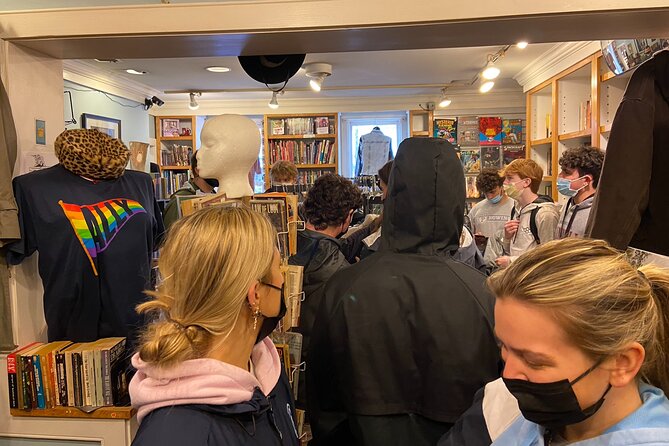
Next you’ll head to Writer’s Block Rehab, where the tour highlights two murals of queer icons. This stop is listed as about 10 minutes, so it’s meant to be quick and focused.
What I like about this kind of stop: it shows you LGBTQ culture doesn’t live only in official institutions. It lives in everyday spaces too—especially the kind of local places that build community through nights out, conversation, and visibility.
Also, the mural format is ideal for a walking tour. It gives you instant context you can see, and it invites questions. If you’re the type who likes to understand who’s represented and why, this is a good moment to slow down for a closer look.
Stop 3: Philly AIDS Thrift at Giovanni’s Room, and the bookstore legacy
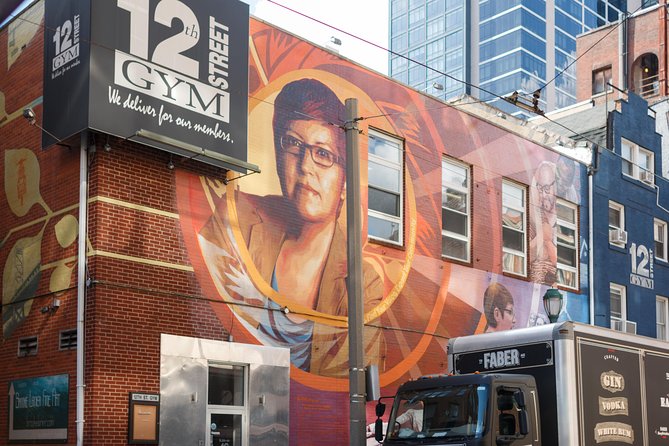
Then you visit Philly AIDS Thrift @ Giovanni’s Room. This is one of the more meaningful stops on the route because it connects LGBTQ history to literature, community support, and continuity.
The tour notes that Giovanni’s Room is the oldest continuously operating LGBTQ-focused bookstore in the country. That’s a big claim, and it explains why this stop feels heavier than a “fun mural photo” moment. A bookstore like this becomes more than retail. It becomes an archive, a meeting place, and a steady presence when communities need one.
If you’re short on time elsewhere in Philly, this is still worth prioritizing. Even if you only browse briefly, the fact that it’s tied to Philly AIDS Thrift adds another layer: learning here isn’t separated from activism.
Stop 4: North Camac Street and where the Gayborhood heart used to beat
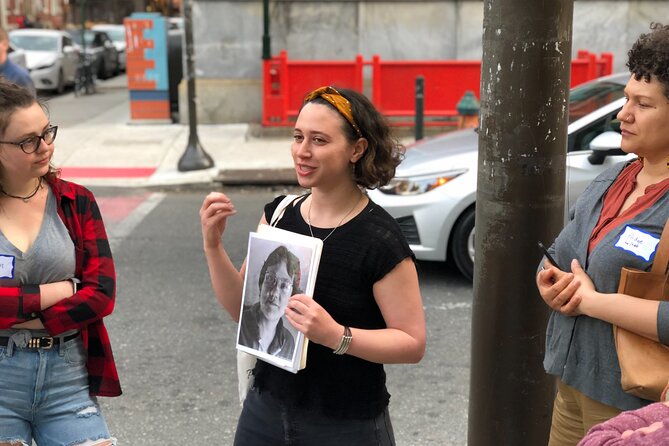
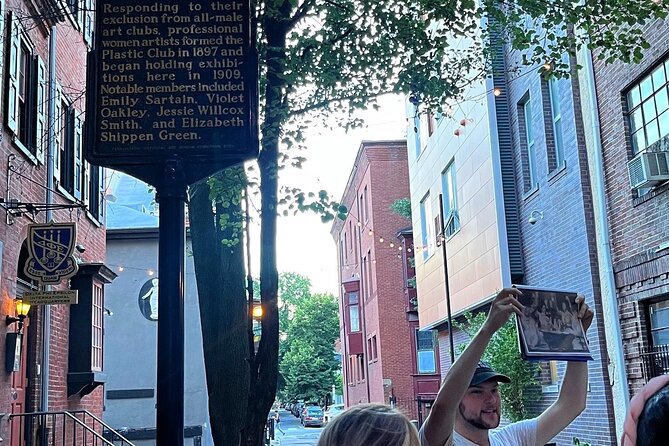
The final stop focuses on North Camac Street. You’ll see what the heart of the Gayborhood consisted of and the location of Philadelphia’s oldest gay bars.
This is where the tour helps you connect the dots between past community spaces and the city you’re walking through today. It’s also a reminder that LGBTQ neighborhoods didn’t appear by accident. They formed through specific bars, gathering spots, and social networks that supported people who didn’t feel safe elsewhere.
If you want to understand how neighborhood change works, this stop is a helpful lens. It teaches you to notice what’s missing, what’s still here, and how meaning gets carried forward.
Understanding Pride here: from protest to parade, with real context
A big theme on this tour is how Pride evolved—from protest to parade. That’s not just a history lesson. It’s a way of reading the city you’re standing in.
When you connect that theme to the murals, a center like William Way, and a long-running bookstore, Pride stops feeling like a single day event. Instead, it becomes a visible outcome of organizing, mutual aid, and cultural visibility. It also helps explain why many LGBTQ people treat Pride as both celebration and accountability.
If you’ve ever watched Pride unfold online but wondered where that energy comes from, this tour gives you a local chain of events you can actually picture on foot.
Group size, photos, and your best tour-day mindset
The cap is 30 travelers, which is the sweet spot for a walking tour. Large enough to make it social, small enough that you’re not feeling like you’re part of a moving crowd of strangers forever.
You’ll likely spend your time doing three things:
- listening for the story behind each location
- taking pictures of murals and storefronts
- asking questions when something clicks
Based on the overall feedback this tour receives, the guide’s role matters. The tour is designed to run on time, with a pace that keeps everyone together. If you’re the kind of person who likes asking follow-up questions, bring that energy.
The private upgrade: same route, smaller group feel
There’s an upgrade option for a private tour experience with 5 people minimum. If you’re traveling with friends, a family group, or you want fewer people in the mix for questions, this can be a nice way to get more interaction.
Private doesn’t mean a different story—it usually means the story gets delivered with more space. If you have a question that needs a longer answer, a smaller group makes that easier.
Who this walking tour is best for
This tour fits best if you want:
- LGBTQ history tied to street-level places, not just theory
- Pride context that goes beyond parade day
- A route you can do without committing half a day
It’s also a good fit for first-timers to Philadelphia. Starting at a central meeting spot and moving through key Gayborhood landmarks gives you quick orientation.
It may be less ideal if you want a long, museum-style experience or a deep chronological lecture. This is a walking tour with short stops. It’s meant to be digestible, not exhaustive.
Timing, weather, and how to avoid a wasted walk
This experience requires good weather. If Philly decides to rain or get unpleasant, you’ll need to be flexible, because the tour can be canceled and you’ll be offered a different date or a full refund.
My practical advice: check the forecast the morning of, and dress like you’ll be outside for 90 minutes plus a little extra buffer. Comfortable shoes matter here, even with short stops.
Should you book this Philly Gayborhood and LGBTQ history tour?
I’d book it if you want a focused, local walk that connects LGBTQ landmarks to Pride’s evolution. At $49 for about 1.5 hours, it’s a strong option when you’d rather spend time in meaningful places than chasing random photo spots.
Skip it or reconsider if you hate outdoor walking in changing weather, or if you’re looking for a very long, museum-level historical deep dive. Otherwise, this is the kind of tour that leaves you seeing the city differently—by the time you’re done, you’ll know why these walls matter.
FAQ
What is the price for the Philly Gayborhood and LGBTQ History Walking Tour?
The price is $49.00 per person.
How long is the tour?
The tour runs for about 1 hour 30 minutes.
Where does the tour start and end?
It starts at Bud & Marilyn’s, 1234 Locust St, Philadelphia, PA 19107, and it ends back at the meeting point.
What time does the tour begin?
The start time listed is 3:00 pm.
Is the tour offered in English?
Yes, it’s offered in English.
Are service animals allowed?
Yes, service animals are allowed.
Is free cancellation available?
Free cancellation is available up to 24 hours in advance for a full refund.
More Philadelphia Walks, Step by Step


More Tours in Philadelphia
More Tour Reviews in Philadelphia
Fresh Off the Press: Latest Philadelphia Reviews




Historical Tours, compared.
 ★ 5.0Revolution and the Founders: History Tour of PhiladelphiaFrom $292,944 reviews
 ★ 5.0Philadelphia Old City Historic Walking Tour with 10+ Top SitesFrom $432,020 reviews
 ★ 5.02.5 Hour Philadelphia History Tour with Washington War Tent ShowFrom $45924 reviews
 ★ 4.6Revolution and The Founders History TourFrom $29450 reviews
 ★ 5.0True Crime Philadelphia and History TourFrom $44416 reviews
 ★ 4.9History, Highlights & Revolution Walking TourFrom $45317 reviews
 ★ 5.0Philadelphia Old City History Pub Crawl Small-Group TourFrom $45294 reviews
 ★ 4.6Grim, Dark, and Twisted History TourFrom $44231 reviews
Browse the lists this tour appears in