
Reviewed · HISTORICAL TOURS
The Black Journey: An African-American History Walking Tour of Philadelphia
Philadelphia’s Independence Hall tells a different story. This Black history walking tour uses major landmarks to spotlight smaller, often overlooked lives—from enslaved people to freedom seekers—and it keeps the route tight enough to feel doable. I especially like how the guide brings specific places to life with concrete stories, not vague themes. One possible drawback: it moves at a walking pace for about two hours, so plan for steady going.
The guide—often described as Mijuel (pronounced My Jewel) and sometimes Mike—leans into storytelling while still staying organized stop-to-stop. You’ll also appreciate the practical touches, like a mobile ticket and a max group size of 40, which helps questions stay possible without turning into a loud shuffle.
This is a great fit if you want a guided walk through the Old City core, including stops where the history is right in front of you. Just note it requires good weather, so I’d avoid booking it on days when Philly seems determined to drizzle.
In This Review
- Key takeaways before you go
- Price and timing: what $35 gets you in Old City
- Start at Independence Visitor Center, end near the Commodore John Barry Statue
- The independence-area route: how the tour uses famous buildings as story props
- President’s House: the stop that reframes the founding story
- Liberty Bell and abolition: not just a landmark, a symbol with teeth
- Washington Square: a short stop with big implications
- Congress Hall, Old City Hall, and the courts: the systems behind the stories
- Banks, trade, and the “Black Wall Street” angle
- Carpenter’s Hall to Independence Square: learning to read the street
- Congo Square and the stories that cross beyond Independence Hall
- Former sites you can’t always see: Philly Prison, Quakers, and more
- How long is the walk, and what to bring
- Who should book this tour
- Should you book The Black Journey Philadelphia Walking Tour?
- FAQ
- How much does The Black Journey Philadelphia Walking Tour cost?
- How long is the tour?
- Where does the tour start?
- Where does the tour end?
- What time does the tour begin?
- Do I need to buy tickets for the stops?
- How big is the group?
- Is the tour run in all weather?
- Are service animals allowed?
- What is the cancellation policy?
Key takeaways before you go
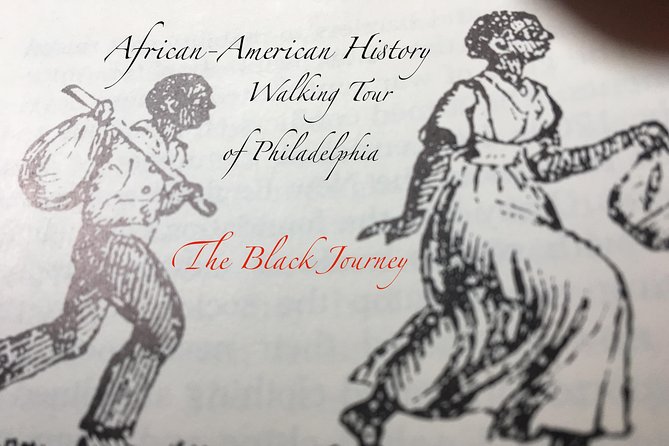
- A focused 2-hour route through the Independence Hall area, built for first-timers and repeat visitors alike
- Liberty Bell context tied to abolition and a bigger story than the photo op
- Personal stories tied to real sites, including the President’s House and Washington Square
- AME connections and church-centered narratives, with Mother Bethel standing out in the story line
- Markers for places you might not realize existed, like Philadelphia Prison and Quaker meeting and school sites
- Maximum 40 people, which usually means you can hear, see, and ask without constant crowd pressure
Price and timing: what $35 gets you in Old City
At $35 per person for about two hours, this tour is priced like a mid-range guided experience—but the value is in where you spend that time. You’re not just walking past famous buildings; you’re getting context for why Black history is woven into the same streets that anchor the United States founding story.
Two details matter for planning. First, this is typically booked around 20 days in advance, so if your dates are firm, lock them in early. Second, the tour starts at 2:00 pm, which can help you avoid the worst morning crowds near Independence Hall while still catching daylight for photos.
The route is mostly outdoors and it’s weather-dependent. If rain or poor conditions shut things down, you should expect your choice to be adjusted through a new date or a full refund, since good weather is required to run it.
Philly at a walking pace, more routes

Start at Independence Visitor Center, end near the Commodore John Barry Statue
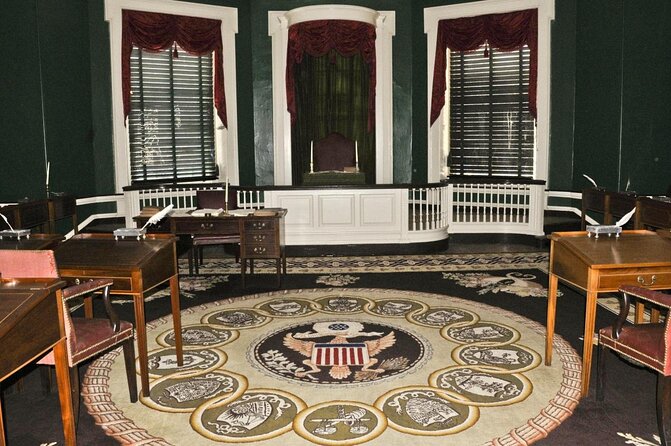
Your walk starts at the Independence Visitor Center (599 Market St) and finishes at the Commodore John Barry Statue (111 S Independence Mall W). That end point is handy because it’s central: you can keep exploring after the tour without needing to retrace your steps.
The tour is designed for a group that stays together. With a cap of 40 people, you should still have a good shot at hearing the guide at each stop. The tour also notes “moderate physical fitness” as the requirement, which basically means you’ll want comfortable shoes and you should expect continual movement between close-by sites.
One more practical note: it’s near public transportation, and service animals are allowed. If you’re traveling with mobility needs, I’d still treat this as a walking tour with frequent stops rather than a mostly sit-down lecture.
The independence-area route: how the tour uses famous buildings as story props
This walk covers a classic Old City belt: Congress Hall, Old City Hall, the First U.S. Supreme Court building, and the American Philosophical Society Museum, plus nearby halls and gardens. The smart move here is that the guide doesn’t treat these as museum-only stops. Instead, they become anchors for the story of who lived here, who worked here, and who fought for freedom while the nation built its public image.
Here’s what that looks like for you on the ground. When you pass places tied to government and elite life, you’ll get the counterweight: stories about enslaved people and freedom seekers whose names and contributions were often treated like footnotes. That contrast is the whole point of the tour, and it makes the route feel less like sightseeing and more like learning the city’s real layout of power.
It’s also why the stops listed along the walk matter. You’re moving through spaces linked to legislation, courts, and commerce, and the guide connects those systems to the lived experience of Black Philadelphians across time. That connection is what turns a famous streetscape into something personal.
President’s House: the stop that reframes the founding story
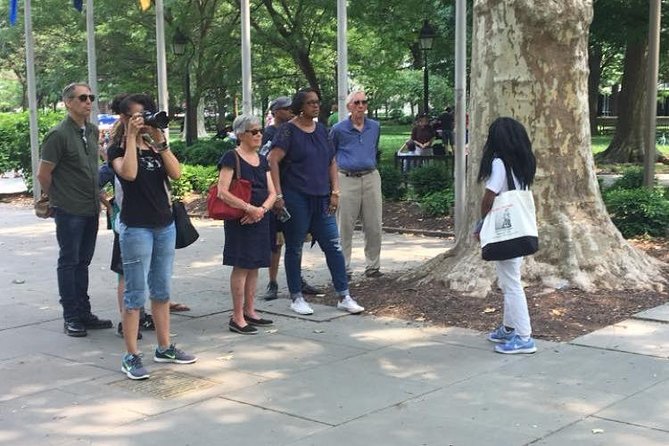
If you want a “main character” stop, it’s the President’s House. The tour frames it as the house where the first two presidents lived, and it specifically notes that nine enslaved individuals were part of that household. The stop lasts about 15 minutes, and the admission is listed as ticket-free for that component.
Why this matters to you: it’s one thing to know slavery existed in the colonies. It’s another to hear it placed directly into the domestic, visible setting that most people associate with leadership and national beginnings. This is where the tour tends to shift from background facts to sharper moral questions—who benefited, who paid, and who didn’t have a choice.
If you’re the type who likes to understand “how it worked,” this stop is the best place to start asking your own questions. Pay attention to how the guide ties everyday household life to the larger system of bondage and the pushback against it.
Liberty Bell and abolition: not just a landmark, a symbol with teeth
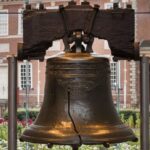
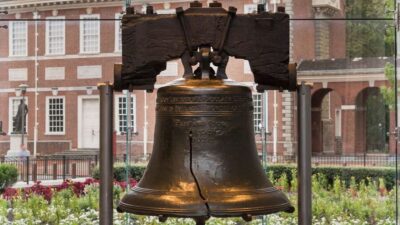
Next, you’ll hear about the bell that sat atop Independence Hall. This part of the story is tied to abolition, and the tour presents the bell not as a single object frozen in time, but as a symbol that traveled through the movement for freedom.
That’s a big difference from most quick visits. Most people come, take a picture, and move on. Here, you get the idea that symbols get their meaning from people fighting to make them matter. If you care about how activism reshapes public memory, this stop will land hard in the best way.
Deeper into old Philadelphia
Washington Square: a short stop with big implications
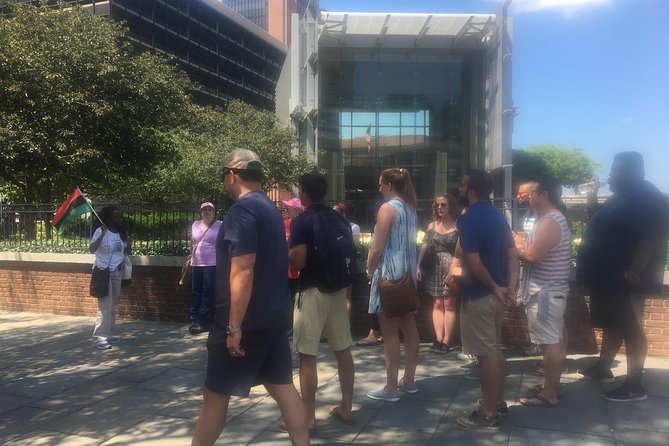
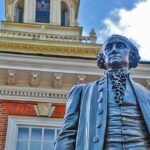
You also spend time at Washington Square. The tour lists about 10 minutes here, and the admission is ticket-free for this component. I’d treat this as a “listen closely” stop. It’s short, but it’s the type of place where a guide can connect street-level geography to community life and the social world surrounding it.
This is also the kind of stop where you’ll benefit from asking yourself what you’d notice if you lived here. When you’re in Philly for the first time, Washington Square can look like just another open space. On this walk, it becomes a place with an argument attached.
Congress Hall, Old City Hall, and the courts: the systems behind the stories
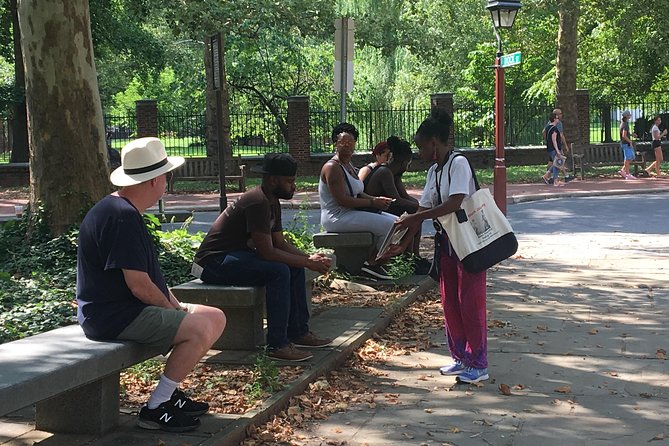
This tour threads through buildings that represent power: Congress Hall and Old City Hall, plus the First U.S. Supreme Court building. Even if you don’t go inside any of these sites, the exterior storytelling has value because it gives you context for who had authority, how laws worked, and why enslavers and advocates shaped the legal world.
A practical way to enjoy this stretch: keep your attention on the cause-and-effect chain the guide is building. You’ll hear how institutions and public decisions impacted human lives. When you understand that, the buildings feel different. They stop being “old” and start being “active,” even though they’re standing still.
Banks, trade, and the “Black Wall Street” angle
The route includes both the First Bank of the U.S. and the Second Bank of U.S., plus nearby story-linked commercial stops such as Dock Creek, Merchant’s Exchange, and City Tavern. This part is where you’ll often hear the city’s business life connected to Black community survival and ambition.
One reason people love this tour is that it can reframe Philly as more than a political birthplace. It becomes an economic story too—credit, trade, employment, and the risks of trying to build stability in an unfair system.
If you’ve ever heard Philly described with comparisons to famous “Black Wall Street” stories, this is likely where the tour points you toward that mindset—seeing economic life as part of the freedom story, not separate from it.
Carpenter’s Hall to Independence Square: learning to read the street
As you move through Carpenter’s Hall and Independence Square, the guide’s job is to help you read the street the way locals do. You start noticing patterns: which areas were designed for official life, which were tied to workers and commerce, and which spaces became important community reference points.
The tour also includes a Tomb of the Unknown Revolutionary War Soldier and a Bicentennial Moon Tree, plus John Todd House and the Bishop White House. These might look like quick “yep, that’s there” stops on other itineraries. Here, the guide uses them to keep the story moving and to show how people argued over nationhood, freedom, and belonging in the very same square feet.
Congo Square and the stories that cross beyond Independence Hall
Some guides fold in broader Black-Phiadelphia threads, and this tour’s narrative can reach beyond the immediate Old City core. In the feedback for this experience, Congo Square comes up as a moment where the guide discusses burial and the lasting presence of people whose stories were pushed aside.
Why that matters for you: history isn’t only a set of buildings you can point at. It’s also people—where they lived, how they gathered, and how their memory persisted through generations even when documentation was missing or treated as less important.
Even if your primary goal is Independence Hall-area landmarks, the fact that this tour can widen the story helps you connect the founding-era setting to later Black community life in Philly.
Former sites you can’t always see: Philly Prison, Quakers, and more
A big part of the tour’s value is that it identifies former locations—places that shaped lives even if the original structures no longer stand in the way you’d expect.
The guide highlights locations including:
- Philadelphia Prison Site
- Benjamin Rush House Site
- Quaker Meeting House Site
- Quaker School Site
This is one of those “you’ll feel it later” features. When you walk these streets afterward on your own, you’ll recognize that the city used to contain other realities—education and worship spaces, detention sites, and home bases for people whose roles were tangled with race, morality, and power.
If you like learning how cities evolve, this section is where the walk stops being only about facts and starts being about patterns.
How long is the walk, and what to bring
The tour runs about 2 hours and includes many stops in a relatively compact area. That’s ideal for a first day in Philly because you get a lot of context without having to commit to an all-day museum crawl.
For comfort and best listening, I’d bring:
- Comfortable shoes for continuous sidewalk walking
- Water, since it’s mostly outdoors
- A charged phone in case you need your mobile ticket
- A willingness to slow down at each stop and actually listen
Since the tour calls for moderate physical fitness, you should also plan to keep your schedule flexible. It’s not a “sit when tired” experience.
Who should book this tour
This tour is a good match if you:
- Want African-American history in Philadelphia with a guided, place-based approach
- Prefer learning by walking through the city instead of only reading plaques
- Appreciate story-driven context, including abolition-era details and church-centered narratives (the tour highlights the African Methodist Episcopal Church, and Mother Bethel is mentioned as a highlight)
- Are visiting for the first time and want your landmarks to come with meaning beyond dates
It may be less ideal if you need a very slow pace, or if you get frustrated when history conversations touch heavy topics like slavery and escape. That said, the guide’s job here is to tell the truth of what happened, including stories such as the daring escape of Martha Washington’s handmaid.
Should you book The Black Journey Philadelphia Walking Tour?
I’d book it if you want Philly with context. The route hits headline sites like the Liberty Bell area and Congress Hall, but the real payoff is how the guide turns those places into a map for Black lives—enslaved, striving, resisting, and building community.
At $35 for roughly two hours, it’s also a strong value for what you get: in-person guidance, a manageable group size, and a stop-by-stop story that helps you understand the city’s power structures and human stories instead of just memorizing monuments.
If your goal is purely casual sightseeing, you might find it too focused. But if you want a walking tour that respects your time and still gives you real, specific takeaways, this is one of the best ways to understand Philadelphia beyond the standard postcard version.
FAQ
How much does The Black Journey Philadelphia Walking Tour cost?
It costs $35.00 per person.
How long is the tour?
The tour lasts about 2 hours.
Where does the tour start?
The tour starts at the Independence Visitor Center, 599 Market St, Philadelphia, PA 19106.
Where does the tour end?
The tour ends at the Commodore John Barry Statue, 111 S Independence Mall W, Philadelphia, PA 19106.
What time does the tour begin?
The start time listed is 2:00 pm.
Do I need to buy tickets for the stops?
You use a mobile ticket. One stop specifically notes admission ticket free at the President’s House.
How big is the group?
The tour has a maximum of 40 travelers.
Is the tour run in all weather?
No. It requires good weather. If it’s canceled due to poor weather, you’ll be offered a different date or a full refund.
Are service animals allowed?
Yes, service animals are allowed.
What is the cancellation policy?
You can cancel for free up to 24 hours in advance for a full refund. If you cancel less than 24 hours before the start time, the amount paid won’t be refunded.
More Philadelphia Walks, Step by Step



More Tours in Philadelphia

More Tour Reviews in Philadelphia
Fresh Off the Press: Latest Philadelphia Reviews








Historical Tours, compared.
 ★ 5.0Revolution and the Founders: History Tour of PhiladelphiaFrom $292,944 reviews
 ★ 5.0Philadelphia Old City Historic Walking Tour with 10+ Top SitesFrom $432,020 reviews
 ★ 5.02.5 Hour Philadelphia History Tour with Washington War Tent ShowFrom $45924 reviews
 ★ 4.6Revolution and The Founders History TourFrom $29450 reviews
 ★ 5.0True Crime Philadelphia and History TourFrom $44416 reviews
 ★ 4.9History, Highlights & Revolution Walking TourFrom $45317 reviews
 ★ 5.0Philadelphia Old City History Pub Crawl Small-Group TourFrom $45294 reviews
 ★ 4.6Grim, Dark, and Twisted History TourFrom $44231 reviews
Browse the lists this tour appears in