
Reviewed · HISTORICAL TOURS
Walking Tour of Historic Philadelphia
Philadelphia’s founding story is one walk away. This 90-minute historic Philadelphia walking tour strings together the biggest names and the lesser-told details around Independence Mall, so you leave with the whole neighborhood making sense. I love the small-group feel (max 20) and how the guide keeps the story moving with clear explanations and humor, like when Joe breaks things down with an easy, friendly style or Tom answers questions without rushing you.
The main thing to consider is that this is an overview walk from the outside. You won’t enter the major sites, so if you want museums inside (some stops cost extra), you’ll need to plan those add-ons separately after the tour.
In This Review
- Key highlights you’ll actually remember
- Historic Philadelphia by Foot: what 90 minutes really gives you
- Start at Liberty View: where to meet and how the tour runs
- Independence National Historical Park: America’s Most Historic Square Mile
- Independence Hall: the room behind the Declaration
- Liberty Bell Center: why it no longer rings
- The Founders’ street-level world: Graff House, Congress Hall, Old City Hall
- Carpenters’ Hall and Franklin Court: ideas start to look practical
- Christ Church and Elfreth’s Alley: famous landmarks plus everyday longevity
- Betsy Ross House: separating myth from the real legacy
- Beyond the obvious: the “institutions” loop with the Federal Reserve, APS, and the banks
- Military, worship, and coins: New Hall Military Museum, Arch Street Meeting House, United States Mint
- The African American Museum and the National Constitution Center: two different kinds of meaning
- Admissions you can choose: what costs extra and what doesn’t
- Price and value: $25 for a guided walk that sets your bearings
- Who should book this tour (and who might skip it)
- Should you book this Historic Philadelphia walking tour?
- FAQ
- How long is the Walking Tour of Historic Philadelphia?
- Where does the tour start and end?
- What is the price per person?
- Is admission to historic sites included?
- What languages are available?
- How big is the group?
- What ticket type do I get?
- What happens if the weather is bad?
- Are service animals allowed?
Key highlights you’ll actually remember
- Liberty Bell crack explained in plain English: why it never really rang again, how it got its name, and what the crack you see is really about
- A question-friendly guide: chances to ask what you want as you walk, not just at a single stop
- Independence-era context you rarely get from a quick photo walk: who did what, and why it mattered
- Old streets with real staying power: you’ll walk through places like Elfreth’s Alley that kept living through centuries
- Founders’ buildings plus the institutions behind them: you’ll connect Congress, courts, finance, and more into one timeline
Historic Philadelphia by Foot: what 90 minutes really gives you
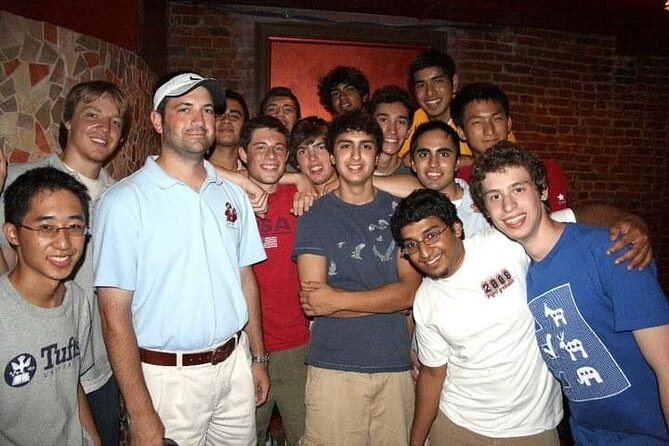
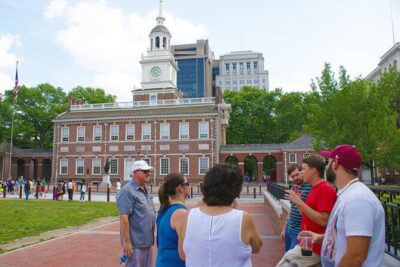
This tour is designed for the first day in Philadelphia, when you want your bearings fast and your brain doesn’t want 40 pages of reading. You start at the Independence Visitor Center area and then move through the core of Independence Mall and the surrounding historic blocks. The whole point is to understand how the Revolution era worked on the ground, not just how it looks on a postcard.
You’ll get a steady rhythm: short introductions, quick walks, then a guide-led moment to connect the buildings to the people and events. The pacing is brisk enough to cover a lot, but the guide also makes time for questions, which is a huge deal when you’re trying to separate myths from facts.
One practical note: expect solid walking. A review mentioned about 3,500 steps, so wear shoes you trust, even if you’re not a big walker. It’s also mostly outdoors, so plan for the weather and layer up. When the guide keeps everyone moving smoothly, it feels efficient rather than rushed.
Philly at a walking pace, more routes



Start at Liberty View: where to meet and how the tour runs
You meet at Liberty View at the Independence Visitor Center, 599 Market St. The tour ends back at the same meeting point, which makes it easy to plan lunch afterward without a tricky return.
The format is straightforward: mobile ticket, English language, and you’re part of a larger group of paying customers. The group size cap is 20 travelers, which helps keep the tour personal. You’ll also be near public transportation, so it’s not a pain to get there even if you’re already using transit during your trip.
If you’re traveling with kids or teens, this structure helps. One review specifically noted Tom kept a mixed-age group interested. The stops are short, and the guide’s style helps you follow along even if you’re not a die-hard history person.
Weather matters. The experience requires good weather, and if it’s canceled due to poor conditions, you’ll be offered another date or a full refund. That means it’s a smart idea to book it early in your visit window, so you have flexibility if clouds or rain roll in.
Independence National Historical Park: America’s Most Historic Square Mile
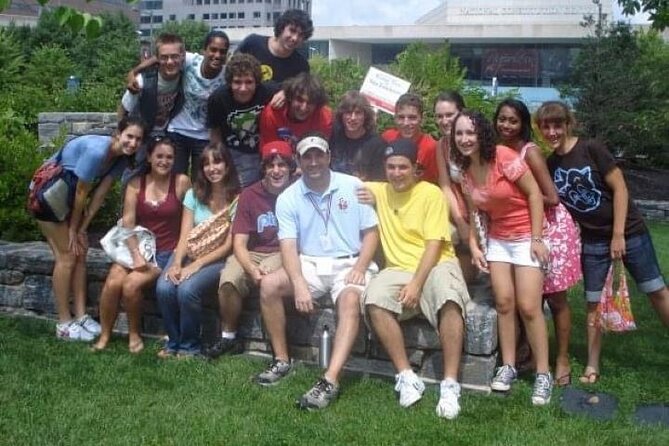
Your first stop sets the tone at Independence National Historical Park, billed as America’s Most Historic Square Mile. This is where the tour does something valuable: it gives you the mental map before you start bouncing between famous landmarks.
The guide explains what makes this part of Philly different. It’s not just “a lot of old buildings.” It’s that so many key Revolutionary-era decisions, debates, and government functions clustered here. Once you understand that, the rest of the walk clicks into place.
This stop is also where you’ll hear context about the founding of Philadelphia—why this city became a center of power and argument, not just a scenic place with historic stone. It’s a good foundation moment, and it makes your later answers (about the Declaration, Congress, and the Liberty Bell) feel connected instead of random.
Independence Hall: the room behind the Declaration
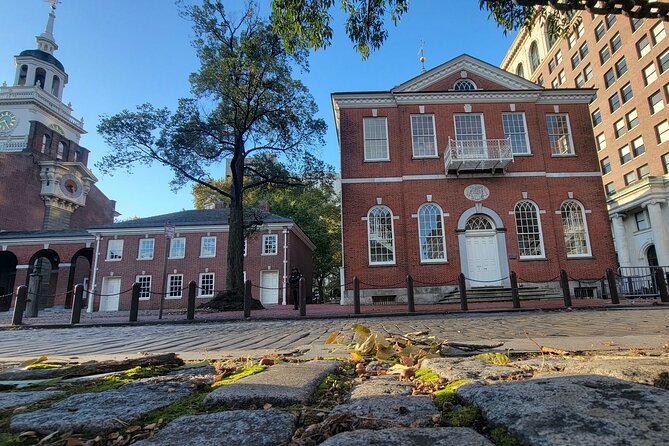
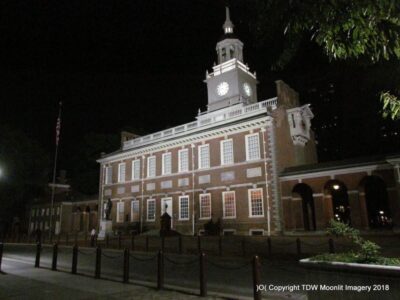
Next comes Independence Hall, the anchor of the whole area. You’ll learn why it’s significant: the Declaration of Independence was signed here, and you’ll also hear about moments from famous founding fathers that most quick guidebooks don’t emphasize.
Since this is an exterior tour, you’re not walking inside the hall, so the guide has to do extra work with storytelling. That’s exactly where the tour pays off. Instead of just staring at a building, you’re told what happened around it and what people were trying to accomplish.
A practical consideration: Independence Hall is the most famous stop on the block, so it can feel busy in the surrounding area. That’s normal. The guide’s job here is to keep your attention on the “why” and “how,” not just the “what.”
Liberty Bell Center: why it no longer rings
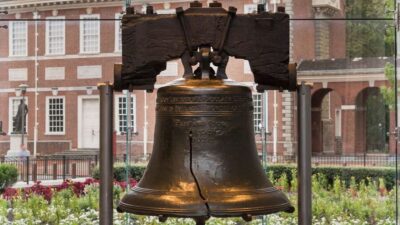
Then you hit the Liberty Bell Center, and this is where the tour earns its keep for many first-time visitors. You’ll learn the significance of the bell, including why it no longer rings, how it earned its name, and—this is the part people love—the crack you see isn’t exactly what broke the bell.
That explanation matters because the Liberty Bell can get turned into a simple symbol. The guide connects it back to real history: the bell’s story, the meaning people attached to it, and how the crack became part of its identity over time.
One of the best parts is that you’re not just looking at a famous object. You’re learning the logic behind the story, so it becomes memorable. After this stop, you’ll be able to answer friends’ questions without sounding like you memorized a placard.
Deeper into old Philadelphia



The Founders’ street-level world: Graff House, Congress Hall, Old City Hall
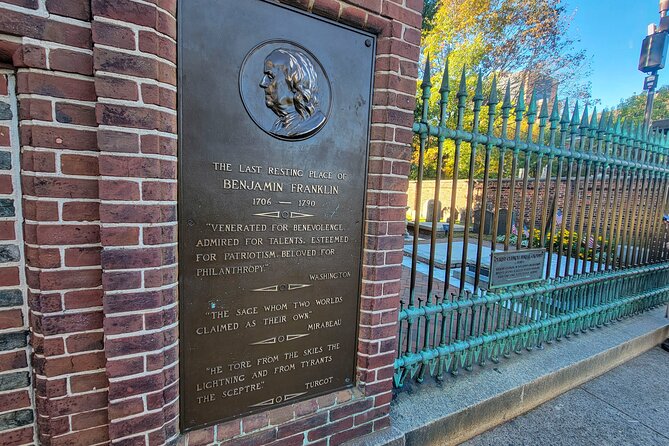
After Independence Hall, the walk moves into the supporting cast of the Revolution story.
At Declaration House (Graff House), you’ll learn what the name tells you, but also why the house was chosen and who helped Thomas Jefferson with his writing. That’s the kind of detail that turns “the Declaration” from a date into a messy, human process.
Then comes Congress Hall. You’ll hear what it meant for the union and how the two houses met there. The guide also points out why its most significant achievement can’t be seen with the naked eye. Even without entering, you’ll get a clear explanation of what that means and why it mattered.
Old City Hall rounds out this cluster. You’ll hear that it wasn’t just the city’s administrative building, but also tied to the Supreme Court—just not the way you’re used to today. This stop helps you understand that government isn’t only chambers and debates; it’s rooms, schedules, and institutions finding their footing.
Carpenters’ Hall and Franklin Court: ideas start to look practical
You’ll then reach Carpenters’ Hall, described as the place where the independence movement effectively began. You’ll hear the famous words spoken there and by whom, plus learn about a conspiracy on the second floor. This is one of those stops where the guide’s storytelling seems to do what museums do with artifacts: it gives the past tension and stakes.
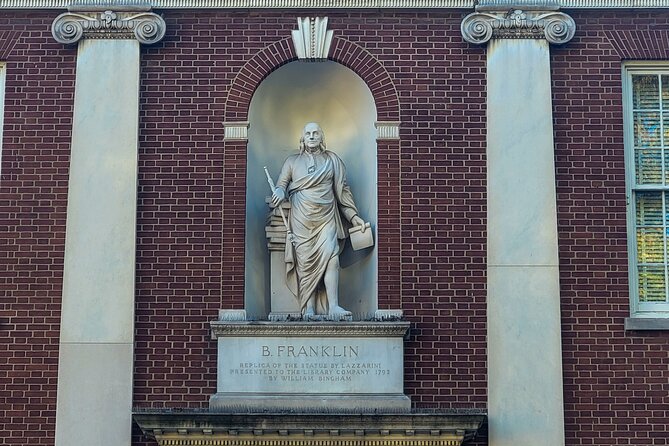
Right after that, Franklin Court brings the focus to Ben Franklin’s home and workshops. You’ll find out why his house no longer stands, which might sound like a bummer at first—until the guide explains why the space still matters. You’ll also hear why the post office at the end of the court is special in American history, even now.
If you like “how things worked” history, these two stops are a strong pairing. Carpenters’ Hall shows the political spark. Franklin Court shows how communication and experimentation fed into the bigger story.
Christ Church and Elfreth’s Alley: famous landmarks plus everyday longevity
At Christ Church, the guide explains its significance beyond religion. It was once the tallest building in America, and it also functions as a museum. There’s also an easily overlooked item you’re meant to notice—something you’d likely miss if you walked past quickly.
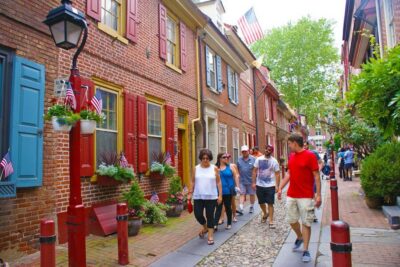
Then you move to Elfreth’s Alley, the oldest continually lived-on street in America. Here the tour changes gears. Instead of “government moments,” you get “people kept living here.” You’ll learn how it earned its name and what subtle features in the homes are easy to overlook.
This is a great stop for photos, but it’s also about scale and texture. You start to see how Revolution-era leadership didn’t exist in a vacuum. Lives, jobs, and neighborhoods continued—and the physical street layout kept going long after the founders’ speeches faded.
Betsy Ross House: separating myth from the real legacy
Next is Betsy Ross House. The tour explains her surprising legacy and specifically tackles the big question people ask: did she really sew the first flag? The tour’s version of the answer is described as surprising, which is exactly the point. This is where you get beyond the slogan.
Because this stop typically involves paid admission if you want to go in, it’s worth asking yourself what you want from the tour experience. If you care about the full story in artifacts and exhibits, budget for an extra ticket here. If you mainly want context and orientation, you can still get value without entry.
Either way, this stop adds variety. The morning is heavy on institutions; Betsy Ross brings it back to a person and to how American symbols form.
Beyond the obvious: the “institutions” loop with the Federal Reserve, APS, and the banks
The tour continues past Independence Hall and into the civic and financial machinery that followed the Revolution.
At the Federal Reserve Bank of Philadelphia, you’ll learn why it’s nicknamed the Bank of Banks. You’ll also be reminded that you use its work almost every day, even if you’ve never thought about where the system operates. This stop helps modern travelers connect the Revolutionary-era need for stability to today’s financial reality.
Then there’s the American Philosophical Society Museum, where you’ll hear that scholars gathered there to make the world better. You’ll also learn that the building houses some rare antiquities in America. It’s a reminder that the founding era wasn’t only about war and government. It was also about research, learning, and practical improvement.
You’ll also pass Library Hall, where the guide explains what you’ll find inside and who studied there for an important journey. You’ll learn how the founder’s accidental influence made the world smarter. That kind of story is why a guided walk beats wandering alone: you get the connections pointed out.
Finally, you’ll see the Second Bank of the United States and learn why there’s a second one. The tour explains why the first needed replacing and notes that the building had more than one important role. This helps you understand that early America was still building trust, systems, and enforcement.
Military, worship, and coins: New Hall Military Museum, Arch Street Meeting House, United States Mint
Some tours focus only on politics. This one spreads the attention across other kinds of power.
At New Hall Military Museum, you’re told it’s the colonial version of the Pentagon. The tour frames it as a place where military planning and tradition played out in the 18th and 19th centuries, and the museum side includes attractions you shouldn’t skip if you want the armed forces story.
At Arch Street Meeting House, you’ll hear why it looks plain but is actually unique. It’s a house of worship, and the guide makes you notice how that plain exterior connects to the building’s identity and purpose.
Then there’s the United States Mint, where you learn that almost half the coins many people carry are made here. You’ll also hear that the facility makes famous and valued items in history. It’s a fun stop because it feels tied to daily life, not just to dusty documents.
The African American Museum and the National Constitution Center: two different kinds of meaning
The tour includes the African American Museum in Philadelphia, described as the first museum of its kind in America, founded in 1976. You’ll hear that it has led research and education since then and that it houses thousands of exhibits. This stop gives the walk more than just founding-era framing. It broadens the meaning of history.
Admission is not included, so if you want the inside experience, plan for the extra cost.
Later, the walk reaches the area of the National Constitution Center, the only museum in the country dedicated solely to the constitution. You’ll learn about taking the oath here, plus a comparison that shows how tall (or short) some founders were. This stop is also paid-entry, and again, the tour itself keeps things exterior, so you’ll decide whether the museum experience is worth adding on.
Admissions you can choose: what costs extra and what doesn’t
Most of the time, you stay outside. That’s why the base price is a value for getting oriented. Still, some key stops offer paid entry if you want to see exhibits.
Based on the provided details, admission is charged at places like Christ Church, Elfreth’s Alley, Betsy Ross House, The African American Museum, and the National Constitution Center. Others listed come without admission fees for this walking overview.
If you know you want more inside time, you can pair the tour with a later museum visit on the same day (or a follow-up day). If you’re budget-conscious, you can still enjoy the stories without spending more, because the guide focuses on explanation and connections rather than ticketed access.
Price and value: $25 for a guided walk that sets your bearings
At $25 per person for about 1 hour 30 minutes, this is priced like a practical city orientation, not a high-ticket private experience. It’s also one of those tours that helps you spend your next days smarter. Once you know where these buildings fit into the story, you can choose what to revisit.
The review scores are extremely strong, and the common thread is the guide quality. People highlight guides like Tom and Joe for explaining clearly with humor and for being receptive to questions. That matters because it’s not just “see buildings.” It’s “understand the building’s role.”
So yes, the price is low enough to feel safe. And the structure is tight enough to feel like you got your money’s worth.
Who should book this tour (and who might skip it)
This is a great fit if:
- You’re in Philadelphia for a short visit and want a guided map of independence-era sites
- You like asking questions and getting straight answers as you walk
- You want more than a photo route, but you don’t want to sit through a long museum day
You might choose a different option if:
- You want to enter lots of buildings during the tour itself (this walk stays outside)
- You already plan to take multiple inside museum tours and you’d rather spend that time inside rather than walking between exterior stops
For families, it also makes sense. Several reviews mention the guide held attention for both teens and kids, and the tour length felt right for the group.
Should you book this Historic Philadelphia walking tour?
Book it if you want a smart, efficient starting point in Philly. The tour covers the major independence landmarks and then connects them to the institutions and people that made the era work. You get stories that help you interpret what you’re seeing later, and you’ll likely walk away with a few facts you can’t stop repeating, like the Liberty Bell crack explanation.
Skip it only if your priority is inside access during the tour window. In that case, plan a museum-heavy day and use a different guide format, because this one is built for overview, outside views, and turning the neighborhood into a coherent timeline.
FAQ
How long is the Walking Tour of Historic Philadelphia?
It runs about 1 hour 30 minutes.
Where does the tour start and end?
The meeting point is Liberty View at Independence Visitor Center, 599 Market St, Philadelphia, PA 19106, and the tour ends back at the same meeting point.
What is the price per person?
The price is $25.00 per person.
Is admission to historic sites included?
The tour is an outside overview. Admission is not included for the historic sites, and some stops have separate admission prices if you choose to go in.
What languages are available?
This tour is offered in English. Foreign language tours require advanced notice.
How big is the group?
The tour has a maximum of 20 travelers.
What ticket type do I get?
You receive a mobile ticket.
What happens if the weather is bad?
The experience requires good weather. If it’s canceled due to poor weather, you’ll be offered a different date or a full refund.
Are service animals allowed?
Yes, service animals are allowed.
More Philadelphia Walks, Step by Step



More Tours in Philadelphia


More Tour Reviews in Philadelphia
Fresh Off the Press: Latest Philadelphia Reviews












Historical Tours, compared.
 ★ 5.0Revolution and the Founders: History Tour of PhiladelphiaFrom $292,944 reviews
 ★ 5.0Philadelphia Old City Historic Walking Tour with 10+ Top SitesFrom $432,020 reviews
 ★ 5.02.5 Hour Philadelphia History Tour with Washington War Tent ShowFrom $45924 reviews
 ★ 4.6Revolution and The Founders History TourFrom $29450 reviews
 ★ 5.0True Crime Philadelphia and History TourFrom $44416 reviews
 ★ 4.9History, Highlights & Revolution Walking TourFrom $45317 reviews
 ★ 5.0Philadelphia Old City History Pub Crawl Small-Group TourFrom $45294 reviews
 ★ 4.6Grim, Dark, and Twisted History TourFrom $44231 reviews
Browse the lists this tour appears in