

Reviewed · MUSEUM TICKETS & CITY PASSES
Go City: Philadelphia Explorer Pass: Choose 3 to 7 Things To Do
A pass that turns Philly into a menu. With the Philadelphia Explorer Pass, you choose 3 to 7 included attractions, then use a mobile ticket for direct entry, no voucher hunting. I also like the 30-day window from your first visit, which makes it easier to spread things out instead of cramming. One drawback to plan for: some popular stops may require advance reservations, and the lineup can change, so you should confirm details in the Go City app.
What makes this pass feel practical is the mix of experiences. You can start with a Hop-On Hop-Off city tour to get your bearings, then jump into big-ticket museums, hands-on science, and even a few walks at night. If you rely heavily on the app to make reservations, be ready for a little friction, since not everyone’s experience with the mobile setup has been smooth.
In other words: this is a good deal when you use it like a plan, not like a lottery ticket. If you choose wisely, you can knock out major sights across different neighborhoods without paying admission one-by-one.
In This Review
- Key takeaways before you pick attractions
- Price and value: when the $62 pass really pays off
- Making the pass work in real life (not just on paper)
- Big Bus Tours Philadelphia: get your bearings before you nerd out
- Eastern State Penitentiary: history that hits hard
- Betsy Ross House: the founding-era story in a small space
- Museum of the American Revolution: a time-ordered story you can follow
- National Constitution Center: interactive and debate-themed
- Christ Church Burial Ground: graves with real founding names
- Ghost Tours of Philadelphia (Candlelight Walking Tour): history with a spooky storyteller
- Bow Tie Tours Independence Walking Tour: taught by a historian, not just a guide
- National Liberty Museum: interactive freedom stories
- Franklin Institute: hands-on science for kids and grown-ups
- Adventure Aquarium: sharks, hippos, and touch exhibits
- Academy of Natural Sciences of Drexel University: dinosaurs to living butterflies
- Philadelphia Museum of Art: pick highlights, then wander
- Barnes Foundation: dense, smart groupings of modern art
- Rodin Museum: smaller than you expect, still satisfying
- Brandywine Museum: Wyeth-family focus with broader American art
- Longwood Gardens: a garden day you’ll still feel tomorrow
- Battleship New Jersey: climb ladders and feel the scale
- Independence Seaport Museum: ships, underwater themes, and hands-on learning
- Penn Museum: world cultures and archaeology in a multi-room marathon
- LEGOLAND Discovery Center Philadelphia: for ages 3–10
- Weitzman National Museum of American Jewish History: hands-on, family-friendly, and historical
- African American Museum in Philadelphia: built to preserve and interpret
- Battleship, museums, and gardens: how to stitch together a smart 2–4 day plan
- Practical notes that can make or break your day
- Should you book the Go City Philadelphia Explorer Pass?
- FAQ
- How many attractions can I choose with the Philadelphia Explorer Pass?
- How long is the pass valid?
- Is the pass available right after purchase?
- Do I need to redeem a voucher at attractions?
- Does the pass require advanced reservations?
- Where does the experience start and end?
- What if I need to cancel or change this booking?
Key takeaways before you pick attractions
- Mobile entry, no voucher redemption so you can get in faster at many stops
- 30 days to use the pass gives you breathing room for crowds and travel days
- A smart mix of Philly classics: museums, history sites, waterfront, gardens, and family attractions
- Some stops need reservations so check the Go City app early
- App and scanning issues can happen; have a backup plan and stay flexible
Price and value: when the $62 pass really pays off
At $62 per person, the pass can be a strong value because admission is built into the attractions you select. The trick is that value depends on what you choose and how many you choose.
If you only pick 3 attractions, make sure they are bigger “admission-day” stops (think major museums or famous historic sites). If you pick 5 or 7, the math usually gets easier because you’re using the pass for more categories—history, art, science, and family-friendly fun—without having to buy lots of separate tickets.
The pass also helps with planning. With a digital guide that includes opening times and access instructions, you can build an itinerary that matches your energy level, not just your calendar.
More Philly museums and passes worth the ticket



Making the pass work in real life (not just on paper)

This pass is valid for 30 days from your first attraction visit. That matters because you can stagger visits across weekends, rainy days, or “one-neighborhood” days without feeling like the clock is punishing you.
It’s also immediately available after purchase, which is useful if you book late or want to lock in your timing fast. And since your ticket is stored on your mobile device for direct entry, you can move through attractions with less back-and-forth.
Still, keep expectations realistic. Some of the most popular activities may require advanced reservations, and you’ll want to place them well before you arrive. Also, attractions in the lineup can change, so the Go City app is where you confirm what’s currently included and how to access it.
Big Bus Tours Philadelphia: get your bearings before you nerd out
The Hop-On Hop-Off Big Bus Tour (Blue route) is one of the best “first day in town” tools. You get a single comprehensive loop with 25+ stops, live narration by a trained guide, and two seating styles: covered first level or open-air second level.
Why it’s worth using: Philly is spread out in distinct neighborhoods. This bus loop helps you connect sights to geography, so your museum days and historic walks make more sense.
Possible drawback: you’re tied to the route schedule, and if you plan to hop off and immediately do something else, you’ll want to pace yourself. One good approach is to do the bus early, then pick one or two areas for deeper exploring later.
Eastern State Penitentiary: history that hits hard

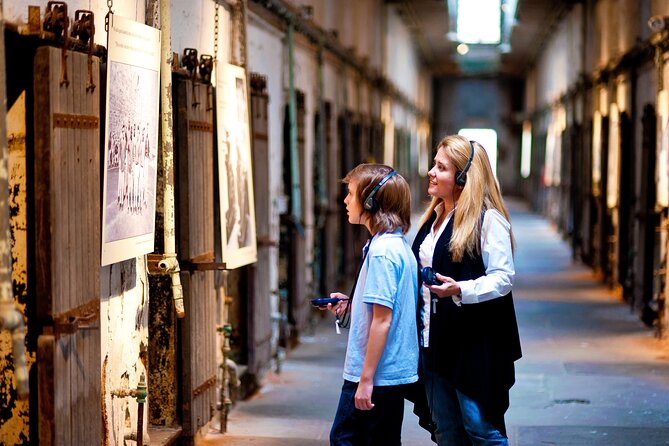
Eastern State Penitentiary is an American historic landmark where the architecture and the story match in a haunting way. You’ll see cell blocks designed around solitary confinement and get context on how the U.S. criminal justice system has shifted over time.
What makes it special: the site reads like a lesson and a warning at the same time. It’s not just “a prison museum”; it’s also about reform ideas and how punishment was imagined.
Consideration: the atmosphere is heavy. If you’re sensitive to grim themes, go with extra time for breaks and choose your day accordingly.
Betsy Ross House: the founding-era story in a small space
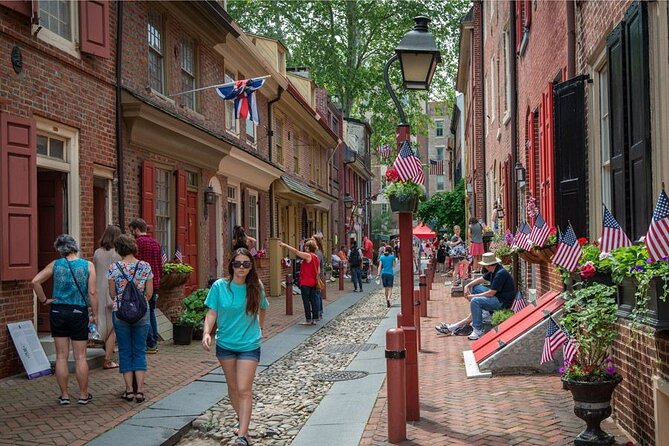
The Betsy Ross House is a restored circa-1740 row house in Historic Philadelphia, presented with a self-guided audio tour. You’ll learn about late-1700s life and how Betsy Ross’s work turned skills like upholstery into a business.
Why you’ll like it: it’s a compact stop that feels close to the ground—less giant museum, more period texture. It’s also a good pairing with nearby Revolutionary-era sites.
Watch-outs: it’s self-guided and roughly 1.5 hours, so if you want a deeper lecture-style experience, you may need to supplement with another history stop that’s more talk-heavy.
Wider loops around Philadelphia






Museum of the American Revolution: a time-ordered story you can follow
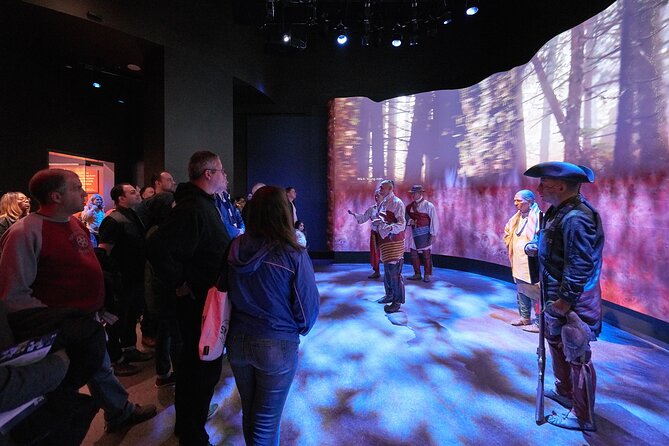
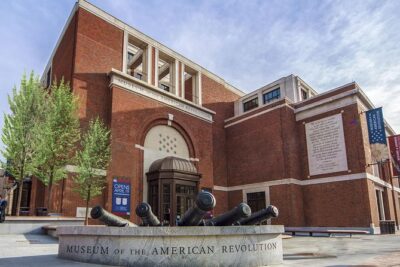
This museum uses a chronological layout to take you from early unrest to major war milestones, then through events like the Declaration of Independence and beyond. Expect immersive, hands-on exhibits and a collection of objects such as weapons, uniforms, manuscripts, maps, and rare books.
Why it works: the timeline makes it easier to understand what led to independence, not just the headline moments. It also helps if you’re visiting with kids who benefit from “what happened next” structure.
Consideration: because it’s an immersive museum, it can be easy to lose time. If you have a tight day, plan to focus on key sections rather than trying to see everything.
National Constitution Center: interactive and debate-themed

The National Constitution Center tells the Constitution story through interactive, multimedia exhibits, film, artifacts, and theatrical elements. It’s also built around participation, including “debate” style experiences and activities like taking a presidential oath concept.
Best for: people who want more than reading panels. The interactive elements make it feel like a living document, not a dusty textbook.
Consideration: since the recommended time is about 1 hour, it’s best if you go with priorities (what you want to learn or try) so you don’t feel rushed.
Christ Church Burial Ground: graves with real founding names
This self-guided tour lets you visit the burial ground of Colonial and Revolution-era figures. You can see graves connected to Benjamin Franklin and four Declaration of Independence signers, plus lots of markers and vaults.
Why it’s memorable: it’s a small time investment for a big “scale of legacy” feeling. It’s also a nice counterbalance to high-tech museums.
Consideration: it’s about 45 minutes. If you want longer, plan a nearby walk to extend the experience.
Ghost Tours of Philadelphia (Candlelight Walking Tour): history with a spooky storyteller
This is a 75–90 minute candlelight walking tour led by a costumed storyteller. You’ll cover Independence Park and Society Hill, mixing haunted-house vibes with stories that are described as researched, documented, and tied to specific historic places.
Why it’s a good use of your pass: it’s a different tempo. After museum-heavy days, a night walk adds variety and gets you outside.
Consideration: it’s a walking tour. Dress for the weather and wear shoes you trust, since comfort matters more than the “spooky aesthetic.”
Bow Tie Tours Independence Walking Tour: taught by a historian, not just a guide
Bow Tie Tours is a guided history walk focused on how the colonies formed a new nation. You’ll cover about 75 minutes and pass 20+ landmarks connected to major names like Washington, Adams, Jefferson, Hamilton, and Franklin.
What I like about this style: the guides are described as qualified teachers or historians with a certificate of knowledge, so you can ask questions and expect answers grounded in history.
Consideration: it’s built on walking. If you’re nursing blisters or tired legs, you may want to swap this for a more “sit-and-see” attraction that day.
National Liberty Museum: interactive freedom stories
This museum frames liberty through American heritage with interactive exhibits and contemporary art. You can explore different ideas like leadership, civic engagement, and peaceful conflict resolution, then include a film in the immersive theater.
Why it’s worth your time: it’s not stuck in one narrow era. The museum encourages you to connect liberty themes to modern life through hands-on learning.
Consideration: interactive exhibits can make time pass quickly, but the experience is roughly 1.5 hours, so check your next stop so you’re not sprinting across town.
Franklin Institute: hands-on science for kids and grown-ups
The Franklin Institute is Philadelphia’s best-known science museum vibe, named after Benjamin Franklin. You’ll find interactive exhibits that range from the science of sports to big visual displays like a two-story human heart, plus temporary exhibits and theater experiences.
Why I think you’ll like it: it’s designed so you’re doing something, not just reading about it. For families, it’s a high-hit option when kids have energy to burn.
Consideration: with so many hands-on features, you’ll want to pick a few “must-do” attractions. Otherwise, you can scatter your attention and feel like you saw nothing deeply.
Adventure Aquarium: sharks, hippos, and touch exhibits
Adventure Aquarium is a favorite for hands-on animal lovers. It’s known for hippos, a large shark collection, and at least one special standout like a great hammerhead shark. You’ll also explore touch exhibits, interactive and immersive galleries, and over 8,500 sea animals.
Why it’s great: touch exhibits add a level of memory-making that most museums can’t replicate.
Consideration: it’s about 2 hours. If you try to add too many other stops right after, you may feel worn out from walking and waiting.
Academy of Natural Sciences of Drexel University: dinosaurs to living butterflies
This museum mixes big natural-science themes with interactive learning. Expect dinosaur skeletons, live animals, an indoor tropical garden with butterflies, fossil digging, and exhibits on ecosystems from around the world.
What makes it special: it’s not only display. You’ll see staff preparing fossils in the Fossil Prep Lab before they go to scientific study, which turns the museum into a “how science gets done” experience.
Consideration: the time recommendation is about 2 hours. If you’re traveling with kids, factor in extra time for the live animals and the indoor garden.
Philadelphia Museum of Art: pick highlights, then wander
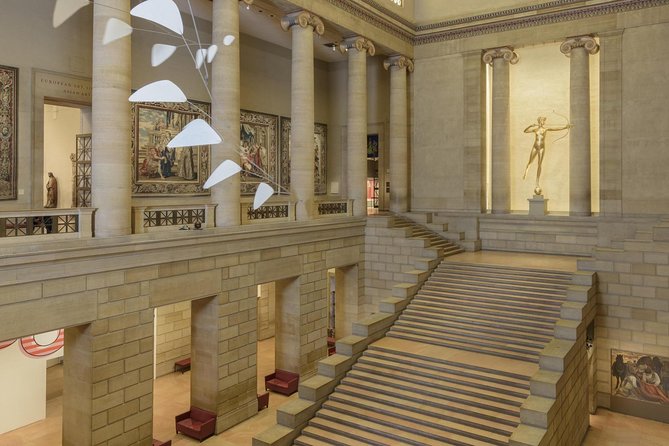
The Philadelphia Museum of Art is huge, with more than 240,000 objects across many collections and regions. You can see Impressionist masterworks, decorative arts, Asian and European galleries, plus specialized rooms and special exhibitions.
How to enjoy it: unless you have hours to burn, don’t chase “everything.” Use your pass time to choose a few sections you truly want, then let the rest be bonus.
Consideration: the pass time listed is about 1 hour. That’s enough for a focused circuit, not a full museum day.
Barnes Foundation: dense, smart groupings of modern art
The Barnes Foundation features over 2,000 masterpieces, including French painting and examples of African art and other collections. Exhibits are arranged in close groupings called ensembles, designed to encourage you to see comparisons through light, line, color, and space.
Why it’s worth the effort: the way it’s arranged makes you slow down and look. Even if modern art isn’t your normal lane, the ensembles push you to notice connections.
Consideration: plan on an about 1.5-hour visit. Because the displays are visually crowded, you’ll get more out of it by staying present instead of rushing.
Rodin Museum: smaller than you expect, still satisfying
The Rodin Museum highlights Auguste Rodin with more than 140 works, including bronzes, marbles, and plasters. You’ll explore rooms and gardens focused on his life and sculpting impact.
Why it works: if you like sculpture, this is a strong “one artist, all phase” plan without needing to cross a massive campus.
Consideration: it’s about 2 hours. If you only want a quick art hit, you might feel it stretches, but if you’re truly into Rodin, it’s a good fit.
Brandywine Museum: Wyeth-family focus with broader American art
This museum is known for the Wyeth family artwork, but it also includes work by other American artists. Its heritage collection focuses on art produced in the Brandywine Valley, giving the museum a distinct regional identity.
Why it’s appealing: it’s a calmer art option compared with huge “see everything” museums.
Consideration: with about 1.5 hours, go in with a sense of what you want—Wyeth focus is part of the point here.
Longwood Gardens: a garden day you’ll still feel tomorrow
Longwood Gardens is one of the premier horticultural display gardens in the U.S., with formal plantings, exotic species, fountain systems, and indoor and outdoor experiences across 1,077 acres of grounds. The recommended time is about 1.5 hours.
Why it’s great: even if you’re not a “garden person,” the fountain-and-plant focus makes it a relaxing break from museum density.
Consideration: 1.5 hours can be tight for so much space. You’ll get more out of it if you walk with a plan: decide what you want to see, then don’t feel bad if you miss the rest.
Battleship New Jersey: climb ladders and feel the scale
Battleship New Jersey is a floating museum on the Camden Waterfront, and it’s one of the largest battleships ever built. You’ll tour multiple levels with an audio guide, including lots of history from World War II through Korea and Vietnam.
Why it’s memorable: the self-guided tour plus steep steps and tight passageways makes it feel physical, like you’re moving through the ship rather than just looking at photos.
Consideration: be ready for steep ladders and narrow spaces. If mobility is an issue, you’ll want to consider that before choosing this stop.
Independence Seaport Museum: ships, underwater themes, and hands-on learning
This museum focuses on Philadelphia’s maritime history near the Delaware River at Penn’s Landing. You’ll explore interactive displays, see over 1,000 artifacts and works of art, and even tour two National Historic Landmarks: Admiral Dewey’s cruiser Olympia and the WWII submarine Becuna.
Why it’s a strong family pick: the hands-on feel is built in, and ship exploration is naturally engaging for kids.
Consideration: it’s about 2 hours. It’s easy to want to add “one more” gallery, so keep an eye on your timing.
Penn Museum: world cultures and archaeology in a multi-room marathon
Penn Museum is an anthropology and archaeology museum with around 1 million objects. Expect signature galleries like Egypt (sphinx and mummies), Africa, Greece, Rome, China, and Mexico/Central America, plus the building itself with multiple construction phases and gardens.
Why you’ll like it: it’s a big “human story” museum, so it scratches the curiosity itch hard.
Consideration: the time listed is about 3 hours. This is not a quick stop. If you take it, commit to it.
LEGOLAND Discovery Center Philadelphia: for ages 3–10
LEGOLAND Discovery Center is an indoor family attraction with LEGO-themed play areas, an interactive ride, and a 4D cinema experience. It includes MINILAND with Philadelphia landmarks, a Model Builder Academy, racing-style speed tests, and play areas like Heartlake City and Pirate Adventure Island (kids need to wear socks).
Why it’s worth selecting: it’s the kind of place where kids can spend time without getting bored in 20 minutes.
Consideration: it’s best for younger kids. If you don’t have kids in the 3–10 range, it may feel like a detour rather than a highlight.
Weitzman National Museum of American Jewish History: hands-on, family-friendly, and historical
This museum explores 350 years of American Jewish history with interactive exhibits and around 1,200 artifacts, films, and activities. It focuses on themes like immigration, worship, work, entertainment, and community life.
Why it’s a good choose: it’s designed to be accessible while still covering serious history, and it offers family-friendly hands-on learning.
Consideration: with interactive exhibits, you may want to keep your day flexible so you’re not rushing through.
African American Museum in Philadelphia: built to preserve and interpret
The African American Museum in Philadelphia is described as the first institution built by a major U.S. city dedicated to collecting, preserving, and interpreting African American life and work. The museum organizes its story around the African Diaspora, the Philadelphia story, and contemporary narrative themes.
Why it matters: you get a structured approach to art, family life, sports, medicine, religion, politics, law, and technology through exhibitions and galleries.
Consideration: plan on about 1.5 hours. If a specific exhibit catches you, you might want extra time that the pass schedule may not leave.
Battleship, museums, and gardens: how to stitch together a smart 2–4 day plan
If you’re here for a short trip, I’d build days around neighborhood flow. For example:
- Start with the Hop-On Hop-Off bus to understand where everything sits.
- Then pick one “heavy hitter” museum/history stop per half-day.
- Save the garden or waterfront for the day you want a slower pace.
And if you’re traveling with kids, anchor the schedule with Franklin Institute, Adventure Aquarium, or LEGOLAND Discovery Center so the family energy stays high.
Practical notes that can make or break your day
The pass is designed for direct entry using your mobile device, and it’s immediately available after purchase. That said, the real-world experience can depend on timing and how well reservations line up for the stops that require them.
Also, some people have run into scanning or reservation problems. If that happens, the best move is to stay calm, show the pass on your phone, and ask staff for help right away so you can keep your day on track.
Should you book the Go City Philadelphia Explorer Pass?
Yes, if you want a flexible “choose-your-own Philly” approach and you’re willing to plan lightly but check details in the app. This pass shines when you use it to combine big admissions like Eastern State Penitentiary, Franklin Institute, Philadelphia Museum of Art, and at least one family-oriented stop.
Book it especially if:
- you like mixing history with hands-on museums
- you have kids and want multiple options without buying separate tickets
- you want a 30-day buffer instead of squeezing everything into one weekend
Skip it if:
- you hate reservation steps and prefer “walk up and go” plans
- you’re only interested in one or two small attractions, since the value is driven by picking enough included stops
If you do book, my best advice is simple: pick your 3–7 attractions early, reserve where needed, and let the 30-day validity give you breathing room.
FAQ
How many attractions can I choose with the Philadelphia Explorer Pass?
You can choose 3, 4, 5, or 7 included attractions, tours, or activities.
How long is the pass valid?
The digital pass is valid for 30 days from your first attraction visit.
Is the pass available right after purchase?
Yes. Your Philadelphia Explorer Pass is immediately available as your ticket after purchase.
Do I need to redeem a voucher at attractions?
No. The pass is downloaded to your mobile device for direct entrance to attractions without voucher redemption.
Does the pass require advanced reservations?
The most popular activities require advanced reservations. The digital guide and Go City app will note which ones, and you should reserve well in advance.
Where does the experience start and end?
It starts in Philadelphia, PA, USA and ends back at the meeting point.
What if I need to cancel or change this booking?
It’s non-refundable and cannot be changed for any reason. If you cancel or request an amendment, you won’t get a refund.
Philadelphia, River to Row House
More Tour Reviews in Philadelphia




More Philly Museums and City Passes



Fresh Off the Press: Latest Philadelphia Reviews












Museum Tickets & City Passes, compared.
 ★ 4.2Museum of Illusions Timed Entrance TicketFrom $31244 reviews
 ★ 4.5Museum of the American Revolution Admission Ticket with Audio Guided OptionFrom $25187 reviews
 ★ 4.8Museum of the American Revolution EntryFrom $2790 reviews
 ★ 4.4Go City All-Inclusive Pass w/ 30+ AttractionsFrom $5986 reviews
 ★ 4.0Philadelphia Pass: 30+ Things To Do including Philadelphia ZooFrom $5982 reviews
 ★ 4.6Philadelphia Museum of Art and The Rodin MuseumFrom $3055 reviews
 ★ 4.6The Barnes Foundation Entry TicketFrom $3049 reviews
 ★ 4.3Official Sesame Place Entry TicketFrom $5046 reviews
Browse the lists this tour appears in