
Reviewed · REVOLUTIONARY PHILADELPHIA & THE FOUNDERS
Philadelphia: Colonial Philadelphia Walking Tour
Stone streets still whisper the founding era. This walking tour strings together Philadelphia’s earliest streetscapes—Elfreth’s Alley, Christ Church, Ben Franklin’s neighborhood, and a final stop at Independence Hall—with architecture-based storytelling you can actually see.
I love the way the guide connects buildings to the famous people you recognize from history class, including names buried at Christ Church like Andrew Hamilton, Pierce Butler, and Robert Morris. I also love the architecture angle: you’re not just memorizing dates—you’re learning why façades and building styles look the way they do, from Georgian and Federal through later Revival touches.
One drawback to plan for: this tour is outdoors and runs rain or shine, so dress for weather and expect about 2 hours of solid walking.
In This Review
- Key highlights that make this walk worth it
- Setting Off at 100 Elfreth’s Alley: Where the Founding Story Starts
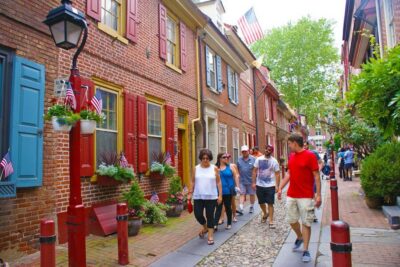
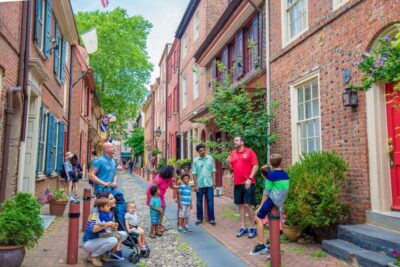
- Elfreth’s Alley Up Close: Oldest Residential Street, Real Street Feel
- Christ Church Philadelphia: The Churchyard Where Revolutionary Names Rest
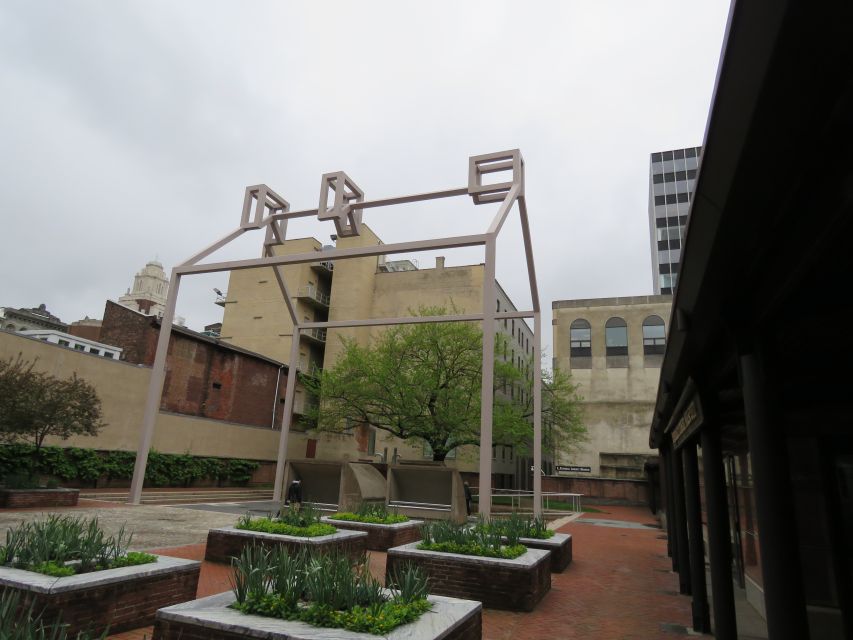
- Franklin Court and the Ben Franklin House Site: History at Human Scale
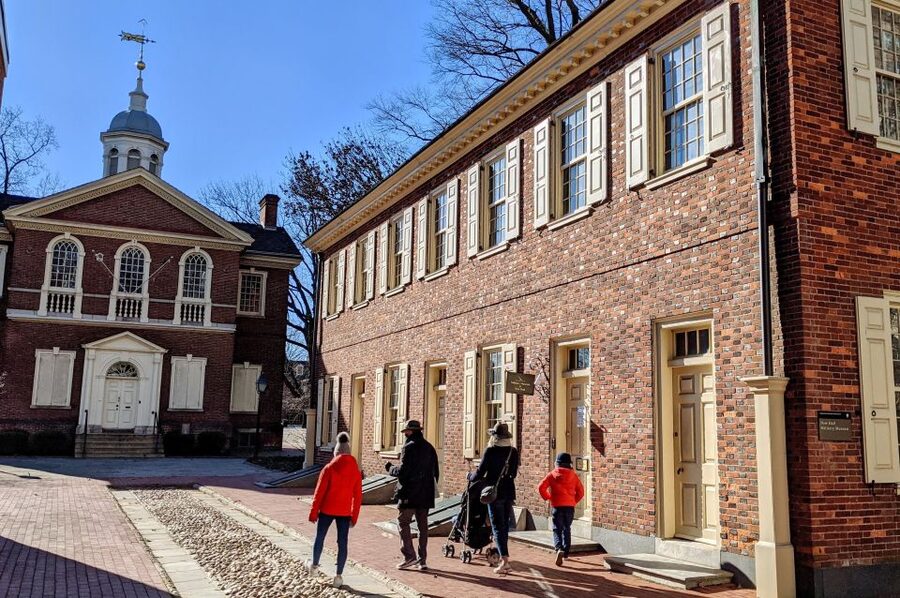
- Carpenter’s Hall: Where the First Continental Congress Met
- The Bank Stop That Explains Power: First Bank and Second Bank Facades
- The First Bank of the United States: Greco-Roman First Impressions
- Passing the Hamilton Home and Dolly Todd House
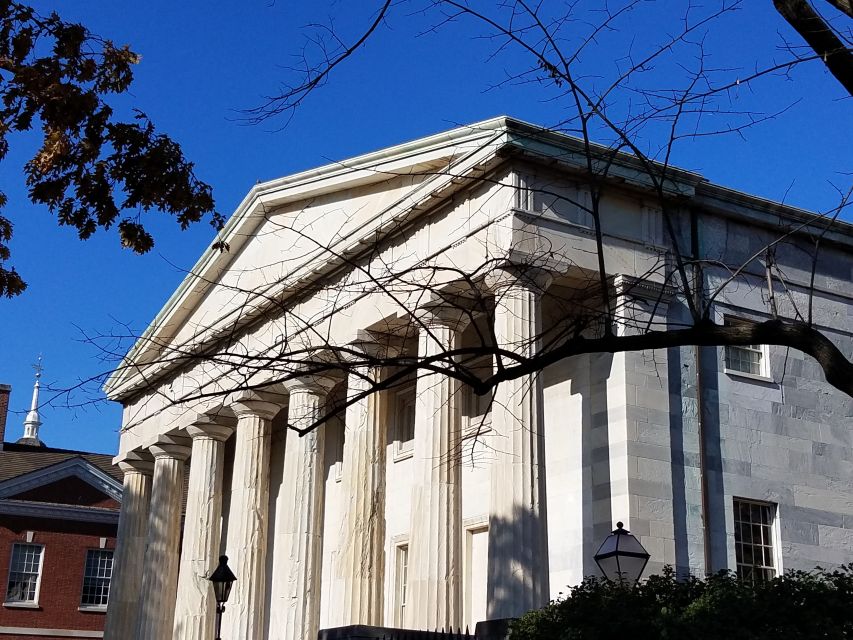
- The Second Bank of the United States: America’s First All-Marble Facade
- Independence Hall Finish: Declaration and Constitution, 11 Years Apart
- The Guide Experience: Architect-Historian Storytelling That Stays Practical
- Timing, Walking Comfort, and Rain-or-Shine Reality
- Price and Value: What $40 Buys in This Two-Hour Walk
- Who Should Book This Colonial Philadelphia Walk
- Should You Book? My Take on the Decision
- FAQ
- Where do I meet the guide, and how do I recognize them?
- How long is the Colonial Philadelphia walking tour?
- What does the tour cost?
- Is the tour guided in English?
- Where does the tour end?
- What’s included in the ticket price?
- What should I bring?
- Does the tour run in rain or shine?
- Is this tour suitable for children or wheelchair users?
- Can I cancel for a refund?
Key highlights that make this walk worth it
- Elfreth’s Alley: the oldest continuously inhabited residential street in America
- Christ Church churchyard: big names tied to the Revolutionary era
- Franklin Court / Ben Franklin’s house site: history told at street level
- Carpenter’s Hall: the place where the first Continental Congress met
- Hamilton and the banks: Greco-Roman First Bank and an all-marble Second Bank
- Independence Hall finish: where the Declaration and Constitution were created and signed 11 years apart
Setting Off at 100 Elfreth’s Alley: Where the Founding Story Starts
You begin at 100 Elfreth’s Alley, and that choice matters. This is one of those places where Philadelphia feels less like a museum and more like a living city that simply grew up around major events.
Elfreth’s Alley is the kind of street you can read like a chapter. The buildings and layout help you understand how a city neighborhood functioned long before skyscrapers, subways, and modern distractions. Expect your guide to point out how Philadelphia’s early growth connects to the broader origin story of Pennsylvania and the city itself.
The tour is designed for seeing details while you walk. You’ll get about 40 minutes here, which is enough time to actually notice patterns: street proportions, how buildings face the road, and how architectural styles show up over time.
Back to 1776 and the men who signed here
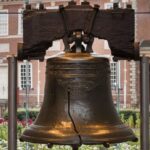
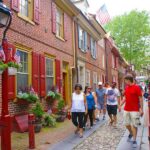
Elfreth’s Alley Up Close: Oldest Residential Street, Real Street Feel
Here’s what makes Elfreth’s Alley special on a guided walk: you’re not just looking at “old buildings.” You’re learning how the city formed—then you’re comparing what’s still standing to what you imagine from textbooks.
The guide’s focus on architectural styles helps a lot. You’ll hear terms like Georgian and Federal, and later Revival influences. Even if you don’t know architecture vocabulary, you’ll start recognizing cues: symmetry, proportions, and the way details sit on façades. That knowledge makes the next stops easier, because you’ll know what to look for before your guide explains it.
Practical tip: wear comfortable shoes. This is a strolling-but-not-park-it kind of tour, and uneven sidewalks and curb changes are part of the experience.
Christ Church Philadelphia: The Churchyard Where Revolutionary Names Rest
Next you head to Christ Church Philadelphia, with about 25 minutes devoted to the stop and its churchyard. This is where the tour becomes more than “pretty buildings.” It turns into people and power.
The highlights aren’t vague. You’ll learn about well-known figures buried there, including Andrew Hamilton, Pierce Butler, and Robert Morris. When you hear those names tied to the exact place they’re remembered, the Revolutionary story stops feeling abstract.
Also, Christ Church is the sort of site where architecture and history overlap. The churchyard gives you a physical sense of permanence—this is an area the city kept around while everything else transformed. That contrast makes the explanations stick.
If you tend to like tours that explain why history matters (not just what happened), this stop is one of the strongest parts.
Franklin Court and the Ben Franklin House Site: History at Human Scale
From Christ Church, you move to Franklin Court (about 25 minutes). This is the point in the walk where Ben Franklin stops being a name on a worksheet and becomes a neighborhood story.
You’ll see the site connected to Ben Franklin’s house, and you’ll hear his life story in a way that fits the setting. Instead of floating through isolated facts, the guide uses the location to ground the timeline. It’s easier to remember a person’s influence when you understand where they lived and what surrounded them.
Franklin Court is a good reminder that Philadelphia’s founding era wasn’t all grand speeches. It was also daily work, business, correspondence, and invention—things that happened in real spaces.
If you’re traveling with a phone-friendly learning style, bring a charged smartphone so you can save quick notes or photos as you go.
Carpenter’s Hall: Where the First Continental Congress Met
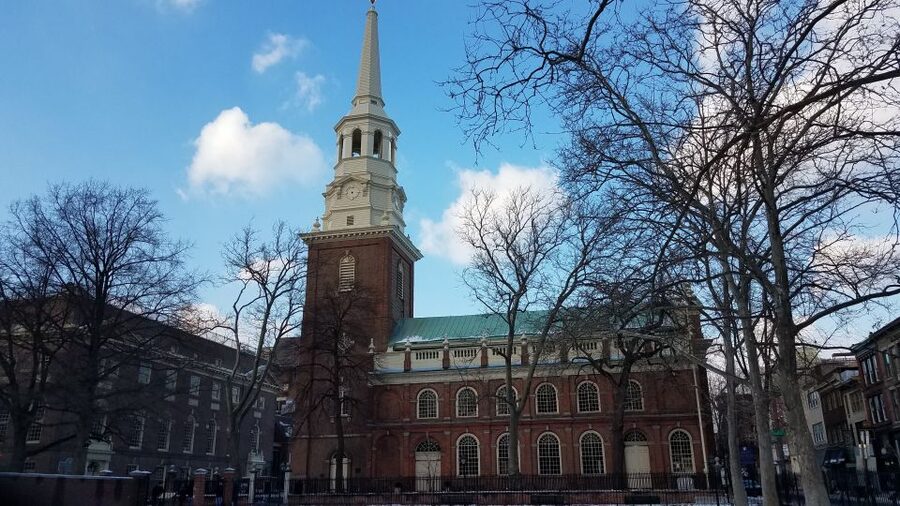
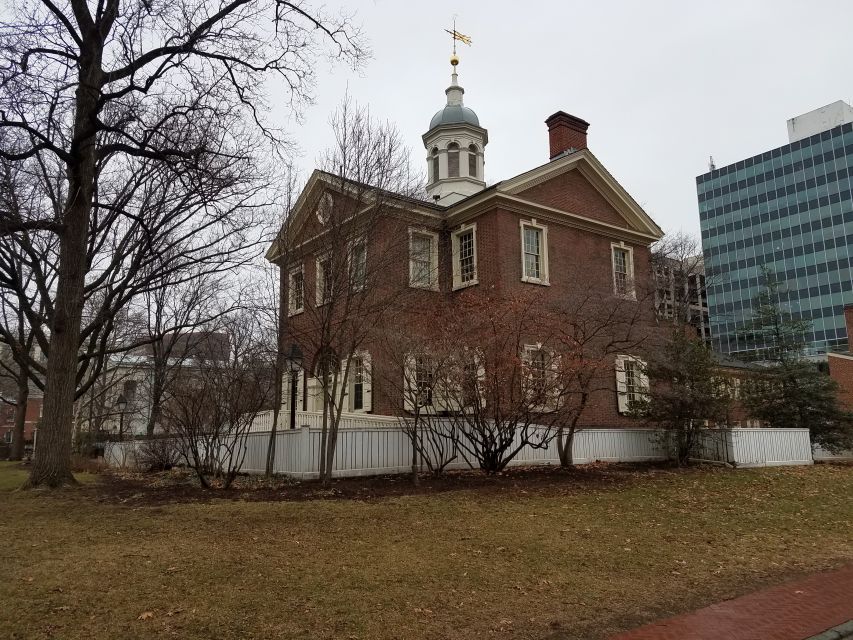
Then comes Carpenter’s Hall (around 15 minutes). Even with the shorter time, it’s a meaningful stop because it’s tied to a specific political moment: the meeting place of the First Continental Congress.
What I like about how this is handled is the pacing. You’ve just been with Franklin’s world and churchyard legacies, then the tour shifts into the mechanics of government. You’re not only hearing about big ideas—you’re connecting those ideas to the buildings where agreements took shape.
If you’re the type who likes to “place” events in your mind, this stop helps you build a mental map. When you later reach Independence Hall, the flow feels more logical, not like two random landmarks on the same day.
Philly at a walking pace, more routes





The Bank Stop That Explains Power: First Bank and Second Bank Facades
Now you get to something practical and visually memorable: banking architecture tied to the people who shaped U.S. finance.
The First Bank of the United States: Greco-Roman First Impressions
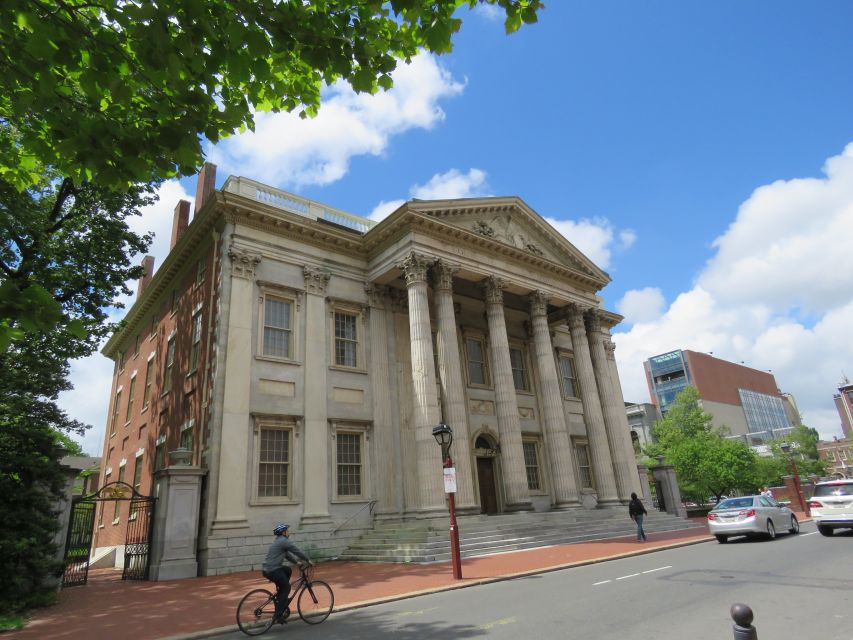
At the First Bank of the United States (about 15 minutes), you’ll learn that it was founded in 1791 by Alexander Hamilton. The building is noted for its Greco-Roman facade, and your guide uses that detail for a reason: the look of an institution signals authority and stability.
When you hear why that façade is significant, you start seeing how young America wanted to project credibility. It’s not just style. It’s branding before the term existed.
Passing the Hamilton Home and Dolly Todd House
Right in this stretch, you’ll also pass locations connected to Hamilton and his mistress, plus the Dolly Todd House. This adds a human layer to what can otherwise be a stiff, official topic. It’s one of the tour’s best “wait, really?” moments—history becomes less tidy and more believable.
The Second Bank of the United States: America’s First All-Marble Facade
Finally, you move to the Second Bank of the United States (about 10 minutes). This stop is described as having the first all-marble facade in America. Even if you don’t memorize the architectural terms, you’ll recognize the effect: marble signals permanence, and permanence signals state-building.
This bank sequence works well because it shows a timeline. You’re not staying stuck in the Revolutionary War years. You’re seeing how the new country kept building institutions after the fighting and speeches slowed down.
Independence Hall Finish: Declaration and Constitution, 11 Years Apart
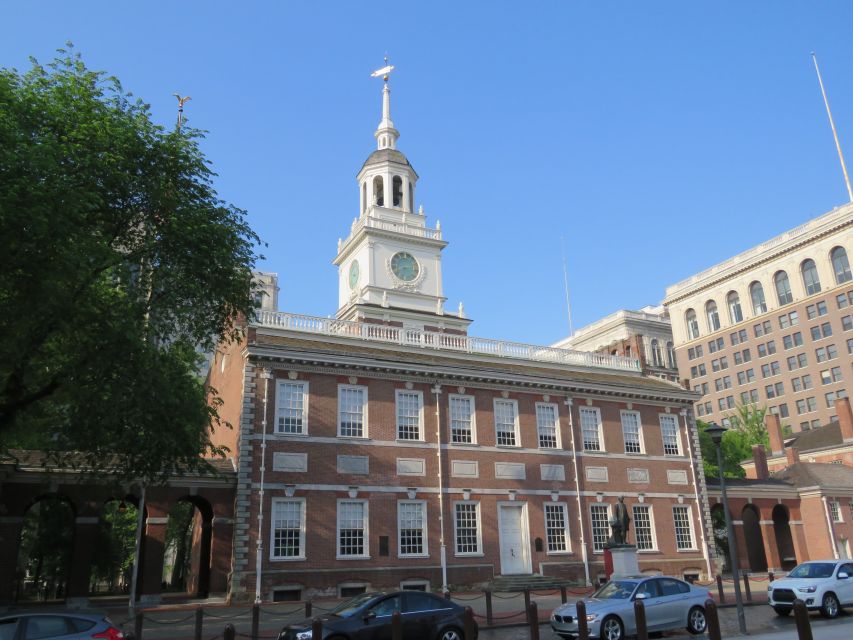
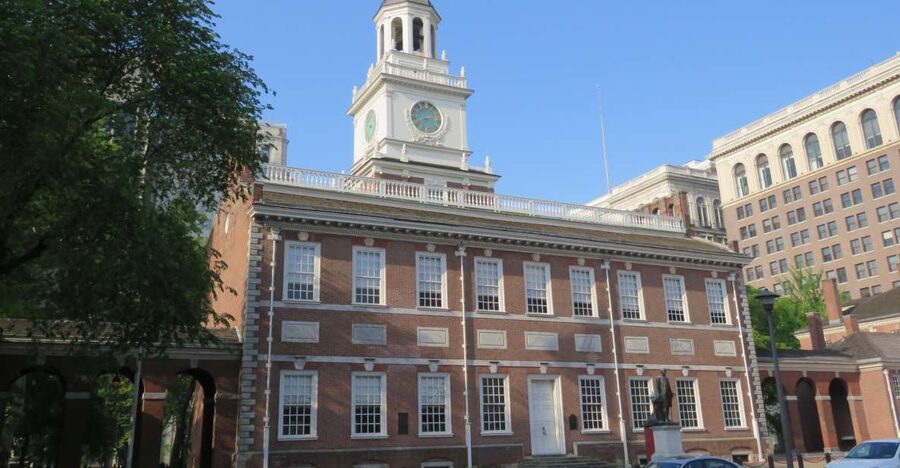
You end at Independence Hall. This is where everything you’ve walked past starts to feel connected.
You’ll learn that this is home to the Second Continental Congress, and that it’s the place where the Declaration of Independence and the Constitution were created and signed 11 years apart. That specific time gap matters because it frames Independence Hall as both an ending and a beginning. First you declare independence. Later you create a governing system strong enough to last.
If you’re walking through Philadelphia with a “what changed over time?” mindset, Independence Hall gives you the payoff. All those earlier stops—Alley streets, churchyard names, Franklin’s daily world, and meeting halls—act like supporting cast for this final act.
The Guide Experience: Architect-Historian Storytelling That Stays Practical
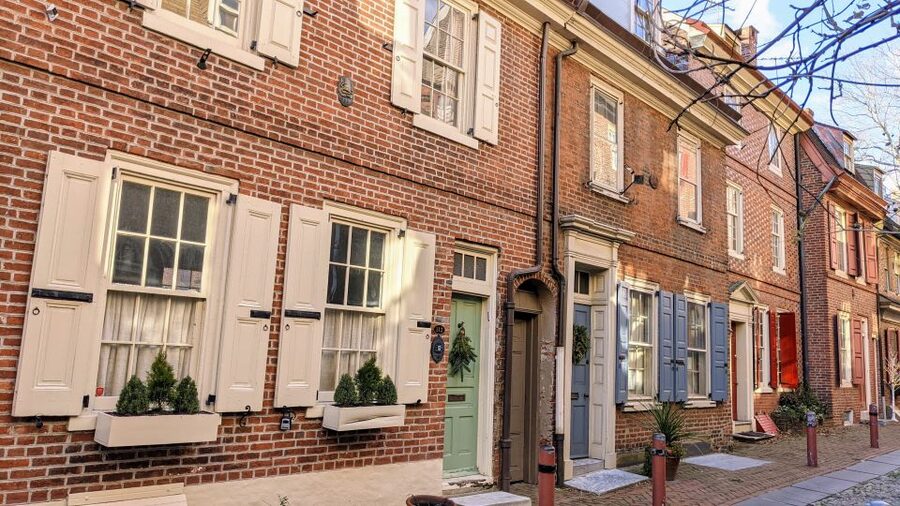
This tour is led by an architect/historian-style guide, and it shows in how the explanations are structured. You’re not only getting facts. You’re getting “how to see it” guidance.
One guest described the guide as Reid, a retired architect who loves Philadelphia and brings enormous knowledge of the city’s history. That kind of background tends to produce tours where you learn to spot features fast, then understand what they mean. In other words: less memorizing, more noticing.
Also, the experience works best when your group stays small. The tour is private or small groups available, and that usually means you’ll get more direct answers when you ask questions about a building detail or a historical name.
Timing, Walking Comfort, and Rain-or-Shine Reality
The tour runs 2 hours to 150 minutes, so think of it as an easy half-day commitment. It’s outdoors and operates rain or shine, which matters for comfort and pacing.
Here’s what you’ll want:
- Comfortable shoes (don’t underestimate this)
- Outdoor clothing for whatever weather Philadelphia decides
- A charged smartphone for quick photos and notes
Moderate physical fitness is expected. There isn’t any “stop and sit for long” rhythm—this is a walking tour with short sightseeing windows, so plan to stay engaged the whole way.
Logistics are simple: the guide meets you at the start location, and you should arrive 10 minutes before it begins. The guide is described as wearing a fedora or similar hat and carrying a messenger bag, so spotting them is straightforward.
Price and Value: What $40 Buys in This Two-Hour Walk
At $40 per person for roughly 2 hours (up to 150 minutes), the value comes from three things: the guide quality, the density of major sites, and the way architecture is explained.
You’re not paying just for entry tickets or a long bus ride. You’re paying for someone to connect these places into one story—Elfreth’s Alley to Christ Church to Franklin’s orbit to the halls of early Congress to two major banking buildings and then Independence Hall.
Small-group availability also helps value. If you get a smaller group, you’re more likely to get direct attention for questions, and you’ll move through the stops with less crowd friction than you’d find on larger mass tours.
Add in the fact that the tour is architect/historian guided (not just someone reading dates), and the price feels like it’s aiming at meaning, not just movement.
Who Should Book This Colonial Philadelphia Walk
This tour is a strong fit if you:
- Like American founding-era history but want it connected to real street scenes
- Enjoy architecture explanations you can use while you travel
- Want a structured route that ends at Independence Hall without you guessing what to prioritize
It’s also a good choice for travelers who want to spend less time commuting and more time in walkable neighborhoods.
It may not be the right match if you:
- Need wheelchair access or have mobility impairments (not suitable for wheelchair users)
- Are traveling with kids under 10
- Prefer indoor, sit-down experiences (this one is outdoors and keeps walking)
Should You Book? My Take on the Decision
If your ideal Philadelphia day includes walking, street-level history, and architecture you can actually spot, I think this is an easy yes. The route is efficient, the stops are genuinely connected to the founding story, and the guide format is built for you to learn something without feeling like school.
Book it if you want the big landmarks—Elfreth’s Alley, Christ Church, Franklin Court, Carpenter’s Hall, the two banks, and Independence Hall—but also want the details that make those landmarks feel real.
Skip it if you need lots of seating, strong mobility support, or you’re not comfortable with an outdoors, rain-or-shine walk.
FAQ
Where do I meet the guide, and how do I recognize them?
Meet at 100 Elfreth’s Alley. Arrive about 10 minutes early. The guide will be wearing a fedora or similar hat and carrying a messenger bag.
How long is the Colonial Philadelphia walking tour?
It lasts about 2 hours to 150 minutes, depending on the starting time and pacing.
What does the tour cost?
The price is $40 per person.
Is the tour guided in English?
Yes. The live tour guide speaks English.
Where does the tour end?
The walk finishes at Independence Hall.
What’s included in the ticket price?
The ticket includes a 2-hour walking tour and an architect/historian-style tour guide.
What should I bring?
Wear comfortable shoes and bring outdoor clothing. Also bring a charged smartphone.
Does the tour run in rain or shine?
Yes. It operates outdoors and will run in rain or shine.
Is this tour suitable for children or wheelchair users?
No. It is not suitable for children under 10, people with mobility impairments, or wheelchair users.
Can I cancel for a refund?
Yes. Free cancellation is available up to 24 hours in advance for a full refund.
More Tours in Philadelphia



More Tour Reviews in Philadelphia
Revolutionary Philadelphia, a Little Further
Fresh Off the Press: Latest Philadelphia Reviews












Revolutionary Philadelphia & the Founders, compared.
 ★ 5.0Revolution and the Founders: History Tour of PhiladelphiaFrom $292,944 reviews
 ★ 5.02.5 Hour Philadelphia History Tour with Washington War Tent ShowFrom $45924 reviews
 ★ 4.6Revolution and The Founders History TourFrom $29450 reviews
 ★ 4.9History, Highlights & Revolution Walking TourFrom $45317 reviews
 ★ 4.8Revolutionary Walk Through Historic Old CityFrom $35208 reviews
 ★ 4.5Museum of the American Revolution Admission Ticket with Audio Guided OptionFrom $25187 reviews
 ★ 4.5Founding Phantoms Adult’s Only Walking TourFrom $3498 reviews
 ★ 4.8Museum of the American Revolution EntryFrom $2790 reviews
Browse the lists this tour appears in