
Reviewed · REVOLUTIONARY PHILADELPHIA & THE FOUNDERS
Small-Group Alexander Hamilton Public Walking Tour in Philadelphia
Hamilton history comes alive on foot. This small-group Alexander Hamilton public walking tour strings together major Philadelphia sites tied to his rise, his politics, and his work. I like that you’re not stuck in a big crowd—you get guided context as you move from place to place, including the biggest “Hamilton-era” stopping points.
Two things I really like: the tour’s story comes with real names and real locations, and the guide Reid is especially good at keeping people tuned in. In reviews, he’s praised as a close-to-the-ground historian and storyteller, even helping kids stay engaged, with music used to add energy.
One possible drawback: it’s about 2 hours 30 minutes of walking with a moderate fitness level, and there’s no hotel pickup, so you’ll want to plan how to get to Independence Visitor Center and then finish at Christ Church Burial Area.
In This Review
- Key things to know before you go
- A Hamilton story you can actually see: route, pace, and group size
- Price and value: what $45 buys you in Philadelphia
- Starting at Independence Visitor Center: how the logistics work
- Stop-by-stop: from Washington’s house to Hamilton’s financial legacy
- Stop 1: The President’s House (Washington and Adams)
- Stop 2: Independence Hall (Congress and the Constitution)
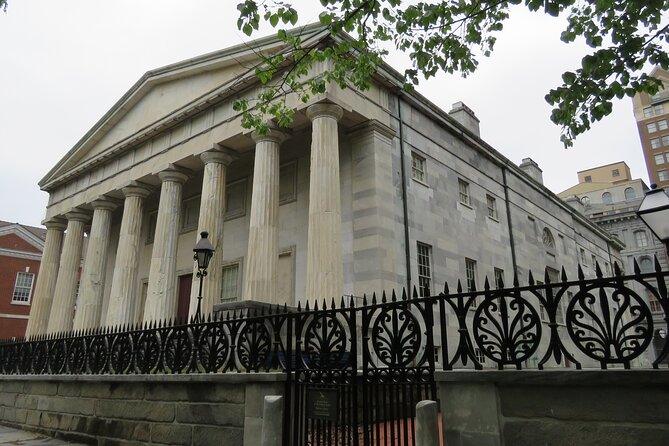
- Stop 3: Second Bank of the United States (Hamilton and banking)
- Stop 4: Franklin Court (Hamilton, Madison, Franklin and the Constitution)
- Stop 5: Carpenters’ Hall (First Continental Congress and early banking)
- Stop 6: Todd House (Maria Reynolds and Dolly Madison)
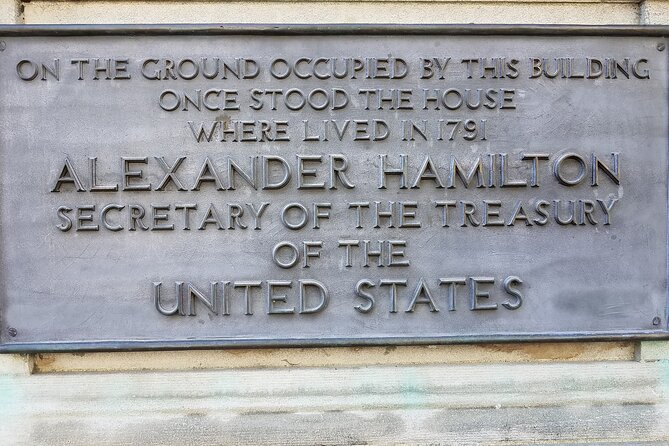
- Stop 7: Merchant Exchange Building (Hamilton’s home nearby)
- Stop 8: First Bank of the United States (1791 and Greco-Roman style)
- Stop 9: Christ Church (Robert Morris’s grave and a final question)
- Reid’s storytelling and the “kid-friendly Hamilton” factor
- What to bring for this 2.5-hour walking tour
- Should you book this Alexander Hamilton public walking tour?
- FAQ
- How long is the Alexander Hamilton Public Walking Tour in Philadelphia?
- How much does the tour cost?
- Where does the tour start and where does it end?
- Is this a small-group tour?
- Do I need a printed ticket?
- What’s included in the price?
- Is there hotel pickup or drop-off?
Key things to know before you go
- Max 8 travelers means you won’t feel lost in a crowd.
- 2.5 hours on foot ties Hamilton’s life to Philadelphia’s key landmarks.
- Reid’s storytelling is a big reason this tour gets top marks.
- Free admission at the listed stops keeps the visit moving without ticket hassles.
- Starts at Independence Visitor Center and ends at Christ Church Burial Area.
A Hamilton story you can actually see: route, pace, and group size
If you love Alexander Hamilton, you can read about him all day and still feel like the story floats above the streets. This tour does the opposite. You walk a tight loop through Independence-era Philadelphia, and the guide puts Hamilton’s world back into place—politics, money, and the people swirling around it.
The group size stays small, topping out at 8 travelers. That matters more than you might think. Smaller groups usually mean you hear the guide clearly, you can ask a question without waiting, and the tour doesn’t feel like a lecture with motion.
The pace is practical. You’re looking at short, focused stops (mostly 5 to 10 minutes) rather than long museum marathons. That’s a good match for people who want context fast—especially first-timers in Philadelphia. It also helps if you’re bringing kids, since reviews specifically call out how well Reid keeps them engaged.
Back to 1776 and the men who signed here


Price and value: what $45 buys you in Philadelphia
At $45 per person for an approximately 2.5-hour guided walk, this isn’t a “random paid history stroll.” You’re paying for direction, pacing, and interpretation—basically, the thing that turns landmarks into a story.
Here’s why the value feels strong. The itinerary focuses on major sites tied to Hamilton, including Independence Hall and two banks associated with early U.S. financial systems. The stops are short, so you’re not paying for time sitting around. And each listed location has free admission, so you’re not hit with extra entry costs at the main moments you came for.
Booking demand is real: it’s commonly booked around 48 days in advance on average. If you’re traveling in a busy season or you want a specific day, you’ll do yourself a favor by locking it in earlier rather than hoping.
Starting at Independence Visitor Center: how the logistics work
The meeting point is Independence Visitor Center, 599 Market St, Philadelphia, PA 19106. You’ll want to arrive a few minutes early so you can get oriented before the walking starts. The tour uses a mobile ticket, so you won’t need to print anything.
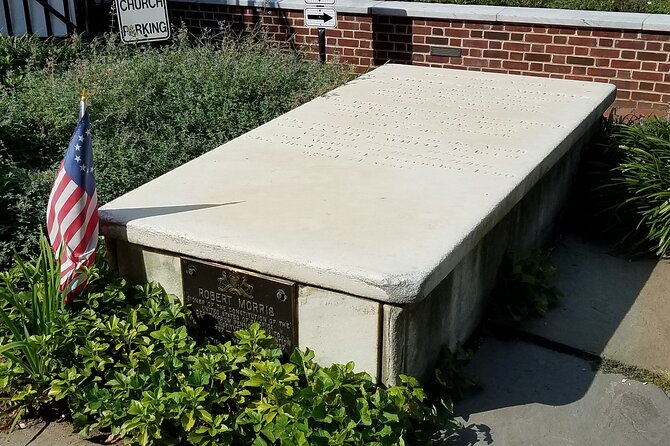
The walk ends at 22 N 2nd St, Philadelphia, PA 19106, at the Christ Church Burial Area, near Robert Morris’s grave. That matters because you’re not walking back to your starting point the same way. Once the tour finishes, you’re positioned right where you can keep exploring the neighborhood on your own.
It’s also described as near public transportation, which is helpful in a city where parking can be annoying. You’ll still be doing walking, though—this is a walking tour, not a ride.
Stop-by-stop: from Washington’s house to Hamilton’s financial legacy
This is where the tour earns its keep. Instead of piling on facts, it ties Hamilton’s life threads to exact places. Pay attention to how the guide connects politics, banking, and personal relationships as you move through the route.
Stop 1: The President’s House (Washington and Adams)
You begin at the President’s House, tied to George Washington and John Adams when they were in office. This stop sets the tone: Hamilton’s career didn’t unfold in isolation. It developed in a world where the presidency was still shaping what the U.S. even meant.
The timing here is brief—about 10 minutes—so focus on the big picture: why the early government mattered to people like Hamilton, and how the new nation’s institutions were still being invented. Admission is listed as free for this stop, so you’re not losing time to ticket procedures.
A practical tip: since the walk is short at each location, keep an eye on what the guide emphasizes. If you miss one point, the tour moves fast to the next landmark.
Philly at a walking pace, more routes





Stop 2: Independence Hall (Congress and the Constitution)
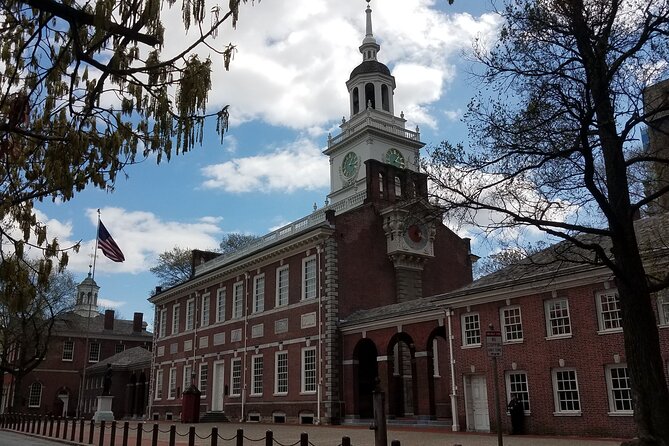
Then you hit the center of the Independence story: Independence Hall, home to the 2nd Continental Congress and the Constitutional Convention. Hamilton’s involvement in the early national era is impossible to understand without this backdrop. This is where debates about power, structure, and law were put into action.
This stop is free and scheduled at about 10 minutes total to take in the setting with the guide’s commentary. Even if you’ve seen Independence Hall from the outside before, the guided narrative helps you connect the building to the type of political thinking Hamilton became known for.
Potential drawback: because the tour is time-boxed, you won’t have the leisurely “stare and think” pace of a full standalone visit. If you’re the type who wants to read every interpretive sign, you may want to save extra time later in your own schedule.
Stop 3: Second Bank of the United States (Hamilton and banking)
Next comes the Second Bank of the United States, with a focus on the banking system Hamilton helped set up. This is one of the smartest shifts in the itinerary because it shows Hamilton as more than a debate-and-speeches guy. He’s also part of the country’s financial architecture.
You get about 5 minutes here. That sounds short, but the stop is designed to give you the “why” behind early U.S. banking: credit, stability, and the idea that national systems could support the growth of the new nation. Admission is listed as free.
Look for what the guide highlights about Hamilton’s thinking. If you want the quick version of his economic worldview, this stop is where you’ll get it.
Stop 4: Franklin Court (Hamilton, Madison, Franklin and the Constitution)
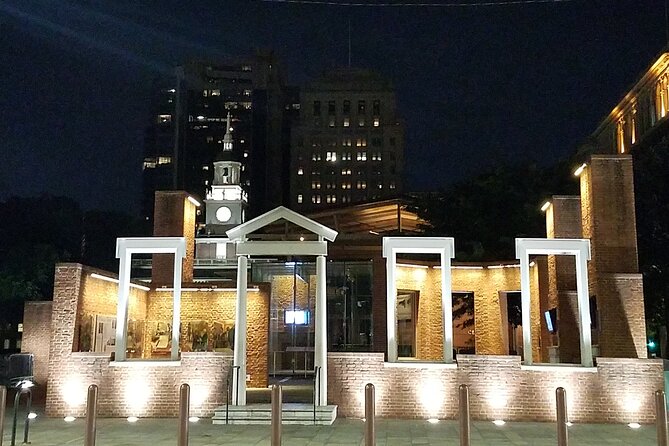
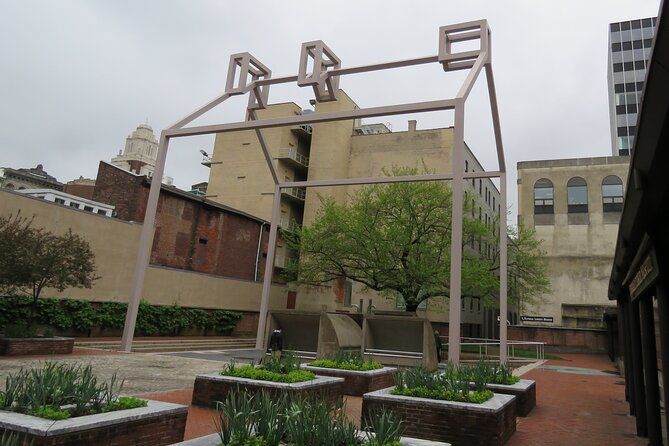
At Franklin Court, the tour points to discussions involving Hamilton, Madison, and Franklin about the Constitution. This stop is especially valuable if you like political ideas and personal connections. It turns famous names into a working network rather than a set of names in a textbook.
Time is around 5 minutes. That’s enough to orient you to the space and understand why these conversations mattered. Admission is listed as free.
What you might find useful here is how the guide connects the constitutional conversation to Hamilton’s later push for structure and system-building. Even in a short stop, you can walk away with clearer mental links.
Stop 5: Carpenters’ Hall (First Continental Congress and early banking)
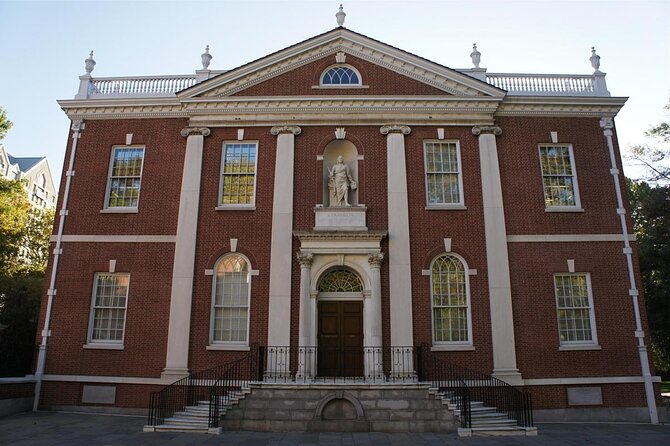
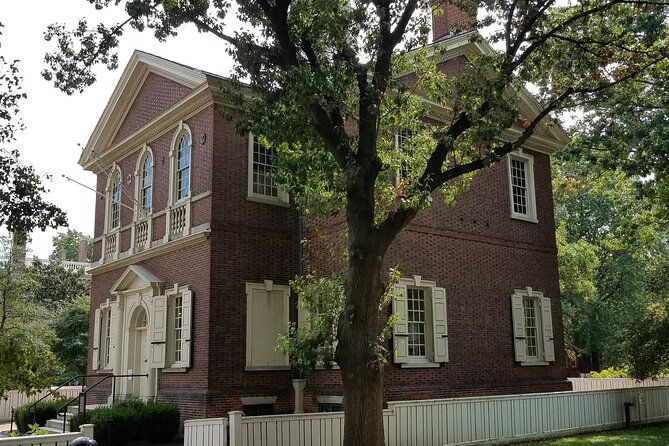
Then you reach Carpenters’ Hall, associated with the 1st Continental Congress and later the 1st Bank of the United States for a while. This stop helps you see how civic life and finance overlapped early on. The same city infrastructure that supported political meetings also hosted the practical machinery of governance.
You’ll spend about 10 minutes at this stop. Admission is listed as free. That extra time helps because the story here naturally has more threads—Congress, institutions, and the early financial experiment.
A consideration: since it’s one of the bigger storyline stops, it can be easy to miss details if you’re busy photographing everything. Use photos if you need them, but make sure you also listen closely to the guide’s timeline.
Stop 6: Todd House (Maria Reynolds and Dolly Madison)
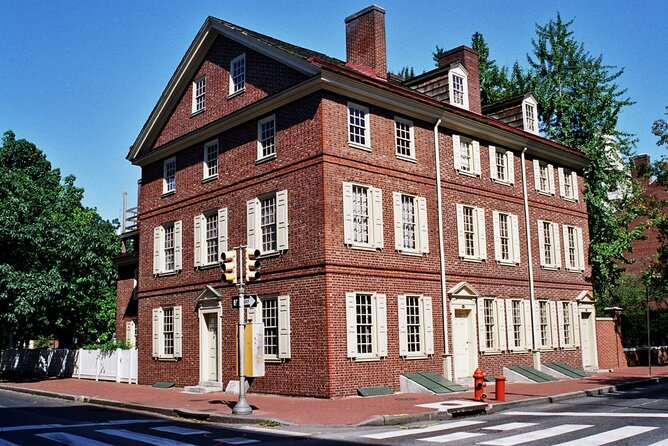
Now the tour turns personal, and it’s one of the most memorable parts for people who know Hamilton’s story beyond the political stuff. At the Todd House, you’ll hear about Maria Reynolds, described as Hamilton’s mistress for about a year, and how this led to a connection involving James Madison and Aaron Burr. The tour also connects this to the story of Dolly Todd becoming Dolly Madison.
This stop is about 5 minutes, so it won’t go on forever. But it adds a human layer that makes the Hamilton story feel lived-in rather than sealed in stone.
Admission is listed as free. The main “drawback” here is simply emotional: if you’d rather keep your Hamilton focus strictly on policy, this is the stop where the story veers into personal drama.
Stop 7: Merchant Exchange Building (Hamilton’s home nearby)
Across the street and nearby themes return at the Merchant Exchange Building, where the tour places Alexander Hamilton and his family. It’s also positioned as about a block from where Maria Reynolds lived.
This stop is listed at 5 minutes with free admission. Why it works is timing and contrast. After the Todd House story, you get a sense of proximity—how public and private lives ran close together in early Philadelphia.
If you like seeing how a city’s layout shapes stories, you’ll enjoy this. It’s less about what happened inside a building and more about how location reinforces the narrative.
Stop 8: First Bank of the United States (1791 and Greco-Roman style)
Then the itinerary zooms back to Hamilton’s legacy in institutions with the First Bank of the United States. The tour frames it as created in 1791 and notes it as one of the first new U.S. government buildings, including an early Greco-Roman temple style with some marble.
You get about 5 minutes here. With that short time, your best move is to look for the style cues the guide mentions. Architecture is a way of signaling ideas—how a new country wanted to look, feel, and claim legitimacy.
Admission is listed as free. This stop tends to land well because it’s a physical symbol of policy made visible.
Stop 9: Christ Church (Robert Morris’s grave and a final question)
The tour ends at Christ Church Burial Area, at the grave of Robert Morris. The guide’s closing theme includes that Morris turned down George Washington’s offer to become the first U.S. Secretary of the Treasury. The tour ends with a line of reflection that frames history as something shaped by who lives, who dies, and who gets remembered.
Time here is about 5 minutes, and admission is listed as free. This ending works if you want a “why this matters” moment rather than a final stamp of names.
If you’re the type who likes to finish a tour with a strong takeaway, this stop is designed for it.
Reid’s storytelling and the “kid-friendly Hamilton” factor
A lot of history tours are either too dry or too broad. This one gets praise for tone and pacing, and that’s largely due to the guide, Reid. In reviews, he’s described as a world-class historian who tells stories in a way that feels personal—like you’re learning from someone who grew up with Philadelphia’s past.
One detail that stood out in reviews is that music is used, and it helps keep energy up for both adults and kids. Another review notes an easy walk with lots of shade. That’s the kind of practical comfort detail that you’ll care about on a hot day.
With a max group size of 8, the tour also avoids the typical problem of kids getting lost in the shuffle. If you’re planning a family visit, this tour looks like a solid fit because the guide is specifically praised for keeping young people engaged.
What to bring for this 2.5-hour walking tour
You don’t need anything fancy, but a few basics will make the day smoother. Wear comfortable walking shoes, since the tour is built around a steady pace for about 2 hours 30 minutes.
Bring a charged phone. The tour uses a mobile ticket, and having it ready is easiest. Also, plan to be outdoors for most of the experience, with the route reportedly having shade, but still subject to Philadelphia weather.
If you’re a Hamilton fan, consider doing a quick pre-read on your favorite era or character before you go. The guide uses lots of names and relationships, and even a small amount of background helps you catch the connections faster.
Should you book this Alexander Hamilton public walking tour?
I think you should book it if you want Hamilton in a form that feels concrete: buildings, locations, and quick explanations that connect policy and personalities. The small-group size, the guide’s storytelling (Reid is repeatedly praised), and the focus on major landmarks make it a strong “first Hamilton walk in Philadelphia” choice.
Skip it if you’re expecting a long museum-style experience at each site. This tour is designed for movement and context, not for deep standalone reading. It’s also less ideal if you want your day to start late or you don’t want to manage your own way to the meeting point, since there’s no hotel pickup.
If you’re deciding between this and a general sightseeing stroll, choose this. You’ll leave with a clearer picture of how Hamilton’s ideas—especially around institutions and banking—fit into the early U.S. story, right where it happened.
FAQ
How long is the Alexander Hamilton Public Walking Tour in Philadelphia?
The tour runs for approximately 2 hours 30 minutes.
How much does the tour cost?
The price is $45.00 per person.
Where does the tour start and where does it end?
It starts at Independence Visitor Center, 599 Market St, Philadelphia, PA 19106 and ends at 22 N 2nd St, Philadelphia, PA 19106 at the Christ Church Burial Area.
Is this a small-group tour?
Yes. The maximum group size is 8 travelers.
Do I need a printed ticket?
No. The tour uses a mobile ticket.
What’s included in the price?
The live guided tour is included.
Is there hotel pickup or drop-off?
No, hotel pickup and drop-off are not included.
If you want, tell me your travel dates (and whether you’re coming with kids or any Hamilton-specific favorites), and I’ll help you plan a smart day around this 2.5-hour walk.
More Tours in Philadelphia



More Tour Reviews in Philadelphia
Revolutionary Philadelphia, a Little Further

Fresh Off the Press: Latest Philadelphia Reviews












Revolutionary Philadelphia & the Founders, compared.
 ★ 5.0Revolution and the Founders: History Tour of PhiladelphiaFrom $292,944 reviews
 ★ 5.02.5 Hour Philadelphia History Tour with Washington War Tent ShowFrom $45924 reviews
 ★ 4.6Revolution and The Founders History TourFrom $29450 reviews
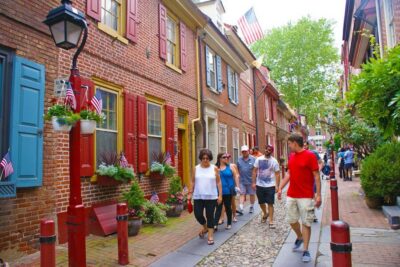 ★ 4.9History, Highlights & Revolution Walking TourFrom $45317 reviews
 ★ 4.8Revolutionary Walk Through Historic Old CityFrom $35208 reviews
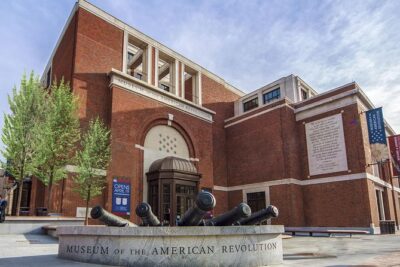 ★ 4.5Museum of the American Revolution Admission Ticket with Audio Guided OptionFrom $25187 reviews
 ★ 4.5Founding Phantoms Adult’s Only Walking TourFrom $3498 reviews
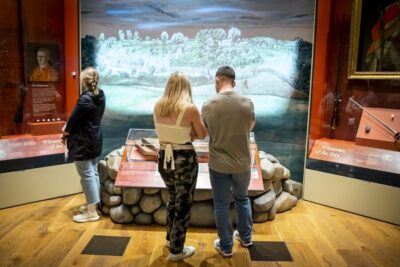 ★ 4.8Museum of the American Revolution EntryFrom $2790 reviews
Browse the lists this tour appears in