
Reviewed · OLD CITY WALKING TOURS
Historic Sites of Philadelphia Self-Guided Walking Audio Tour
Revolutionary Philly, guided by your phone. This self-guided audio tour turns major founding-era landmarks into a walk you can control, with WalknTours app navigation that helps you stay on track.
You start at Elfreth’s Alley, then move through the story of the Revolution—Washington, Franklin, Haym Solomon, Betsy Ross, and even Alexander Hamilton—while you keep your own pace.
Two things I really like: first, it’s built for real life walking. You press start, follow prompts, and if you drift off you can check an arrow in the app to get going again. Second, it’s a great way to cover a lot of famous sites fast because most stops are outdoors, so you’re not stuck waiting on timed entry.
One possible drawback: this is an audio tour on your phone, so you’ll want headphones/earbuds. If you forget them, you’ll lose a big chunk of the experience—especially when you’re standing near other people and want the narration (and the music) clearly.
In This Review
- Key moments that make this tour worth your time
- How the app tour keeps the walk easy (and not stressful)
- The starting hit: Elfreth’s Alley and the Revolution before you even cross the street
- Betsy Ross area: Washington, the flag story, and the audio that adds atmosphere
- Benjamin Franklin’s grave and the Revolution link to France
- Haym Solomon and the Synagogue of the Revolution stop
- The President’s House and Washington’s nickname: Town Killer
- Liberty Bell Center: see the bell for free and connect its “hidden then symbol” story
- Independence Hall exterior: you’ll see a lot without needing an inside ticket
- Signer’s Garden: George Clymer statue and the risks behind the signing
- Carpenters’ Hall: craft guild power and the “Birthplace of Liberty” angle
- Hamilton’s old stomping grounds: the First Bank and the Maria Reynolds affair
- Ending at City Tavern: the rebels feasting idea as a fitting last scene
- Price and value: what $9.49 buys you in real touring time
- Who should book this self-walk (and who might want a different format)
- Practical tips so the audio experience lands well
- Should you book Historic Sites of Philadelphia Self-Guided Walking Audio Tour?
- FAQ
- How long does the Philadelphia historic audio walk take?
- What does the tour cost?
- Is there an in-person guide?
- Are entrance tickets included?
- What language is the tour offered in?
- Where does the tour start and end?
- What’s the cancellation policy?
Key moments that make this tour worth your time
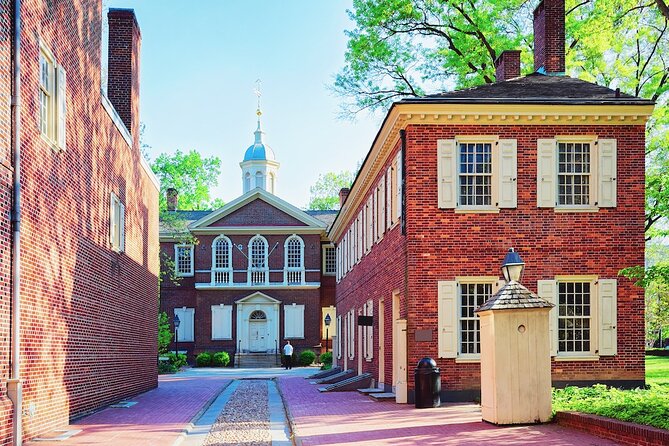
- Elfreth’s Alley sets the tone at a National Historic Landmark with an 18th-century feel.
- Washington and the flag story gets highlighted at the Betsy Ross area with audio that includes music.
- Franklin’s Revolution-to-France angle is told right at his grave stop.
- Independence Hall stays outside, so you’ll see the exterior context without getting forced into a ticket.
- Carpenters’ Hall includes craft-guild and boycott lore, not just the headline name.
- Hamilton’s money drama is anchored in the First Bank locations and tied to the Maria Reynolds scandal.
How the app tour keeps the walk easy (and not stressful)

This is a solo walking experience powered by your smartphone, so the “tour guide” lives in the WalknTours app. The format is simple: you start at the meeting point, start the tour on your phone, and let the app guide you through the route. You can keep your phone tucked away and just listen as you walk, which is ideal when streets are crowded or you don’t want to stare at a map every two minutes.
The practical win here is the direction help. If you feel off track, the app includes an arrow you can check to point you to the next stop. That small safety net matters when you’re navigating downtown streets where detours and crowds can make it easy to lose your place.
You also get pacing control. There’s no group schedule to keep, and you can pause when you want to stand longer, take photos, or just absorb what’s in front of you. That control is especially helpful for families or anyone traveling on a tight timeline who still wants context at each stop.
The other big “real-world” piece is that most stops are outside, which means you’re not constantly lining up or hunting for entrances. If you’re the type who likes seeing famous places without committing to long waits, this format tends to feel efficient.
More of Old City on foot, a few other routes



The starting hit: Elfreth’s Alley and the Revolution before you even cross the street
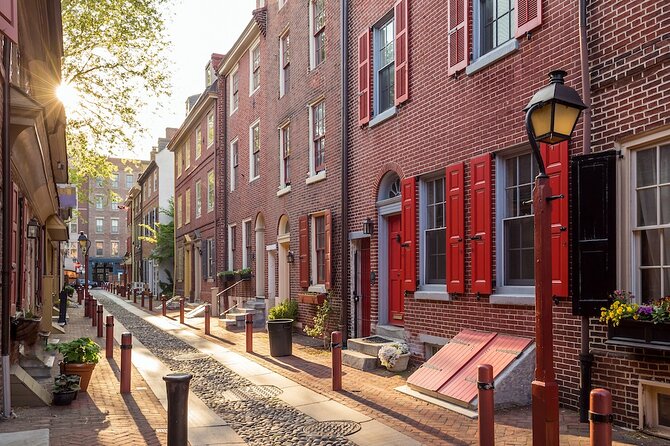
Your route kicks off at Elfreth’s Alley Museum on Elfreth’s Alley. This alley is named after Jeremiah Elfreth, an 18th-century blacksmith, and today it’s designated a National Historic Landmark. That’s a powerful opening because it lets you step into a street that’s still shaped by the 1700s.
The tour’s setup does something smart: it invites you to imagine what Philadelphia looked like during the American Revolution before you zoom forward to the better-known civic buildings. Even if you’ve read about the founding era, seeing an actual old street as your first anchor changes how the rest of the story lands. You’re not just collecting names—you’re walking through a city that still shows the “bones” of its past.
From there, the tour tells you to start the audio and follow the app through the streets. If you like a clear beginning, this one is clean and close to the historic core.
What to watch for: Elfreth’s Alley is a narrow, photo-friendly place. Don’t be shocked if you need to slow down—this is the kind of street where people stop, look, and move carefully.
Betsy Ross area: Washington, the flag story, and the audio that adds atmosphere
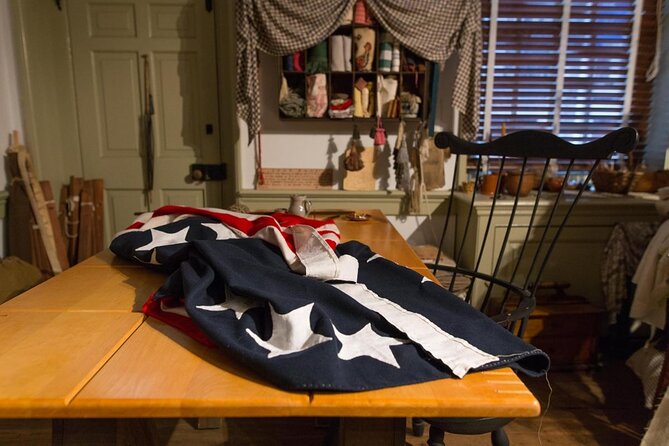
One of the most memorable stretches comes after you leave the alley. The tour routes you to a spot outside the Betsy Ross area, where you hear the story of how Betsy Ross met with George Washington and designed the American flag.
What makes this stop feel different is the delivery. The audio isn’t just facts—it includes music, and the atmosphere helps the moment feel less like a textbook recap. If you’re traveling with kids or friends who get bored by dry history, this kind of sound-and-story pacing can keep attention better than a simple narration track.
Practically, it’s also an easy stop. You’re outside, so you can stand where you can see, listen, and then move on without buying an entry ticket for that exact moment.
Tip: If you’ve got earbuds, this is a good stop to use them. The music matters here, and the sound tends to make the stories feel more cinematic.
Benjamin Franklin’s grave and the Revolution link to France
Next up is Benjamin Franklin’s grave. This is one of those locations where the name is famous enough that you might assume you already know everything. The tour focuses on the role that feels most tied to the Revolution: Franklin’s pivotal work partnering with France.
That France angle helps you connect the local fight to the bigger diplomatic and international story. It’s also a reminder that the Revolution wasn’t only battles and speeches—it was alliances, timing, and persuasion.
This stop is short, but it’s targeted. You get the human energy of Franklin and a sense of why he mattered beyond being an author or a symbol.
What to expect: You’ll likely spend just a few minutes here, then move on. If you like to read plaques slowly, plan for the stop to take a bit longer than the audio segment.
Haym Solomon and the Synagogue of the Revolution stop
The next section pulls you toward a synagogue known as the Synagogue of the Revolution. Here, the tour tells the story of Haym Solomon, described as a financier of the Revolution.
Solomon’s role is the kind of detail that can get lost in the more famous Washington-and-flag narrative. A financial backer at the right time can change outcomes, and the audio helps you see that. It also keeps variety in the itinerary: you’re not only hearing about military leaders and writers—you’re learning about the money side that supports the whole effort.
The audio track also mentions music at points here as well, which keeps the experience from feeling like constant talking. It’s a nice change of pace when you’re standing outdoors near other landmarks.
Philly at a walking pace, more routes




The President’s House and Washington’s nickname: Town Killer
Then you hit one of the most iconic “person first” stops: the President’s House, where George Washington lived. The tour uses Washington’s living presence as its anchor, but the hook is a nickname you might not have heard elsewhere: Town Killer.
That detail is fun because it makes Washington feel less like a marble statue and more like a real figure with a real reputation. History tends to flatten people into roles. This stop resists that a little, which is great when you’re walking and want stories that spark curiosity.
Again, the experience stays outside. You’re not required to enter a building to get the meaning of the location, which keeps the pacing intact. It’s designed to be a “listen, look, move” stop.
Liberty Bell Center: see the bell for free and connect its “hidden then symbol” story
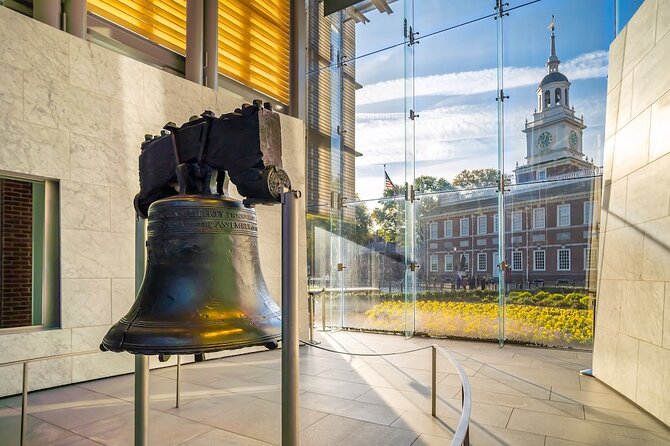
At the Liberty Bell Center, the tour focuses on what the bell represented after the Revolution, and the story starts even earlier—how it was hidden in Allentown during the Revolution.
That shift—from a Revolutionary-era object to a post-war symbol of liberty—is the key context that turns a famous bell into a meaningful stop. Seeing it in person without that timeline can make it feel like a photo moment. With the story attached, it becomes a symbol with a backstory.
The bell is free to see in this context, and the tour keeps the stop short so you don’t lose time.
Practical note: Liberty Bell Center is a big draw for the city. Build a bit of patience into your expectations if you’re visiting during busy hours.
Independence Hall exterior: you’ll see a lot without needing an inside ticket
Independence Hall is the headline. Here, the tour explains why the name “Independence Hall” connects to the Marquis de Lafayette and his French naming idea: Hall of Independence. Then it ties the building to debates and adoption of major founding documents.
The catch—important for planning—is that your tour experience goes outside only. You’ll see the setting, but if you want to go inside, you’d need to book a ticket separately. That’s a good approach if you’re short on time, because it lets you still get the context while keeping the tour moving.
This format also works if you’re traveling in a group with mixed preferences. Some people want photos from the outside; others might want to break off for interior entry. The app tour structure makes that kind of flexible decision easier.
Signer’s Garden: George Clymer statue and the risks behind the signing
Next is Signer’s Garden, a stop built around symbolism. The tour points out the statue in the center and frames it as recognizing the spirit and risks the rebel colonies took when signing the declaration of independence.
It also gets specific about who’s represented: the statue is of George Clymer, a local merchant and politician. That naming matters because many memorial spaces become generic “history views.” Here, you get an actual person to connect to, which helps the story stay grounded.
This is a good pause moment. You can stand, look at the central statue, and let the audio do its job without needing to constantly move along. If you like reflective stops, this one fits the rhythm of the walk.
Carpenters’ Hall: craft guild power and the “Birthplace of Liberty” angle
Carpenters’ Hall is where the tour gets delightfully specific. It’s still owned by the Carpenters company of Philadelphia, and it’s noted as the country’s oldest craft guild. The tour also calls the site the Birthplace of Liberty—and ties it to stories of when rebels met there and boycotted the British.
It even includes a strange-but-intriguing historical twist: Quebec almost became one of the original colonies. That’s the kind of detail you don’t always get from the standard “big buildings” experience, and it’s one reason this tour feels more story-driven than purely sightseeing.
What to expect: Another short stop, outdoors. You’ll get the context, not a long lecture. If you want longer reading time, you may want to pause the audio briefly and look around.
Hamilton’s old stomping grounds: the First Bank and the Maria Reynolds affair
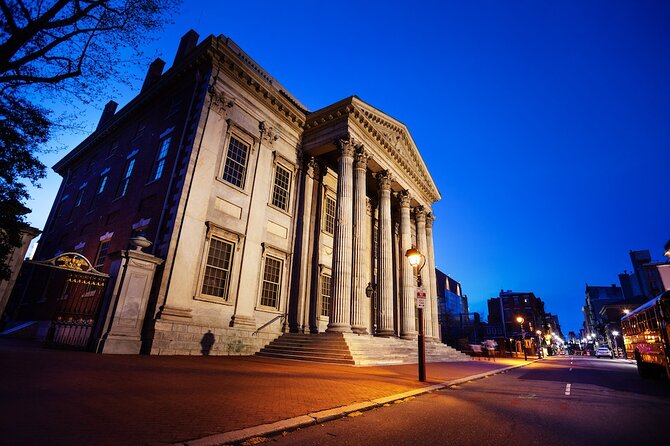
Later in the walk, the tour shifts to Alexander Hamilton and his financial legacy, anchored at the First Bank of the United States. The tour explains that this bank operated from 1791 to 1811 and connects it to Hamilton’s fiscal policy—especially the idea that a national bank was vital to stabilize and improve the nation’s credit and support government financial business under the newly enacted Constitution.
Hamilton is one of those founding-era figures where you either get a quick mention or a deeper story. This tour aims for the deeper, more human angle by tying the locations to his old surroundings and then to the scandal that ended his career: the Maria Reynolds affair.
You’ll also hear about Hamilton once living near this area, and the audio connects it to that personal-political fallout.
This portion is a strong example of why an audio story at the right location works. Instead of treating Hamilton like a name on a banknote, you connect him to the places tied to his plans and his collapse.
Ending at City Tavern: the rebels feasting idea as a fitting last scene
Your tour wraps up at City Tavern (Museum), at S 2nd St in Philadelphia. The experience ends at the old City Tavern, described as the spot where founding fathers often met to drink and eat.
That final “food and drink” framing is actually a useful way to land the theme. The Revolution isn’t only marches and pamphlets. It involved gathering, arguing, planning, and yes—sharing meals and building alliances. Ending here gives your last minutes a more human feel, which helps the whole walk feel less like a checklist.
If you want to keep going after the audio ends, this is also a natural place to re-enter regular sightseeing mode, since it’s a known city stop rather than a random roadside landmark.
Price and value: what $9.49 buys you in real touring time
At $9.49 per person, this is priced like a low-stakes way to add context to a walk. You’re not paying for an in-person guide, and you’re not buying entry tickets as part of the experience. Instead, you’re paying for a guided audio narrative plus app-based directions.
For many people, that tradeoff is exactly right. If you’re spending time in Philadelphia for a day or a short trip, you’ll usually spend more than $9.49 on snacks, transit, or parking. Here, the cost turns into time saved: you cover major locations in a tight area, with a story attached to each stop.
It also helps that most stops are outside, and several are described as free to see in this tour context (including the bell and major exterior landmarks). The only one explicitly called out as requiring a separate ticket is Independence Hall interior, and you’re not forced into that decision.
So the value equation comes down to you:
- If you like stories, you’ll feel like you got your money’s worth quickly.
- If you want ultra-deep, obscure research-level facts at every stop, you might wish the audio lingered longer in spots. The tour is designed to keep moving.
Who should book this self-walk (and who might want a different format)
This experience fits best if you:
- Want to see a lot of Revolutionary-era Philadelphia without paying for multiple guided tours.
- Prefer your pace over group timing.
- Like learning through short audio segments tied to what you’re physically standing near.
- Are comfortable using a mobile app outdoors.
It’s also a good option if you’re traveling with a mix of interests. People can listen and move through landmarks at different speeds, and the “outside-only” structure keeps the flow simple.
You might consider a different format if:
- You need an in-person guide to answer questions and adjust on the fly.
- You expect long, detailed explanations at each site without changing the tempo.
Practical tips so the audio experience lands well
Here’s how to make it work smoothly on the ground:
- Bring earbuds. The audio experience is the point, and you want the narration and music clear while you’re walking.
- Wear good shoes. This is a historic walking route that moves through several major stops, and it’s easiest when you’re comfortable for a full 1 to 1.5 hours.
- Don’t rush the most personal stops. Elfreth’s Alley and Signer’s Garden are places where slowing down makes the stories stick.
- If you’re also interested in nearby major churches or extra sites not included in this tour’s path, plan to add them as bonus stops on your own.
Should you book Historic Sites of Philadelphia Self-Guided Walking Audio Tour?
If you want an affordable way to connect famous Philadelphia landmarks to clear Revolutionary-era stories, I’d book it. The price is low, the route is concentrated, and the app includes the kind of simple navigation help that prevents walking tours from turning into map frustration.
I’d skip (or pair with something else) if you’re the type who wants an extended, question-friendly guide at every stop, or if you hate phone-based audio while walking. But if you’re happy to listen, look, and keep moving, this is a strong value way to get the essentials—and a few more surprising details—without losing half your day to logistics.
FAQ
How long does the Philadelphia historic audio walk take?
The experience is listed as about 1 hour to 1 hour 30 minutes.
What does the tour cost?
It costs $9.49 per person.
Is there an in-person guide?
No. It’s a solo self-guided tour navigated by the WalknTours app.
Are entrance tickets included?
No. The tour goes outside for the experience. Independence Hall interior would require a separate ticket if you want to go in.
What language is the tour offered in?
It’s offered in English.
Where does the tour start and end?
It starts at Elfreth’s Alley Museum, 126 Elfreth’s Alley, Philadelphia, PA 19106, and ends at City Tavern (Museum), S 2nd St, Philadelphia, PA 19106.
What’s the cancellation policy?
Free cancellation is available up to 24 hours in advance for a full refund. If you cancel less than 24 hours before the start time, the amount you paid is not refunded.
More Tours in Philadelphia




More Tour Reviews in Philadelphia
Old City on Foot, More Routes



Fresh Off the Press: Latest Philadelphia Reviews












Old City Walking Tours, compared.
 ★ 5.0Philadelphia Old City Historic Walking Tour with 10+ Top SitesFrom $432,020 reviews
 ★ 5.0Philadelphia Old City History Pub Crawl Small-Group TourFrom $45294 reviews
 ★ 4.8Revolutionary Walk Through Historic Old CityFrom $35208 reviews
 ★ 5.0Philadelphia Historic Centre Food Tour with 5 Authentic TastingsFrom $72117 reviews
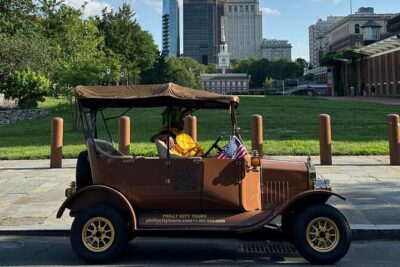 ★ 4.5One Hour Tour Of Philadelphia Historical Sites In A Vintage CarFrom $3952 reviews
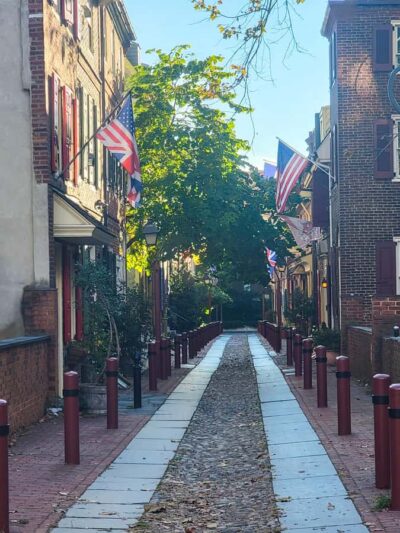 ★ 5.0Guided Walking Tour of Historic District!From $2542 reviews
 ★ 5.090 Minute History Walking Tour of Old City PhiladelphiaFrom $2935 reviews
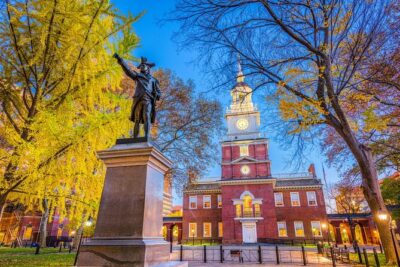 ★ 4.0Philadelphia Historic Sites Self-Guided Walking TourFrom $1425 reviews
Browse the lists this tour appears in