
Reviewed · OLD CITY WALKING TOURS
Philadelphia: Guided Walking Tour of Historic District!
Ninety minutes, 21 landmarks, zero ticket lines. This guided walk through Philadelphia’s core founding sites mixes big-name monuments with street-level details, led by Tom, a history teacher. I like that the story stays focused on what you’re seeing, not on vague dates.
You’ll also like the pacing and local credibility: it’s owner-operated, and it’s been featured on NBC10 and recognized by Philadelphia City Council. One thing to think about: it’s mostly outside, so hot or stormy weather can feel long if you’re heat-sensitive.
In This Review
- Key things to know before you go
- A 90-Minute Foot Sprint Through Philly’s Historic District
- Tom’s History Degree Storytelling, Not Just a Sight Recap
- Starting at Independence Visitor Center: Getting Your Bearings Fast
- Liberty Bell and Independence Hall: The Cracked Icon Meets the Debates
- Carpenters’ Hall and the “In-That-Room” Feeling
- Franklin Court: Small Space, Big Story
- The African American Museum and Graff House: Context Beyond the Headlines
- American Philosophical Society: Where Ideas Had a Home
- Christ Church and the Burial Ground: Faith, Power, and Memory
- Elfreth’s Alley: The Old Street You Can Actually Feel
- Betsy Ross House: A Quick Stop With Big Cultural Gravity
- National Constitution Center: Closing the Loop on What You Saw
- Price and Time: Why $25 Often Feels Like a Bargain
- What to Expect Day-Of: Walk Comfort, Weather, and Pacing
- Accessibility and Rules That Affect the Experience
- Who This Walk Fits Best (and Who Might Want Another Plan)
- Should You Book This Philadelphia Historic District Walk?
- FAQ
- Where does the tour start?
- How long is the walking tour?
- How many sites will we see?
- Is admission to the attractions included?
- Is the tour rain or shine?
- Is the tour wheelchair accessible?
- What should I bring for the walk?
Key things to know before you go
- 21 sites on one route, more than other walking tours in this area
- Tom’s teacher-style approach, with a history degree and clear explanations
- Outside-only viewing, so you get the highlights without waiting in line
- Rain or shine planning, since you’re walking city streets the whole time
- Small-group energy is part of the vibe, even when the group size changes
- Extras you’ll hear about, like practical food ideas after the historical stops
A 90-Minute Foot Sprint Through Philly’s Historic District
This tour is built for your limited time. It runs 90 minutes, and it’s designed to give you a sense of how the historic district connects, block by block. You’ll start at the Independence Visitor Center, then move through the area on real city sidewalks.
The key idea is simple: you won’t need to hunt for landmarks on your own. The route is mapped to the founding-era sights people come to Philly for, plus a few places that add context and personality. And because it’s English and live-guided, you can ask questions as you go (as long as you’re not racing ahead on your own).
More of Old City on foot, a few other routes



Tom’s History Degree Storytelling, Not Just a Sight Recap
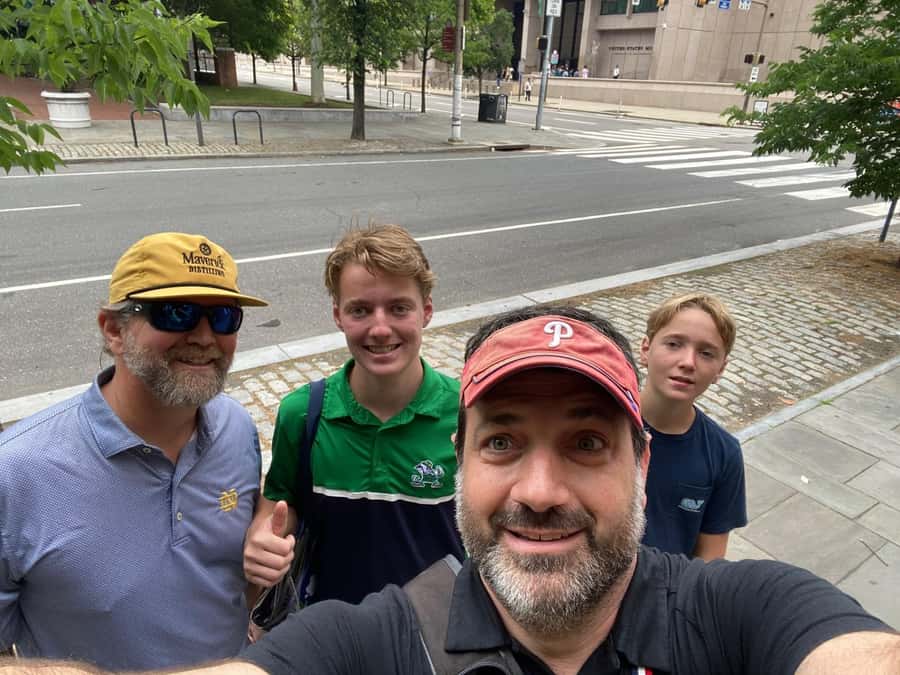
What makes this walk different is the person leading it. Tom is a teacher with a degree in history, so the tour doesn’t sound like a memorized script. The best moments are the “how did they think” moments—why people argued, what problems they faced, and what daily life might have felt like inside the buildings you’re looking at.
You’ll also get the kind of guidance that makes the past feel usable. Instead of only naming places, Tom connects the dots: how meetings shaped decisions, how one person’s work fit into the bigger push, and how the buildings relate to each other geographically. It’s the difference between seeing statues and understanding a system.
Starting at Independence Visitor Center: Getting Your Bearings Fast
The meeting point is right at the main entrance of the Independence Visitor Center (coordinates: 39.9514196, -75.1499212). That’s a smart start because you’re already in the right zone—easy to find, and close to the big hits.
From there, the route moves outward, so you gradually widen your view: first the headline landmarks, then the surrounding streets and institutions. It’s not just a loop of “look at this, look at that.” The flow helps you remember where everything sits.
Practical note: wear comfortable shoes. You’ll be walking city streets the whole time. Bring a reusable water bottle and a charged smartphone for photos.
Liberty Bell and Independence Hall: The Cracked Icon Meets the Debates
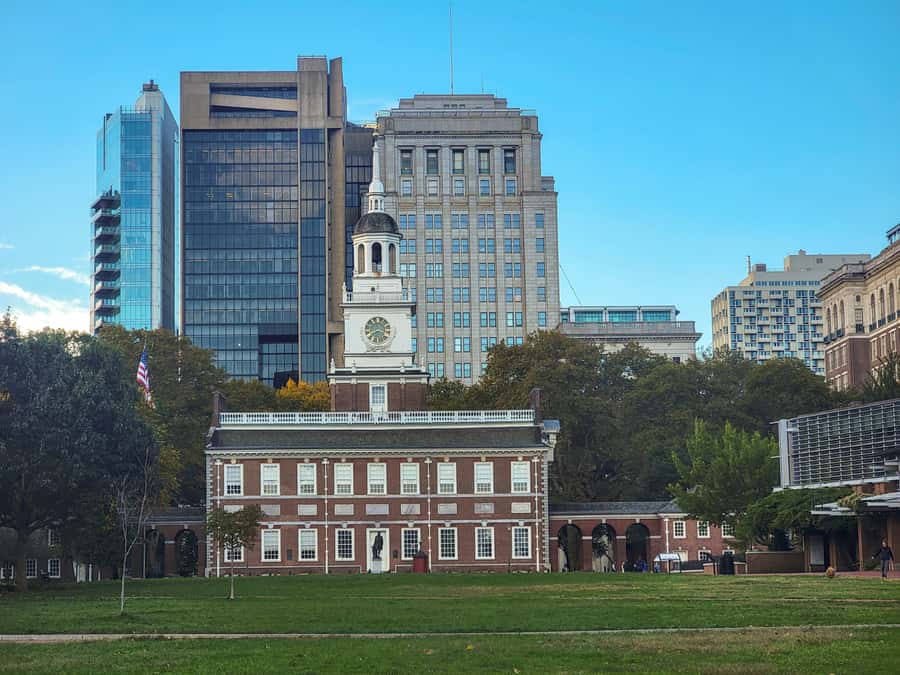
You’ll pass the Liberty Bell, then head toward Independence Hall. These are the two sights most people picture before they arrive. The value here is how quickly the tour frames them so you can actually “read” the scene.
At the Liberty Bell, expect the story behind its fame—including how it worked and what the famous crack means. At Independence Hall, the focus shifts to the people and the pressure: the problems they were trying to solve and the arguments happening around the founding moment. Even if you’ve seen photos before, it helps to have context as you stand in front of the building.
This is also where the outside-only format helps you. You get the landmark impact without turning your morning into a line-queue session.
Carpenters’ Hall and the “In-That-Room” Feeling
Next up is Carpenters’ Hall, where Tom spends extra time (about 8 minutes). This stop matters because it adds a layer beyond the iconic center. It’s the kind of place where you can understand the founding process as ongoing, not as a single dramatic moment.
When the guide talks through what was debated and why, you start to see the buildings as tools people used—meeting spaces, planning spaces, places where decisions got shaped. That’s one of the reasons the tour doesn’t feel like a checklist.
Philly at a walking pace, more routes




Franklin Court: Small Space, Big Story
Franklin Court is a stop with a guided explanation (about 10 minutes). The surrounding streets can feel like they’re all saying the same thing—history, history, history. Franklin Court gives you a more intimate angle.
You’ll learn about what was happening in that era and how key work got done. You’re not going inside as a ticketed visitor here; you’ll experience it from the outside. Still, the guide’s narration helps you imagine the flow of ideas that likely moved through those spaces.
The African American Museum and Graff House: Context Beyond the Headlines
Before you settle into the biggest monuments, the route passes two stops that broaden the story.
The African American Museum in Philadelphia is passed by for about 3 minutes. It’s a reminder that Philadelphia’s story isn’t only about the founding documents. It’s about who lived through the aftermath and how communities shaped the city’s later chapters.
Then there’s Graff House, also passed by. Even as a quick stop, it signals that the historic district isn’t just grand facades. It’s made of real homes and real street life. The guide helps you connect that everyday scale to the political moment you’re learning about.
American Philosophical Society: Where Ideas Had a Home
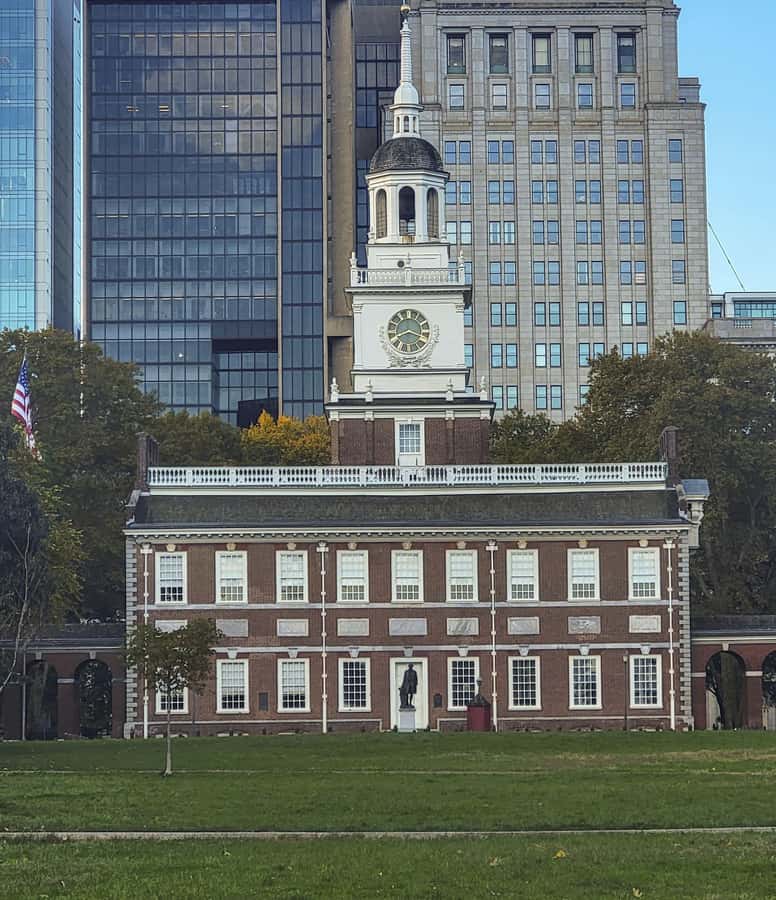
You’ll pass the American Philosophical Society for about 3 minutes, but it’s the kind of institutional landmark that adds meaning. The founding era wasn’t only about speeches and signatures. It was also about thinking, studying, and creating places where ideas could be discussed.
Tom’s approach here is practical: you don’t just hear what the organization is. You hear why institutions like this mattered in shaping how leaders viewed science, governance, and society.
Christ Church and the Burial Ground: Faith, Power, and Memory
You’ll pass Christ Church Philadelphia and later the Christ Church Burial Ground (each about 5 minutes). These stops add emotional texture to the route.
Churches in this part of Philly aren’t just religious buildings. They show how communities organized themselves, how power and influence connected, and how memory got preserved. The burial ground adds a quieter tone—less about action, more about what survives.
The outside-only format still works well here. With the guide’s framing, the architecture and location become part of the story.
Elfreth’s Alley: The Old Street You Can Actually Feel
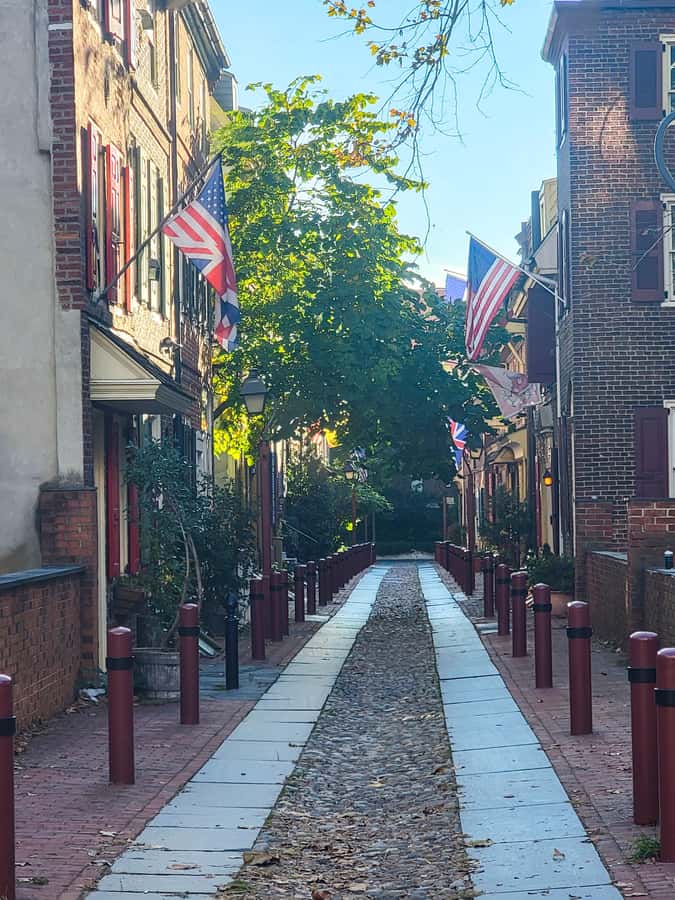
Elfreth’s Alley is one of the highlights for people who like physical atmosphere. You’ll get a guided look (about 8 minutes) on the street itself.
This is the stop where you can slow down and let the location do the talking. The alley helps you picture daily life, not just official history. It’s also a great contrast after the larger institutional buildings, because it brings you back to scale you can almost touch.
Betsy Ross House: A Quick Stop With Big Cultural Gravity
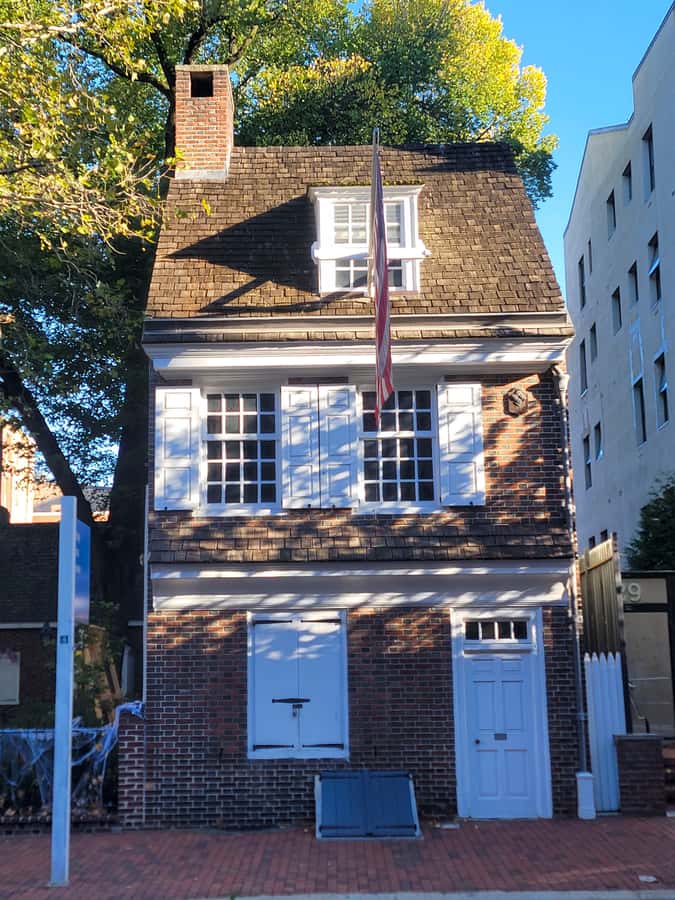
Next is Betsy Ross House, passed by for about 3 minutes. It’s short, but it’s still worth it because the place is surrounded by layers of popular memory. Tom gives you the context that helps separate the legend vibe from the real story you’re learning throughout the tour.
Even if you don’t stay long at this one, it reinforces the tour’s broader goal: you’re not only looking at objects. You’re learning how stories get attached to places.
National Constitution Center: Closing the Loop on What You Saw
You’ll pass the National Constitution Center near the end. It’s a strong finish point because it turns your “founding moment” thinking into “system thinking.”
By the time you reach this stop, you’ve heard about meetings, work spaces, debates, and institutions. The guide ties those pieces back to the idea that the U.S. wasn’t created in one lightning flash. It was built through argument, rewriting, and compromise.
Then you head back to the Independence Visitor Center to end the tour.
Price and Time: Why $25 Often Feels Like a Bargain
At $25 per person for 90 minutes, this is one of those prices that can make sense even if you only have a small window in Philly. Here’s why the value holds up:
- You’re getting 21 sites covered without needing separate admissions.
- It’s a guided experience, so you’re not just collecting photos—you’re collecting connections.
- It’s a short commitment. If you’re juggling museums, food, and transit, the timing is realistic.
That said, because it’s outside only, don’t expect to see interior rooms or paid exhibits. If you want to go inside multiple attractions, you’ll likely pair this with at least one separately ticketed stop. But if you want orientation and storytelling in a compact format, this price sits in the sweet spot.
What to Expect Day-Of: Walk Comfort, Weather, and Pacing
Plan around being outdoors. The tour runs rain or shine, and the route follows city streets with no mention of frequent indoor breaks. That can be totally fine if you dress for the weather. On a very hot day, you may wish there were more chances to step inside for a breather.
What I’d do to prepare:
- wear comfortable shoes (no high heels)
- bring water
- have a charged smartphone for photos
- dress for sudden weather changes
One extra detail that helps: Tom has been known to assist with rain coverage when weather turns. That’s not the same as having inside time, but it does make the walk more comfortable.
Accessibility and Rules That Affect the Experience
The tour is wheelchair accessible, and it’s offered by a live English guide. The experience is designed for walking outside, so mobility needs will still matter—but it’s not framed as an inaccessible route.
There are also clear boundaries: no pets, no weapons or sharp objects, and no smoking, vaping, or intoxication. Unaccompanied minors aren’t allowed. These rules exist for comfort and safety, and they also keep the group experience calmer.
Who This Walk Fits Best (and Who Might Want Another Plan)
This is a good fit if you want:
- a fast overview of Philly’s founding-era landmarks
- clear narration with a history teacher at the front
- a route that hits a lot of sites without moving at a sprint
It’s especially useful if you’re the type who wants to connect the dots on your first day. Seeing the landmarks in a guided order helps your later self-guided visits make more sense.
It may not be ideal if you hate outdoor walking in heat or rain. In that case, you can still book, but adjust your expectations. This is built for street-side viewing, not indoor wandering.
Should You Book This Philadelphia Historic District Walk?
I’d book it if your priority is context over checklists and you want to cover 21 sites in 90 minutes with a teacher-led guide. It’s also a strong choice if you’re paying attention to value, because you’re getting major sights without ticket lines or extra admissions.
Skip it (or pair it differently) if your dream day in Philly depends on lots of inside access. Since everything is outside only, you’ll still want separate plans for museums or ticketed interiors.
If you’re curious, bring your best walking shoes and let Tom handle the story thread. Your time will feel spent on understanding the place, not just moving past it.
FAQ
Where does the tour start?
Meet outside the main entrance of the Independence Visitor Center (39.9514196, -75.1499212).
How long is the walking tour?
The duration is 90 minutes.
How many sites will we see?
You’ll see 21 sites during the tour.
Is admission to the attractions included?
No. Entry and admission fees are not included. The tour experiences all sites from the outside only.
Is the tour rain or shine?
Yes. It runs rain or shine.
Is the tour wheelchair accessible?
Yes, the tour is listed as wheelchair accessible.
What should I bring for the walk?
Wear comfortable shoes, and bring a camera, a charged smartphone, and a reusable water bottle.
More Tours in Philadelphia




More Tour Reviews in Philadelphia
Old City on Foot, More Routes



Fresh Off the Press: Latest Philadelphia Reviews












Old City Walking Tours, compared.
 ★ 5.0Philadelphia Old City Historic Walking Tour with 10+ Top SitesFrom $432,020 reviews
 ★ 5.0Philadelphia Old City History Pub Crawl Small-Group TourFrom $45294 reviews
 ★ 4.8Revolutionary Walk Through Historic Old CityFrom $35208 reviews
 ★ 5.0Philadelphia Historic Centre Food Tour with 5 Authentic TastingsFrom $72117 reviews
 ★ 4.5One Hour Tour Of Philadelphia Historical Sites In A Vintage CarFrom $3952 reviews
 ★ 5.090 Minute History Walking Tour of Old City PhiladelphiaFrom $2935 reviews
 ★ 4.0Philadelphia Historic Sites Self-Guided Walking TourFrom $1425 reviews
 ★ 4.5Historic Sites of Philadelphia Self-Guided Walking Audio TourFrom $924 reviews
Browse the lists this tour appears in